

Apolipoprotein L/APOL1 Protein, Human, Recombinant (His)

Référence NB-64-58048-100ug
Conditionnement : 100ug
Marque : Neo Biotech
Contactez votre distributeur local :
 Téléphone : +1 850 650 7790
Remove All
Apolipoprotein L/APOL1 Protein, Human, Recombinant (His)
(Synonyms: FSGS4, apolipoprotein L1, APOL-I, APOL1, APO-L, APOL) Copy Product InfoSynonyms: FSGS4, apolipoprotein L1, APOL-I, APOL1, APO-L, APOL
Catalog No. TMPY-02956 Copy Product Info
APOL1, also known as apolipoprotein L1, is a minor apoprotein component of HDL (High-density lipoprotein) or 'good cholesterol' which is synthesized in the liver and also in many other tissues, including pancreas, kidney, and brain. APOL1 belongs to the apolipoprotein L family. It may play a role in lipid exchange and transport throughout the body. It may also participate in reverse cholesterol transport from peripheral cells to the liver. Defects in APOL1 are the cause of focal segmental glomerulosclerosis type 4 (FSGS4). It is a renal pathology defined by the presence of segmental sclerosis in glomeruli and resulting in proteinuria, reduced glomerular filtration rate and edema. Renal insufficiency often progresses to end-stage renal disease, a highly morbid state requiring either dialysis therapy or kidney transplantation.
For research use only—not for human use. No sales to individuals. Use as intended only.
Select Batch
Purity:SDS-PAGE: 80.7%; SEC-HPLC: 92.7%
Appearance:Lyophilized powder
Color:White
Contact us for more batch information
Product Information
Bioactivity
Chemical Properties
Storage & Solubility Information
| Bioactivity | Activity testing is in progress. It is theoretically active, but we cannot guarantee it. If you require protein activity, we recommend choosing the eukaryotic expression version first. |
| Description | APOL1, also known as apolipoprotein L1, is a minor apoprotein component of HDL (High-density lipoprotein) or 'good cholesterol' which is synthesized in the liver and also in many other tissues, including pancreas, kidney, and brain. APOL1 belongs to the apolipoprotein L family. It may play a role in lipid exchange and transport throughout the body. It may also participate in reverse cholesterol transport from peripheral cells to the liver. Defects in APOL1 are the cause of focal segmental glomerulosclerosis type 4 (FSGS4). It is a renal pathology defined by the presence of segmental sclerosis in glomeruli and resulting in proteinuria, reduced glomerular filtration rate and edema. Renal insufficiency often progresses to end-stage renal disease, a highly morbid state requiring either dialysis therapy or kidney transplantation. |
| Species | Human |
| Expression System | Baculovirus Insect Cells |
| Tag | C-His |
| Accession Number | Q2KHQ6 |
| Construction | A DNA sequence encoding the human APOL1 (Q2KHQ6) (Met1-Leu398) was expressed with a C-terminal polyhistidine tag. Predicted N terminal: Glu 28 |
| Protein Purity | ≥ 80 % as determined by SDS-PAGE. ≥ 90 % as determined by SEC-HPLC. 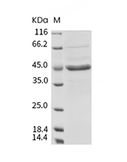 , ,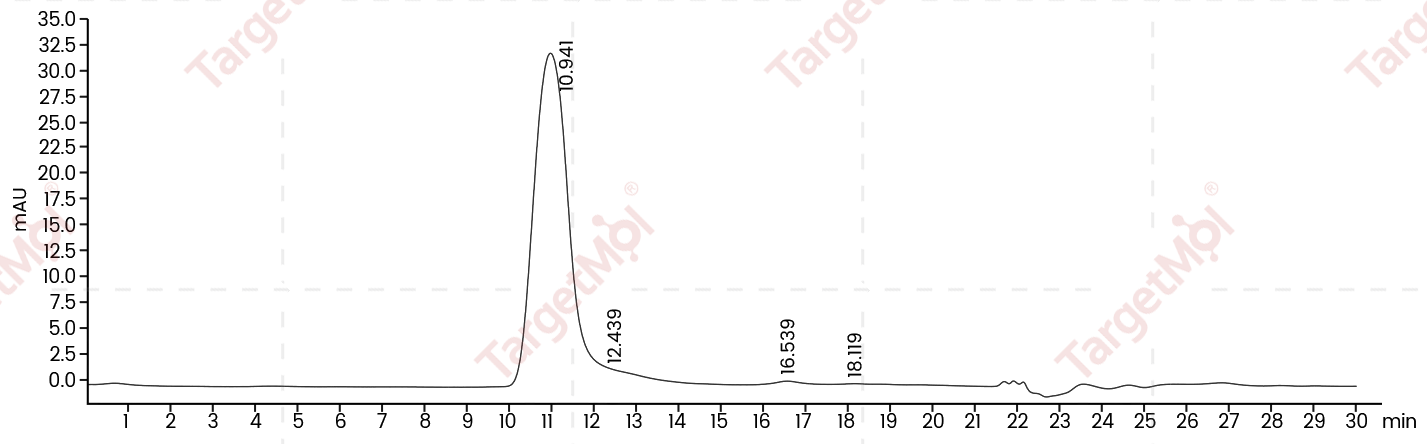 |
| Endotoxin | < 1.0 EU/μg of the protein as determined by the LAL method. |
| Formulation | Lyophilized from a solution filtered through a 0.22 μm filter, containing 20 mM Tris, 300 mM NaCl, 10% glycerol, 0.5 mM TCEP, pH 7.5. Typically, a mixture containing 5% to 8% trehalose, mannitol, and 0.01% Tween 80 is incorporated as a protective agent before lyophilization. |
| Reconstitution | Reconstituted with sterile deionized water to 0.15 mg/mL. Reconstitution conditions may vary depending on the lot. |
| Synonyms | FSGS4, apolipoprotein L1, APOL-I, APOL1, APO-L, APOL |
| Research Background | APOL1, also known as apolipoprotein L1, is a minor apoprotein component of HDL (High-density lipoprotein) or 'good cholesterol' which is synthesized in the liver and also in many other tissues, including pancreas, kidney, and brain. APOL1 belongs to the apolipoprotein L family. It may play a role in lipid exchange and transport throughout the body. It may also participate in reverse cholesterol transport from peripheral cells to the liver. Defects in APOL1 are the cause of focal segmental glomerulosclerosis type 4 (FSGS4). It is a renal pathology defined by the presence of segmental sclerosis in glomeruli and resulting in proteinuria, reduced glomerular filtration rate and edema. Renal insufficiency often progresses to end-stage renal disease, a highly morbid state requiring either dialysis therapy or kidney transplantation. |
| Molecular Weight | 42.53 kDa (predicted); 44 kDa (reducing condition, due to glycosylation) |
| Shipping | In general, lyophilized powders are shipped with blue ice, while solutions are shipped with dry ice. |
| Storage | It is recommended to store recombinant proteins at -20°C to -80°C for future use. Lyophilized powders can be stably stored for over 12 months, while liquid products can be stored for 6-12 months at -80°C. For reconstituted protein solutions, the solution can be stored at -20°C to -80°C for at least 3 months. Please avoid multiple freeze-thaw cycles and store products in aliquots. |
Calculator
Dose Conversion
Keywords
FSGS-4FSGS 4APOL-1APOL 1
Preview
Related Tags: Apolipoprotein L/APOL1 Protein, Human, Recombinant (His) chemical structure | Apolipoprotein L/APOL1 Protein, Human, Recombinant (His) molecular weight
Generate Quote
Catalog No.: Cas No.:
Add
| Size | Quantity | Unit Price | Amount | Operation |
|---|
Generate Quote