

CDK5 (Cyclin-dependent p31) (FITC)

Référence MBS6243422-5x0,1mL
Conditionnement : 5x0.1mL
Marque : MyBiosource
Contactez votre distributeur local :

Téléphone : +1 850 650 7790
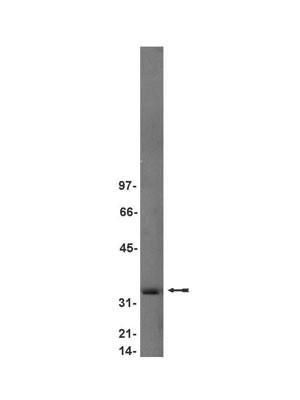
Western Blot: A431 cell lysate was probed with C2575-01 (2ug/ml).
CDK5 Antibody – Mouse Monoclonal
For Research Use Only. Not for use in diagnostic procedures. Catalog #: MBS6243422MBS6243422 is an antibody targeting CDK5. Also known as CDK5 (Cyclin-dependent p31) (FITC). Reactive in Drosophila, Human, Mouse, Rat. Host: Mouse. More details
Product Overview
Online Datasheet in PDFProduct Name
CDK5, Monoclonal Antibody
Full Product Name
CDK5 (Cyclin-dependent p31) (FITC)
Product Gene Name
anti-CDK5 antibody
Clonality
Monoclonal
Isotype
IgG2a
Clone Number
4i34
Host
Mouse
Species Reactivity
Drosophila, Human, Mouse, Rat
Form/Format
Supplied as a liquid in PBS, pH 7.2. No preservative added. Labeled with Fluorescein isothiocyanate (FITC).
Purity/Purification
Purified by Protein G Affinity Chromatography
Specificity
Recognizes human cdk5, Mr 33kD. Species Crossreactivity: mouse, rat and Drosophila.
Preparation and Storage
Store at -20 degree C.
Applications Tested/Suitable for anti-CDK5 antibody
ELISA (EIA), Immunocytochemistry (ICC), Immunoprecipitation (IP), Western Blot (WB)
Other Notes
Small volumes of anti-CDK5 antibody vial(s) may occasionally become entrapped in the seal of the product vial during shipment and storage. If necessary, briefly centrifuge the vial on a tabletop centrifuge to dislodge any liquid in the container`s cap. Certain products may require to ship with dry ice and additional dry ice fee may apply.
Additional Details
NCBI/Uniprot data below describe general gene information for CDK5. It may not necessarily be applicable to this product.
UniProt Primary Accession #
UniProt Secondary Accession #
UniProt Related Accession #
GenBank Nucleotide #
NCBI Official Full Name
cyclin-dependent-like kinase 5 isoform 1
NCBI Official Synonym Full Names
cyclin dependent kinase 5
NCBI Official Symbol
CDK5
NCBI Official Synonym Symbols
LIS7; PSSALRE
UniProt Protein Name
Cyclin-dependent kinase 5
UniProt Synonym Protein Names
Cell division protein kinase 5; Serine/threonine-protein kinase PSSALRE; Tau protein kinase II catalytic subunit
Protein Family
Cyclin-dependent kinase
UniProt Gene Name
CDK5
UniProt Synonym Gene Names
CDKN5; TPKII catalytic subunit
UniProt Entry Name
CDK5_HUMAN
NCBI Protein Information
cyclin-dependent-like kinase 5
NCBI Summary for CDK5
This gene encodes a proline-directed serine/threonine kinase that is a member of the cyclin-dependent kinase family of proteins. Unlike other members of the family, the protein encoded by this gene does not directly control cell cycle regulation. Instead the protein, which is predominantly expressed at high levels in mammalian postmitotic central nervous system neurons, functions in diverse processes such as synaptic plasticity and neuronal migration through phosphorylation of proteins required for cytoskeletal organization, endocytosis and exocytosis, and apoptosis. In humans, an allelic variant of the gene that results in undetectable levels of the protein has been associated with lethal autosomal recessive lissencephaly-7. Alternative splicing results in multiple transcript variants. [provided by RefSeq, May 2015]
Show more UniProt Comments for CDK5
CDK5: a protein kinase of the CDK family. Unlike other members of this family, it is not activated by cyclins but by p35 (CDK5R1) and p39. An important regulator of neuronal positioning during brain development. May also play a role in synaptogenesis and neurotransmission. Substrates include TAU, MAP2, NF-H and -M, Nudel, PDE6, beta-catenin, amphyphysin, dynamin I, synapsin 1, Munc-18, and NMDA receptor 2A. Plays a role in myogenesis, haematopoietic cell differentiation, spermatogenesis, insulin secretion, and lens differentiation. Implicated in the pathology of neurofibrillary tangles and formation of senile plaques, hallmarks of Alzheimer?s disease. Induces tau phosphorylation and aggregation and neurofibrillary tangle deposition and neurodegeneration in in vitro and in vivo animal models. Brain samples from Alzeimer?s pateints show elevated CDK5 activity.
Protein type: Kinase, protein; EC 2.7.11.1; Cell cycle regulation; Protein kinase, Ser/Thr (non-receptor); Protein kinase, CMGC; CMGC group; CDK family; CDK5 subfamily; CDK/CDK5 subfamily
Chromosomal Location of Human Ortholog: 7q36
Cellular Component: cyclin-dependent protein kinase 5 activator complex; dendrite; postsynaptic density; perikaryon; cytosol; postsynaptic membrane; cytoskeleton; growth cone; membrane; cell soma; axon; lamellipodium; cytoplasm; nucleus; cell junction; neuromuscular junction; filopodium
Molecular Function: acetylcholine receptor activator activity; ephrin receptor binding; p53 binding; protein kinase activity; protein serine/threonine kinase activity; ErbB-2 class receptor binding; protein binding; ErbB-3 class receptor binding; cyclin-dependent protein kinase activity; cytoskeletal protein binding; tau-protein kinase activity; kinase activity; ATP binding
Biological Process: Schwann cell development; negative regulation of synaptic plasticity; axon extension; cerebellar cortex formation; rhythmic process; regulation of synaptic plasticity; motor axon guidance; sensory perception of pain; receptor clustering; regulation of cell migration; corpus callosum development; regulation of apoptosis; neuron differentiation; receptor catabolic process; oligodendrocyte differentiation; neurite development; central nervous system neuron development; synaptic transmission, glutamatergic; skeletal muscle development; dendrite morphogenesis; cell division; synaptic vesicle endocytosis; negative regulation of protein ubiquitination; negative regulation of transcription, DNA-dependent; axon guidance; regulated secretory pathway; synaptic transmission, dopaminergic; negative regulation of protein export from nucleus; positive regulation of protein binding; protein amino acid autophosphorylation; cell-matrix adhesion; neuron migration; nucleocytoplasmic transport; negative regulation of axon extension; negative regulation of cell cycle; synaptic transmission; intracellular protein transport; synaptogenesis; behavioral response to cocaine; positive regulation of neuron apoptosis; visual learning; cortical actin cytoskeleton organization and biogenesis; layer formation in the cerebral cortex; serine phosphorylation of STAT3 protein; negative regulation of proteolysis; hippocampus development; peptidyl-threonine phosphorylation; cell cycle; cell proliferation; positive regulation of calcium ion-dependent exocytosis; embryonic development; synaptic vesicle exocytosis; peptidyl-serine phosphorylation; neuron apoptosis; positive regulation of protein kinase activity; blood coagulation; regulation of excitatory postsynaptic membrane potential; phosphorylation
Disease: Lissencephaly 7 With Cerebellar Hypoplasia
Show more Protein type: Kinase, protein; EC 2.7.11.1; Cell cycle regulation; Protein kinase, Ser/Thr (non-receptor); Protein kinase, CMGC; CMGC group; CDK family; CDK5 subfamily; CDK/CDK5 subfamily
Chromosomal Location of Human Ortholog: 7q36
Cellular Component: cyclin-dependent protein kinase 5 activator complex; dendrite; postsynaptic density; perikaryon; cytosol; postsynaptic membrane; cytoskeleton; growth cone; membrane; cell soma; axon; lamellipodium; cytoplasm; nucleus; cell junction; neuromuscular junction; filopodium
Molecular Function: acetylcholine receptor activator activity; ephrin receptor binding; p53 binding; protein kinase activity; protein serine/threonine kinase activity; ErbB-2 class receptor binding; protein binding; ErbB-3 class receptor binding; cyclin-dependent protein kinase activity; cytoskeletal protein binding; tau-protein kinase activity; kinase activity; ATP binding
Biological Process: Schwann cell development; negative regulation of synaptic plasticity; axon extension; cerebellar cortex formation; rhythmic process; regulation of synaptic plasticity; motor axon guidance; sensory perception of pain; receptor clustering; regulation of cell migration; corpus callosum development; regulation of apoptosis; neuron differentiation; receptor catabolic process; oligodendrocyte differentiation; neurite development; central nervous system neuron development; synaptic transmission, glutamatergic; skeletal muscle development; dendrite morphogenesis; cell division; synaptic vesicle endocytosis; negative regulation of protein ubiquitination; negative regulation of transcription, DNA-dependent; axon guidance; regulated secretory pathway; synaptic transmission, dopaminergic; negative regulation of protein export from nucleus; positive regulation of protein binding; protein amino acid autophosphorylation; cell-matrix adhesion; neuron migration; nucleocytoplasmic transport; negative regulation of axon extension; negative regulation of cell cycle; synaptic transmission; intracellular protein transport; synaptogenesis; behavioral response to cocaine; positive regulation of neuron apoptosis; visual learning; cortical actin cytoskeleton organization and biogenesis; layer formation in the cerebral cortex; serine phosphorylation of STAT3 protein; negative regulation of proteolysis; hippocampus development; peptidyl-threonine phosphorylation; cell cycle; cell proliferation; positive regulation of calcium ion-dependent exocytosis; embryonic development; synaptic vesicle exocytosis; peptidyl-serine phosphorylation; neuron apoptosis; positive regulation of protein kinase activity; blood coagulation; regulation of excitatory postsynaptic membrane potential; phosphorylation
Disease: Lissencephaly 7 With Cerebellar Hypoplasia
Research Articles on CDK5
Precautions
All of MyBioSource's Products are for scientific laboratory research purposes and are not for diagnostic, therapeutics, prophylactic or in vivo use. Through your purchase, you expressly represent and warrant to MyBioSource that you will properly test and use any Products purchased from MyBioSource in accordance with industry standards. MyBioSource and its authorized distributors reserve the right to refuse to process any order where we reasonably believe that the intended use will fall outside of our acceptable guidelines.
Disclaimer
While every efforts were made to ensure the accuracy of the information provided in this datasheet, MyBioSource will not be liable for any omissions or errors contained herein. MyBioSource reserves the right to make changes to this datasheet at any time without prior notice.
It is the responsibility of the customer to report product performance issues to MyBioSource within 30 days of receipt of the product. Please visit our Terms & Conditions page for more information.
It is the responsibility of the customer to report product performance issues to MyBioSource within 30 days of receipt of the product. Please visit our Terms & Conditions page for more information.
Product Note
Select online data sheet information is drawn from bioinformatics databases, occasionally resulting in ambiguous or non-relevant product information. It is the responsibility of the customer to review, verify, and evaluate the information to make sure it matches their requirements before purchasing the kit. Our ELISA Kit assays are dynamic research tools and sometimes they may be updated and improved. If the format of this assay is important to you then please request the current manual or contact our technical support team with a presales inquiry before placing an order. We will confirm the current details of the assay. We cannot guarantee the sample manual posted online is the most current manual, it is intended to serve as an example only. Please refer to the instructions For Use provided with the assay kit for precise details.
Product PubMed Publications
Products associated with anti-CDK5 antibody
| Reference Product | PubMed Publications |
|---|---|
| MAPT antibody | >25 publications with CDK5 and MAPT |
| PPP1R1B antibody | >14 publications with CDK5 and PPP1R1B |
| NDEL1 antibody | >12 publications with CDK5 and NDEL1 |
| CDK5R1 antibody | >11 publications with CDK5 and CDK5R1 |
| CABLES1 antibody | >7 publications with CDK5 and CABLES1 |
| CRMP1 antibody | >6 publications with CDK5 and CRMP1 |
| CDK5R2 antibody | >5 publications with CDK5 and CDK5R2 |
| DPYSL2 antibody | >2 publications with CDK5 and DPYSL2 |
Pathways associated with anti-CDK5 antibody
| Products by Pathway | Pathway Diagram |
|---|---|
| ATM Signaling Network In Development And Disease Pathway antibodies | ATM Signaling Network In Development And Disease Pathway Diagram |
| Alzheimer's Disease Pathway antibodies | Alzheimer's Disease Pathway Diagram |
| Alzheimer's Disease Pathway antibodies | Alzheimer's Disease Pathway Diagram |
| Alzheimers Disease Pathway antibodies | Alzheimers Disease Pathway Diagram |
| Axon Guidance Pathway antibodies | Axon Guidance Pathway Diagram |
| Axon Guidance Pathway antibodies | Axon Guidance Pathway Diagram |
| Axon Guidance Pathway antibodies | Axon Guidance Pathway Diagram |
| Brain-Derived Neurotrophic Factor (BDNF) Signaling Pathway antibodies | Brain-Derived Neurotrophic Factor (BDNF) Signaling Pathway Diagram |
| CRMPs In Sema3A Signaling Pathway antibodies | CRMPs In Sema3A Signaling Pathway Diagram |
| Cocaine Addiction Pathway antibodies | Cocaine Addiction Pathway Diagram |
Diseases associated with anti-CDK5 antibody
| Disease Name | Pubmed Publications |
|---|---|
| Nervous System Diseases Antibodies | >394 publications with CDK5 and Nervous System Diseases |
| Brain Diseases Antibodies | >325 publications with CDK5 and Brain Diseases |
| Neoplasms Antibodies | >116 publications with CDK5 and Neoplasms |
| Nerve Degeneration Antibodies | >73 publications with CDK5 and Nerve Degeneration |
| Drug Toxicity Antibodies | >60 publications with CDK5 and Drug Toxicity |
| Movement Disorders Antibodies | >54 publications with CDK5 and Movement Disorders |
| Inflammation Antibodies | >37 publications with CDK5 and Inflammation |
| Cardiovascular Diseases Antibodies | >32 publications with CDK5 and Cardiovascular Diseases |
| Pain Antibodies | >32 publications with CDK5 and Pain |
| Learning Disorders Antibodies | >31 publications with CDK5 and Learning Disorders |
Organs/Tissues associated with anti-CDK5 antibody
| Organ/Tissue Name | Pubmed Publications |
|---|---|
| Brain Antibodies | >800 publications with CDK5 and Brain |
| Embryonic Tissue Antibodies | >72 publications with CDK5 and Embryonic Tissue |
| Blood Antibodies | >62 publications with CDK5 and Blood |
| Muscle Antibodies | >60 publications with CDK5 and Muscle |
| Eye Antibodies | >48 publications with CDK5 and Eye |
| Liver Antibodies | >24 publications with CDK5 and Liver |
| Kidney Antibodies | >23 publications with CDK5 and Kidney |
| Testis Antibodies | >18 publications with CDK5 and Testis |
| Lung Antibodies | >17 publications with CDK5 and Lung |
| Pancreas Antibodies | >17 publications with CDK5 and Pancreas |