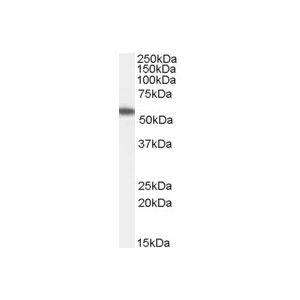
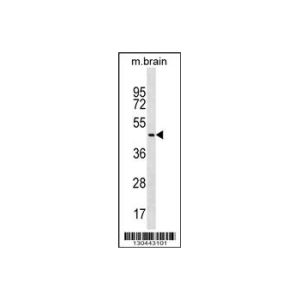
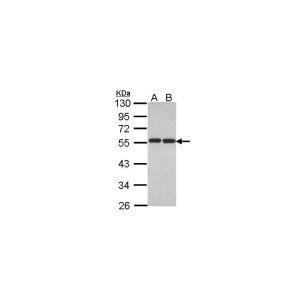
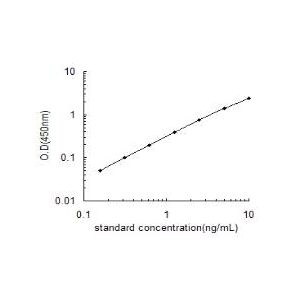
FAF2 Antibody

Référence OAGA05142
Conditionnement : 100ul
Marque : Aviva Systems Biology
Contactez votre distributeur local :

Téléphone : +1 850 650 7790
| Datasheets/Manuals | Printable datasheet for FAF2 Antibody (OAGA05142) |
|---|
| Predicted Species Reactivity | Human|Mouse |
|---|---|
| Product Format | Liquid |
| Clonality | Polyclonal |
| Isotype | IgG |
| Host | Rabbit |
| Conjugation | Unconjugated |
| Application | ICC|IF|IHC-P|WB |
| Reconstitution and Storage | -20°C or -80°C|2°C to 8°C |
| Immunogen | Recombinant protein encompassing a sequence within the center region of human ETEA. The exact sequence is proprietary. |
| Purification | Affinity Purified |
| Concentration | 0.48 mg/ml |
| Preservative | 0.01% Thimerosal |
| Application Info | Suggested starting dilutions are as follows: ICC/IF: 1:100-1:1000, IHC-P: 1:100-1:1000, WB: 1:500-1:3000. Not yet tested in other applications. Optimal working dilutions should be determined experimentally by the end user. |
| Storage Buffer | 0.1M Tris, 0.1M Glycine, 20% Glycerol (pH7). 0.01% Thimerosal was added as a preservative. |
| Gene Symbol | FAF2 |
|---|---|
| Gene Full Name | Fas associated factor family member 2 |
| Alias Symbols | ETEA, expressed in T-cells and eosinophils in atopic dermatitis, FAS-associated factor 2, Protein ETEA, UBX domain containing 8, UBX domain protein 3B, UBX domain-containing protein 3B, UBX domain-containing protein 8, UBXD8, UBXN3B. |
| NCBI Gene Id | 23197 |
| Protein Name | FAS-associated factor 2 |
| Description of Target | Plays an important role in endoplasmic reticulum-associated degradation (ERAD) that mediates ubiquitin-dependent degradation of misfolded endoplasmic reticulum proteins (PubMed:18711132, PubMed:24215460). By controlling the steady-state expression of the IGF1R receptor, indirectly regulates the insulin-like growth factor receptor signaling pathway (PubMed:26692333). Involved in inhibition of lipid droplet degradation by binding to phospholipase PNPL2 and inhibiting its activity by promoting dissociation of PNPL2 from its endogenous activator, ABHD5 which inhibits the rate of triacylglycerol hydrolysis (PubMed:23297223). |
| Uniprot ID | Q96CS3 |
| Protein Accession # | NP_055428.1 |
| Nucleotide Accession # | NM_014613.2 |