FKBP52 Antibody

Référence OASE00057
Conditionnement : 100ug
Marque : Aviva Systems Biology
Contactez votre distributeur local :

Téléphone : +1 850 650 7790
FKBP52 Antibody (OASE00057)
| Datasheets/Manuals | Printable datasheet for FKBP52 Antibody (OASE00057) |
|---|---|
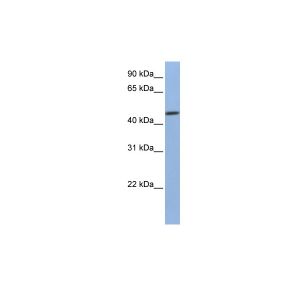
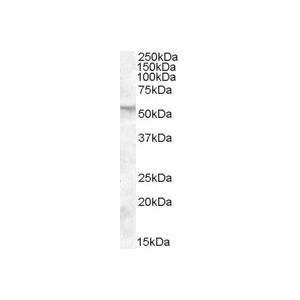
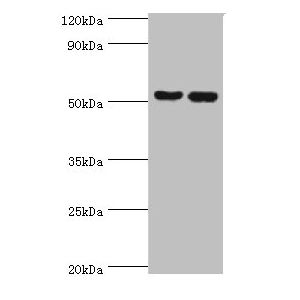
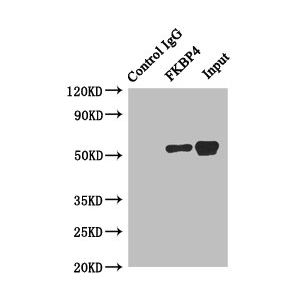
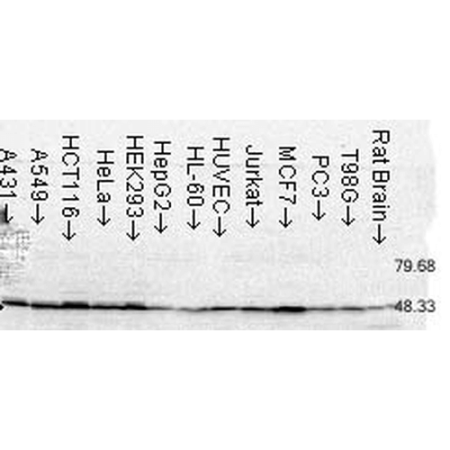
| COA Datasheet | 0.5 µg/ml was sufficient for detection of FKBP52 in 20 µg total protein using WB by colorimetric immunoblot analysis using Goat Anti-Mouse IgG:HRP as the secondary. |
| Predicted Species Reactivity | Dog|Hamster|Human|Mouse|Rat |
|---|---|
| Clonality | Monoclonal |
| Clone | Hi52C |
| Isotype | IgG2a |
| Host | Mouse |
| Conjugation | Unconjugated |
| Application | ICC,IF,IHC,IP,WB |
| Additional Information | Background Info: Detects an ~52kDa protein representing FKBP52 in cell lysate. Also detects FKBP52 in whole tissue extracts from rat kidney and rat and mouse testes. Heavy chain migrates close to FKBP52 on SDS PAGE. |
| :: | Scientific Background: Hsp90 is crucial to cellular signaling by its regulation of the folding, activity, and stability of a wide range of client proteins. These client protein complexes may also contain one or more cochaperones (1). One class of Hsp90-binding cochaperone is composed of proteins with a characteristic tetratricopeptide repeat (TPR) domain that forms an Hsp90 binding site. Among the TPR cochaperones of Hsp90 are Hop/Sti1, protein phosphatase PP5, and members of both the FK506- and cyclosporin A-binding families of immunophilins (2). FK506-binding protein 51 (FKBP51) and FKBP52 are large molecular weight immunophilins that are part of the mature glucocorticoid receptor (GR) heterocomplex (3). The N terminal domain of each protein binds FK506 and has peptidyl-prolyl isomerase (PPIase) activity that converts prolyl peptide bonds within target proteins from cis- to trans- proline. The C-terminal domains contain the TPR repeats involved in protein-protein interactions with the Hsp90 (4). Although FKBP52 and FKBP51 share ~75% sequence similarity, they affect hormone binding by glucocorticoid receptor in opposing manners and have different Hsp90-binding characteristics (3). FK506 binding protein 51 kDa (FKBP51 or otherwise referred to as FKBP54) has been identified as a progestininducible gene. This protein is predominantly expressed in murine T cells but in humans, it is abundantly expressed in numerous tissues at levels many times higher than FKBP12. The FKBP51 gene is known to be induced by glucocorticoids (5). |
| :: | Certificate of Analysis: 0.5ug/ml was sufficient for detection of FKBP52 in 20ug total protein using WB by colorimetric immunoblot analysis using Goat Anti-Mouse IgG:HRP as the secondary. |
| Reconstitution and Storage | -20°C |
| Immunogen | Synthetic peptide corresponding to the residues of human FKBP52 |
| Purification | Protein G Purified |
| Concentration | 1 mg/ml |
| Specificity | Detects ~52kDa. Heavy chain migrates close to FKBP52 on SDS PAGE. |
| Dilution | WB (1:2000), IHC (1:250), ICC/IF (1:1000), IP (5ug); optimal dilutions for assays should be determined by the user. |
| Storage Buffer | PBS, 50% glycerol, 0.09% sodium azide |
| Description | HSP90 is crucial to cellular signaling by its regulation of the folding, activity, and stability of a wide range of client proteins. These client protein complexes may also contain one or more cochaperones (1). One class of HSP90-binding cochaperone is composed of proteins with a characteristic tetratricopeptide repeat (TPR) domain that forms an HSP90 binding site. Among the TPR cochaperones of HSP90 are Hop/Sti1, protein phosphatase PP5, and members of both the FK506- and cyclosporin A-binding families of immunophilins (2). FK506-binding protein 51 (FKBP51) and FKBP52 are large molecular weight immunophilins that are part of the mature glucocorticoid receptor (GR) heterocomplex (3). The N terminal domain of each protein binds FK506 and has peptidyl-prolyl isomerase (PPIase) activity that converts prolyl peptide bonds within target proteins from cis- to trans- proline. The C-terminal domains contain the TPR repeats involved in protein-protein interactions with the HSP90 (4). Although FKBP52 and FKBP51 share ~75% sequence similarity, they affect hormone binding by glucocorticoid receptor in opposing manners and have different HSP90-binding characteristics (3). FK506 binding protein 51 kDa (FKBP51 or otherwise referred to as FKBP54) has been identified as a progestininducible gene. This protein is predominantly expressed in murine T cells but in humans, it is abundantly expressed in numerous tissues at levels many times higher than FKBP12. The FKBP51 gene is known to be induced by glucocorticoids (5). |
| Reference | 1. Cheung-Flynn J., Roberts P.J., Riggs D.L., and Smith D.F. (2003) J. Biol. Chem. 278(19): 17388-17394. 2. Davies T.H., Ning Y.N., and Sanchez E.R. (2002) J Biol. Chem. 277 (7): 4597-4600. 3. Wu, B. et al. (2004) Proc. Natl. Acad. Sci. USA. 101(22): 8348-8353. 4. Denny W.B., Prapapanich V., Smith D.F., and Scammell J.G. (2005) Endocrinology 146(7):3194-3201. 5. Cox M.B. et al. (2007) Molecular Endocrinology. Epub. |
|---|---|
| Gene Symbol | FKBP4 |
| Gene Full Name | FKBP prolyl isomerase 4 |
| Alias Symbols | 51 kDa FK506-binding protein, 52 kDa FK506-binding protein, 59 kDa immunophilin, FK506 binding protein 4, 59kDa, FK506-binding protein 4, FKBP51, FKBP52, FKBP59, HBI, HSP binding immunophilin, HSP-binding immunophilin, Hsp56, Immunophilin FKBP52, p52, peptidyl-prolyl cis-trans isomerase FKBP4, peptidylprolyl cis-trans isomerase, PPIase, rotamase, T-cell FK506-binding protein, 59kD. |
| NCBI Gene Id | 2288 |
| Protein Name | Peptidyl-prolyl cis-trans isomerase FKBP4|peptidyl-prolyl cis-trans isomerase FKBP4 [Homo sapiens] |
| Description of Target | Immunophilin protein with PPIase and co-chaperone activities. Component of steroid receptors heterocomplexes through interaction with heat-shock protein 90 (HSP90). May play a role in the intracellular trafficking of heterooligomeric forms of steroid hormone receptors between cytoplasm and nuclear compartments. The isomerase activity controls neuronal growth cones via regulation of TRPC1 channel opening. Acts also as a regulator of microtubule dynamics by inhibiting MAPT/TAU ability to promote microtubule assembly. May have a protective role against oxidative stress in mitochondria. |
| Uniprot ID | Q02790 |
| Protein Accession # | https://www.ncbi.nlm.nih.gov/protein/NP_002005.1 |