

Goat Polyclonal to Human PRDX1 / Peroxiredoxin 1

Référence MBS244022-0,05mg
Conditionnement : 0.05mg
Marque : MyBiosource
Contactez votre distributeur local :

Téléphone : +1 850 650 7790
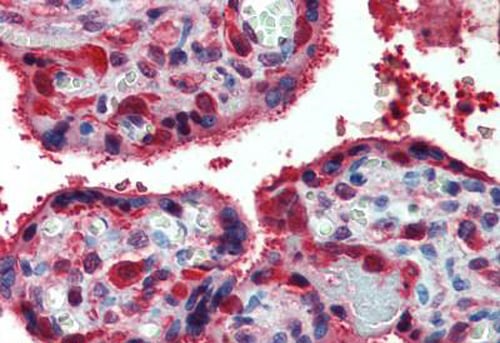
Anti-PRDX1 / Peroxiredoxin 1 antibody IHC of human placenta. Immunohistochemistry of formalin-fixed, paraffin-embedded tissue after heat-induced antigen retrieval. Antibody concentration 2.5 ug/ml.
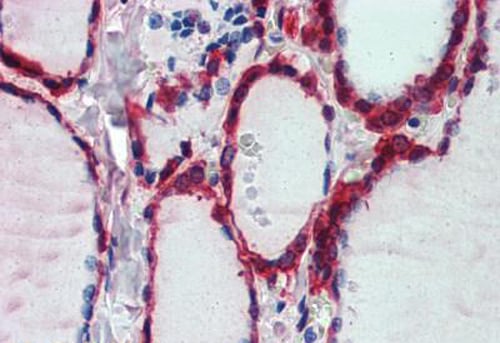
Anti-PRDX1 / Peroxiredoxin 1 antibody IHC of human thyroid. Immunohistochemistry of formalin-fixed, paraffin-embedded tissue after heat-induced antigen retrieval. Antibody concentration 2.5 ug/ml.
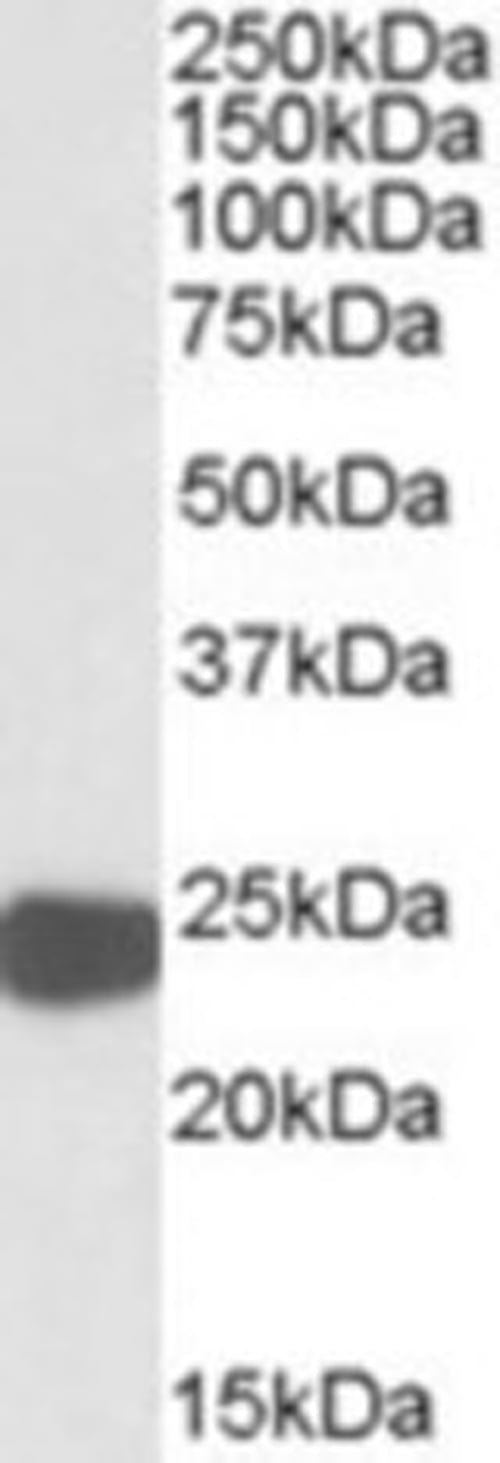
Antibody (0.01 ug/ml) staining of HepG2 lysate (35 ug protein in RIPA buffer). Primary incubation was 1 hour. Detected by chemiluminescence.
PRDX1 Antibody – Goat Polyclonal
For Research Use Only. Not for use in diagnostic procedures. Catalog #: MBS244022MBS244022 is an antibody targeting PRDX1. Also known as Goat Polyclonal to Human PRDX1 / Peroxiredoxin 1. Reactive in Bat, Bovine, Dog, Hamster, Horse, Human, Monkey, Mouse, Pig, Rabbit, Rat. Host: Goat. More details
Product Overview
Online Datasheet in PDFProduct Name
PRDX1 / Peroxiredoxin 1, Polyclonal Antibody
Full Product Name
Goat Polyclonal to Human PRDX1 / Peroxiredoxin 1
Product Gene Name
anti-PRDX1 antibody
Product Synonym Names
Anti-PRDX1 / Peroxiredoxin 1 Antibody (Internal) IHC-plus; PRDX1; MSP23; PAGB; Peroxiredoxin-1; PRX1; NKEFA; Peroxiredoxin 1; Thioredoxin peroxidase 2; NKEF-A; PAG; PRXI; TDPX2; Human PRDX1; Peroxiredoxin 1
Clonality
Polyclonal
Host
Goat
Species Reactivity
Bat, Bovine, Dog, Hamster, Horse, Human, Monkey, Mouse, Pig, Rabbit, Rat
Form/Format
TBS, pH 7.3, 0.02% sodium azide, 0.5% BSA,
Purity/Purification
Purified from goat serum by ammonium sulphate precipitation followed by antigen affinity chromatography using the immunizing peptide.
Concentration
0.5 mg/ml (lot specific)
Specificity
Human PRDX1 / Peroxiredoxin 1. Reported variants represent identical protein (NP_002565.1, NP_859047.1, NP_859048.1).
Preparation and Storage
Aliquot and store at -20°C . Avoid freeze-thaw cycles.
Immunogen Sequence Positions
106-117
OMIM
176763
Target
PRDX1 / Peroxiredoxin 1
Epitope
aa106-117
Immunogen
PRDX1 / Peroxiredoxin 1 antibody was raised against synthetic peptide C-SDPKRTIAQDYG from an internal region of human PRDX1 / Peroxiredoxin 1 (NP_859048.1).
Recommended Immunohistochemistry Protocol
The following protocol is a recommendation only, and MyBioSource, Inc. makes no guarantee of the results:
Tissue Preparation:
Formalin fixation and embedding in paraffin wax.
Tissue Sectioning:
Make 4-um sections and place on pre-cleaned and charged microscope slides. Heat in a tissue-dryingoven for 45 minutes at 60°C.
Deparaffinization:
Wash dry slides in 3 changes of xylene - 5 minutes each @ RT
Rehydration:
Wash slides in 3 changes of 100% alcohol - 3 minutes each @ RT
Wash slides in 2 changes of 95% alcohol - 3 minutes each @ RT
Wash slides in 1 change of 80% alcohol - 3 minutes @ RT
Rinse slides in gentle running distilled water - 5 minutes @ RT
Antigen retrieval:
Steam slides in 0.01 M sodium citrate buffer, pH 6.0 at 99-100°C - 20 minutes
Remove from heat and let stand at room temperature in buffer - 20 minutes
Rinse in 1X TBS with Tween (TBST) -1 minute @ RT
Immunostaining:
(Do not allow tissues to dry at any time during the staining procedure)
Apply a universal protein block - 20 minutes @ RT
Drain protein block from slides, apply diluted primary antibody - 45 minutes @ RT
Rinse slides in 1 X TBST - 1 minute @ RT
Apply a biotinylated secondary antibody appropriate for the primary antibody - 30 minutes @ RT
Rinse slides in 1X TBST -1 minute @ RT
Apply alkaline phosphatase streptavidin - 30 minutes @ RT
Rinse slides in 1X TBST -1 minute @ RT
Apply alkaline phosphatase chromogen substrate - 30 minutes @ RT
Wash slides in distilled water - 1 minute @ RT
Dehydrate:
(This method should only be used if the chromogen substrate is alcohol insoluble (e.g. Vector Red, DAB)
Wash slides in 2 changes of 80% alcohol - 1 minute each @ RT
Wash slides in 2 changes of 95% alcohol - 1 minute each @ RT
Wash slides in 3 changes of 100% alcohol - 1 minute each @ RT
Wash slides in 3 changes of xylene - 1 minute each @ RT
Apply coverslip
Applications Tested/Suitable for anti-PRDX1 antibody
Immunohistochemistry (IHC - Paraffin), Western Blot (WB), ELISA (EIA)
Application Notes for anti-PRDX1 antibody
ELISA (1:32000)
IHC-P (2.5 ug/ml)
WB (0.01 - 0.03 ug/ml)
Peptide Enzyme-Linked Immunosorbent Assay (1:8000)
Usage Summary: Peptide ELISA: antibody detection limit dilution 1:32000. Western Blot: Approx. 23 to 24kD band observed in lysates of cell lines HEK293, A431 and HepG2 (calculated MW of 22.1kD according to NP_859048.1). Recommended concentration: 0.01-0.03 ug/ml.
Other Notes
Small volumes of anti-PRDX1 antibody vial(s) may occasionally become entrapped in the seal of the product vial during shipment and storage. If necessary, briefly centrifuge the vial on a tabletop centrifuge to dislodge any liquid in the container`s cap. Certain products may require to ship with dry ice and additional dry ice fee may apply.
Additional Details
NCBI/Uniprot data below describe general gene information for PRDX1. It may not necessarily be applicable to this product.
NCBI Official Full Name
peroxiredoxin-1
NCBI Official Synonym Full Names
peroxiredoxin 1
NCBI Official Symbol
PRDX1
NCBI Official Synonym Symbols
PAG; PAGA; PAGB; PRX1; PRXI; MSP23; NKEFA; TDPX2; NKEF-A
UniProt Protein Name
Peroxiredoxin-1
UniProt Synonym Protein Names
Natural killer cell-enhancing factor A; NKEF-A; Proliferation-associated gene protein; PAG; Thioredoxin peroxidase 2; Thioredoxin-dependent peroxide reductase 2
Protein Family
Peroxiredoxin
UniProt Gene Name
PRDX1
UniProt Synonym Gene Names
PAGA; PAGB; TDPX2; NKEF-A; PAG
UniProt Entry Name
PRDX1_HUMAN
NCBI Protein Information
peroxiredoxin-1; thioredoxin peroxidase 2; proliferation-associated gene A; natural killer-enhancing factor A; proliferation-associated gene protein; natural killer cell-enhancing factor A; thioredoxin-dependent peroxide reductase 2
NCBI Summary for PRDX1
This gene encodes a member of the peroxiredoxin family of antioxidant enzymes, which reduce hydrogen peroxide and alkyl hydroperoxides. The encoded protein may play an antioxidant protective role in cells, and may contribute to the antiviral activity of CD8(+) T-cells. This protein may have a proliferative effect and play a role in cancer development or progression. Four transcript variants encoding the same protein have been identified for this gene. [provided by RefSeq, Jan 2011]
Show more UniProt Comments for PRDX1
PRDX1: a member of the peroxiredoxin family of antioxidant enzymes, which reduce hydrogen peroxide and alkyl hydroperoxides. Involved in redox regulation of the cell. Reduces peroxides with reducing equivalents provided through the thioredoxin system but not from glutaredoxin. May play an important role in eliminating peroxides generated during metabolism. Might participate in the signaling cascades of growth factors and tumor necrosis factor-alpha by regulating the intracellular concentrations of H(2)O(2). May have a proliferative effect and play a role in cancer development or progression.
Protein type: EC 1.11.1.15; Oxidoreductase; Nuclear receptor co-regulator
Chromosomal Location of Human Ortholog: 1p34.1
Cellular Component: extracellular space; peroxisomal matrix; mitochondrial matrix; cytoplasm; nucleolus; melanosome; nucleus; cytosol
Molecular Function: protein binding; peroxidase activity; protein homodimerization activity; thioredoxin peroxidase activity; heme binding
Biological Process: erythrocyte homeostasis; retinal homeostasis; cell proliferation; regulation of stress-activated MAPK cascade; response to reactive oxygen species; removal of superoxide radicals; hydrogen peroxide catabolic process; natural killer cell mediated cytotoxicity; skeletal development; regulation of NF-kappaB import into nucleus
Show more Protein type: EC 1.11.1.15; Oxidoreductase; Nuclear receptor co-regulator
Chromosomal Location of Human Ortholog: 1p34.1
Cellular Component: extracellular space; peroxisomal matrix; mitochondrial matrix; cytoplasm; nucleolus; melanosome; nucleus; cytosol
Molecular Function: protein binding; peroxidase activity; protein homodimerization activity; thioredoxin peroxidase activity; heme binding
Biological Process: erythrocyte homeostasis; retinal homeostasis; cell proliferation; regulation of stress-activated MAPK cascade; response to reactive oxygen species; removal of superoxide radicals; hydrogen peroxide catabolic process; natural killer cell mediated cytotoxicity; skeletal development; regulation of NF-kappaB import into nucleus
Research Articles on PRDX1
Precautions
All of MyBioSource's Products are for scientific laboratory research purposes and are not for diagnostic, therapeutics, prophylactic or in vivo use. Through your purchase, you expressly represent and warrant to MyBioSource that you will properly test and use any Products purchased from MyBioSource in accordance with industry standards. MyBioSource and its authorized distributors reserve the right to refuse to process any order where we reasonably believe that the intended use will fall outside of our acceptable guidelines.
Disclaimer
While every efforts were made to ensure the accuracy of the information provided in this datasheet, MyBioSource will not be liable for any omissions or errors contained herein. MyBioSource reserves the right to make changes to this datasheet at any time without prior notice.
It is the responsibility of the customer to report product performance issues to MyBioSource within 30 days of receipt of the product. Please visit our Terms & Conditions page for more information.
It is the responsibility of the customer to report product performance issues to MyBioSource within 30 days of receipt of the product. Please visit our Terms & Conditions page for more information.
Product Note
Select online data sheet information is drawn from bioinformatics databases, occasionally resulting in ambiguous or non-relevant product information. It is the responsibility of the customer to review, verify, and evaluate the information to make sure it matches their requirements before purchasing the kit. Our ELISA Kit assays are dynamic research tools and sometimes they may be updated and improved. If the format of this assay is important to you then please request the current manual or contact our technical support team with a presales inquiry before placing an order. We will confirm the current details of the assay. We cannot guarantee the sample manual posted online is the most current manual, it is intended to serve as an example only. Please refer to the instructions For Use provided with the assay kit for precise details.
Product PubMed Publications
Products associated with anti-PRDX1 antibody
| Reference Product | PubMed Publications |
|---|---|
| MYC antibody | >9 publications with PRDX1 and MYC |
| SRXN1 antibody | >6 publications with PRDX1 and SRXN1 |
| TXN antibody | >3 publications with PRDX1 and TXN |
| TLR4 antibody | >2 publications with PRDX1 and TLR4 |
| MAP3K5 antibody | >1 publications with PRDX1 and MAP3K5 |
| UBC antibody | >1 publications with PRDX1 and UBC |
Pathways associated with anti-PRDX1 antibody
| Products by Pathway | Pathway Diagram |
|---|---|
| Androgen Receptor Signaling Pathway antibodies | Androgen Receptor Signaling Pathway Diagram |
| Cellular Responses To Stress Pathway antibodies | Cellular Responses To Stress Pathway Diagram |
| Coregulation Of Androgen Receptor Activity Pathway antibodies | Coregulation Of Androgen Receptor Activity Pathway Diagram |
| Detoxification Of Reactive Oxygen Species Pathway antibodies | Detoxification Of Reactive Oxygen Species Pathway Diagram |
| Peroxisome Pathway antibodies | Peroxisome Pathway Diagram |
| Peroxisome Pathway antibodies | Peroxisome Pathway Diagram |
| Selenium Pathway antibodies | Selenium Pathway Diagram |
Diseases associated with anti-PRDX1 antibody
| Disease Name | Pubmed Publications |
|---|---|
| Carcinoma Antibodies | >33 publications with PRDX1 and Carcinoma |
| Lung Diseases Antibodies | >21 publications with PRDX1 and Lung Diseases |
| Inflammation Antibodies | >16 publications with PRDX1 and Inflammation |
| Liver Diseases Antibodies | >14 publications with PRDX1 and Liver Diseases |
| Lung Neoplasms Antibodies | >14 publications with PRDX1 and Lung Neoplasms |
| Nervous System Diseases Antibodies | >11 publications with PRDX1 and Nervous System Diseases |
| Necrosis Antibodies | >10 publications with PRDX1 and Necrosis |
| Disease Models, Animal Antibodies | >10 publications with PRDX1 and Disease Models, Animal |
| Lung Injury Antibodies | >8 publications with PRDX1 and Lung Injury |
| Breast Neoplasms Antibodies | >8 publications with PRDX1 and Breast Neoplasms |
Organs/Tissues associated with anti-PRDX1 antibody
| Organ/Tissue Name | Pubmed Publications |
|---|---|
| Blood Antibodies | >32 publications with PRDX1 and Blood |
| Lung Antibodies | >27 publications with PRDX1 and Lung |
| Liver Antibodies | >26 publications with PRDX1 and Liver |
| Brain Antibodies | >20 publications with PRDX1 and Brain |
| Vascular Antibodies | >17 publications with PRDX1 and Vascular |
| Muscle Antibodies | >12 publications with PRDX1 and Muscle |
| Nerve Antibodies | >9 publications with PRDX1 and Nerve |
| Kidney Antibodies | >9 publications with PRDX1 and Kidney |
| Heart Antibodies | >7 publications with PRDX1 and Heart |
| Embryonic Tissue Antibodies | >6 publications with PRDX1 and Embryonic Tissue |
Vous serez peut-être également intéressé par les produits suivants :
Référence
Description
Cond.
Prix HT