



Quantibody® Human Cytokine Array 4000 Kit. A combination of Human Inflammation Array Q3, Human Growth Factor Array Q1, Human Chemokine Array Q1, Human Receptor Array Q1, and Human Cytokine Array Q4. Detects 200 Human Inflammatory Factors, Growth Factors, Chemokines, Receptors, and Cytokines. Suitable for all liquid sample types.
High Density
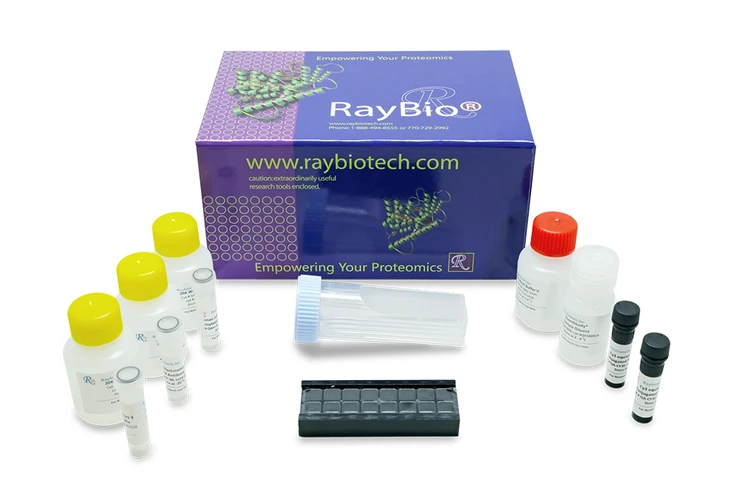
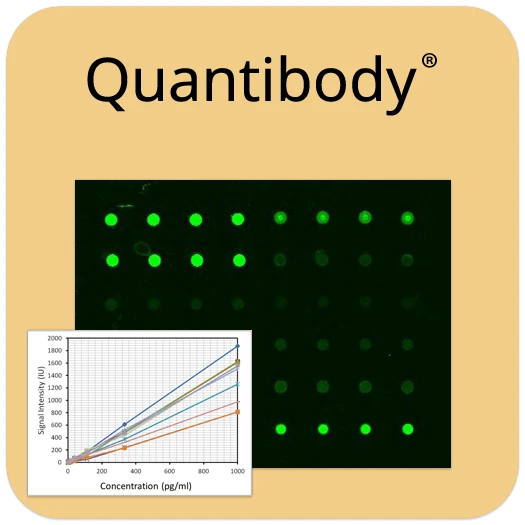
Human Cytokine Array Q4000
Human Cytokine Array Q4000
Contact Us for Bulk Request
Product Description
Specifications
| Size | 8 Sample Kit, 22 Sample Kit, 50 Sample Kit |
| Species | Human |
| Compatible Sample Types | Cell Culture Supernatants, Plasma, Serum, Tissue Lysates, Cell Lysates |
| Quantitative/Semi-Quantitative | Quantitative |
| Number of Targets Detected | 200 |
| Solid Support | Glass Slide |
| Design Principle | Sandwich-based |
| Method Of Detection | Fluorescence Laser Scanner |
| Research Area | Inflammation, Chemokine Biology |
| Shipping Type | Blue ice |
| Storage | -20°C |
Related Products
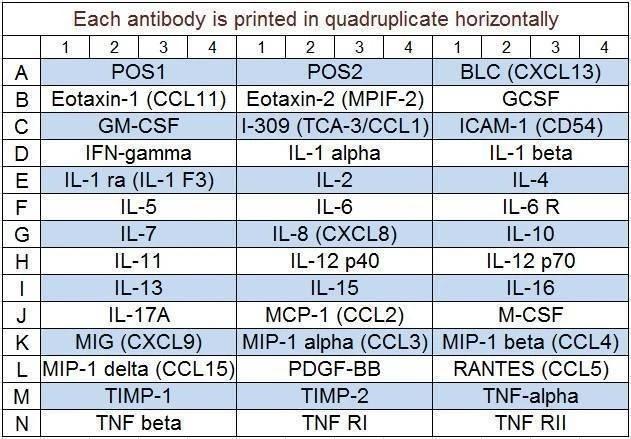
Human Inflammation Array Q3
As low as $840.00
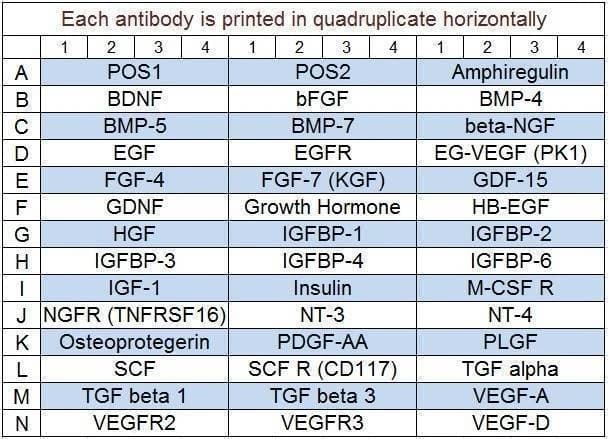
Human Growth Factor Array Q1
As low as $840.00
Human Chemokine Array Q1
As low as $840.00


Product Features
- More cost-effective than traditional ELISA
- High specificity and system reproducibility
- Suitable for diverse sample types
- Low sample volume requirement: 250 µL or less
- Get results same day (6-hour processing time)
- Well-suited for high throughput assays
- Q Analyzer software provides one-step computation
Target Names
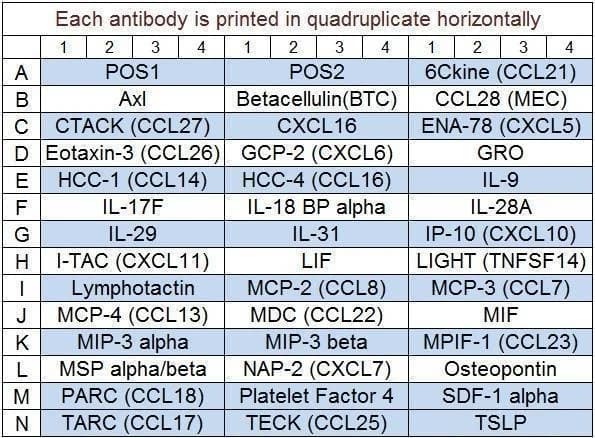
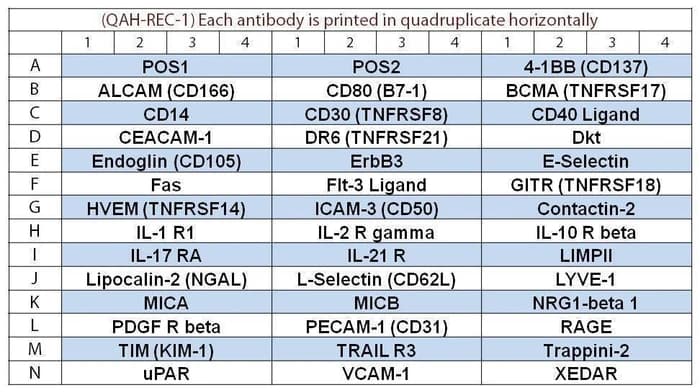
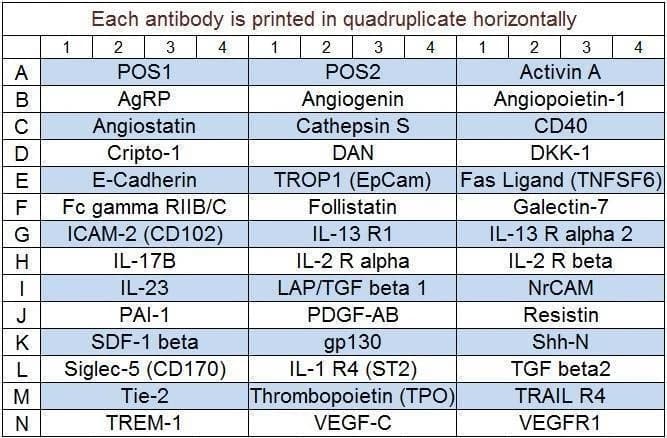
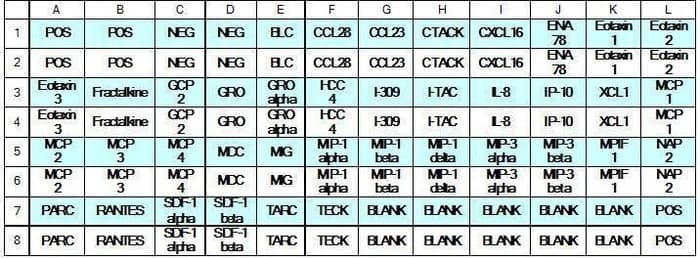
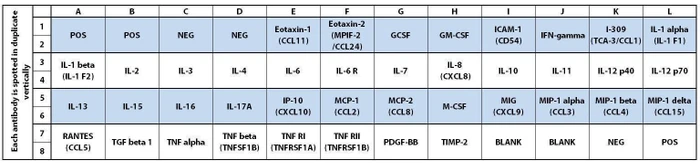
4-1BB (TNFRSF9/CD137), 6Ckine (CCL21), Activin A, AgRP, ALCAM (CD166), Amphiregulin, Angiogenin, Angiopoietin-1, Angiostatin, AXL, BCMA, BDNF, Betacellulin (BTC), beta-NGF, bFGF, BLC (CXCL13), BMP-4, BMP-5, BMP-7, Cathepsin S, CCL28 (MEC), CD14, CD30 (TNFRSF8), CD40 (TNFRSF5), CD40 Ligand (TNFSF5), CD80 (B7-1), CEACAM-1, Contactin-2 (TAG1), Cripto-1, CTACK (CCL27), CXCL16, DAN, DKK-1, DR6 (TNFRSF21), Dtk, E-Cadherin, EGF, EGFR, EG-VEGF (PK1), ENA-78 (CXCL5), Endoglin (CD105), Eotaxin-1 (CCL11), Eotaxin-2 (MPIF-2/CCL24), Eotaxin-3 (CCL26), ErbB3, E-Selectin, Fas (TNFRSF6/Apo-1), Fas Ligand (TNFSF6), Fc gamma RIIB/C (CD32B/C), FGF-4, FGF-7 (KGF), Flt-3 Ligand, Follistatin, Galectin-7, GCP-2 (CXCL6), GCSF, GDF-15, GDNF, GITR (TNFRSF18), GM-CSF, gp130 (sgp130), GRO alpha/beta/gamma, Growth Hormone, HB-EGF, HCC-1 (CCL14), HCC-4 (CCL16), HGF, HVEM (TNFRSF14), I-309 (TCA-3/CCL1), ICAM-1 (CD54), ICAM-2 (CD102), ICAM-3 (CD50), IFN-gamma, IGF-1, IGFBP-1, IGFBP-2, IGFBP-3, IGFBP-4, IGFBP-6, IL-1 alpha (IL-1 F1), IL-1 beta (IL-1 F2), IL-1 R1, IL-1 R4 (ST2), IL-1 Ra (IL-1 F3), IL-10, IL-10 R beta, IL-11, IL-12 p40, IL-12 p70, IL-13, IL-13 R alpha 1 (IL-13 R1), IL-13 R alpha 2, IL-15, IL-16, IL-17 RA, IL-17A, IL-17B, IL-17F, IL-18 BP alpha, IL-2, IL-2 R alpha, IL-2 R beta (CD122), IL-2 R gamma (Common gamma Chain), IL-21 R, IL-23, IL-28A (IFN-lambda 2), IL-29 (IFN-lambda 1), IL-31, IL-4, IL-5, IL-6, IL-6 R, IL-7, IL-8 (CXCL8), IL-9, Insulin, IP-10 (CXCL10), I-TAC (CXCL11), LAP/TGF beta 1 (TGF beta 1), LIF, LIGHT (TNFSF14), LIMPII, Lipocalin-2 (NGAL), L-Selectin (CD62L), Lymphotactin (XCL1), LYVE-1, MCP-1 (CCL2), MCP-2 (CCL8), MCP-3 (MARC/CCL7), MCP-4 (CCL13), M-CSF, M-CSF R, MDC (CCL22), MICA, MICB, MIF, MIG (CXCL9), MIP-1 alpha (CCL3), MIP-1 beta (CCL4), MIP-1 delta (CCL15), MIP-3 alpha (CCL20), MIP-3 beta (CCL19), MPIF-1 (CCL23), MSP alpha/beta, NAP-2 (PPBP/CXCL7), NGFR (TNFRSF16), NrCAM, NRG1-beta 1 (HRG1-beta 1), NT-3, NT-4, Osteopontin (SPP1), Osteoprotegerin (TNFRSF11B), PAI-1, PARC (CCL18), PDGF R beta, PDGF-AA, PDGF-AB, PDGF-BB, PECAM-1, Platelet Factor 4 (CXCL4), PLGF, RAGE, RANTES (CCL5), Resistin, SCF, SCF R (CD117/c-kit), SDF-1 alpha (CXCL12 alpha), SDF-1 beta (CXCL12 beta), Siglec-5 (CD170), Sonic Hedgehog N-Terminal (Shh-N), TARC (CCL17), TECK (CCL25), TGF alpha, TGF beta 1, TGF beta 2, TGF beta 3, Thrombopoietin (TPO), Tie-2, TIM-1 (KIM-1), TIMP-1, TIMP-2, TNF alpha, TNF beta (TNFSF1B), TNF RI (TNFRSF1A), TNF RII (TNFRSF1B), TRAIL R3 (TNFRSF10C), TRAIL R4 (TNFRSF10D), Trappin-2, TREM-1, TROP1 (EpCAM), TSLP, uPAR, VCAM-1 (CD106), VEGF-A, VEGF-C, VEGF-D, VEGFR1, VEGFR2, VEGFR3, XEDARApplication Notes
Suggested Application
- Multiplexed Protein Detection
- Biomarker Screening
- Identifying Key Factors
- Confirming Biological Process
- Biomarker Validation
- Validation of Antibody Array Results
- Quantitative Protein Detection
- Establishing Normal Range
Kit Components
- Human Cytokine Array Q4000 Slide(s)
- Blocking Buffer
- Wash Buffer 1
- Wash Buffer 2
- Lyophilized Standard Mix
- Biotinylated Detection Antibody Cocktail
- Streptavidin-Conjugated Fluor
- Slide Washer/Dryer
- Adhesive Plastic Strips
- Manual
Other Materials Required
- Distilled or deionized water
- Small plastic boxes or containers
- Pipettors, pipette tips and other common lab consumables
- Orbital shaker or oscillating rocker
- Aluminum foil
- Gene microarray scanner or similar laser fluorescence scanner
View Compatible Laser Scanners
Don't have a compatible scanner? RayBiotech now offers FREE scanning service for all RayBio glass slide antibody arrays! Learn More
Protocol Outline
- Dry the glass slide
- Prepare Standards
- Block array surface
- Incubate with Samples and Standards
- Incubate with Biotinylated Detection Antibody Cocktail
- Incubate with Streptavidin-Conjugated Fluor
- Disassemble the glass slide
- Scan with a gene microarray laser scanner
- Perform densitometry and analysis
Storage/Stability
For best results, ore the entire kit frozen at -20°C upon arrival. Stored frozen, the kit will be stable for at least 6 months which is the duration of the product warranty period. Once thawed, store array slide(s), standard mix, detection antibody cocktail, and Cy3-Conjugated Streptavidin at -20°C and all other reagents undiluted at 4°C for no more than 3 months.
"documents
GAL (GAL-QAH-INF-3.gal)
GAL (GAL-QAH-GF-1.gal)
GAL (GAL-QAH-CHE-1.gal)
GAL (GAL-QAH-REC-1.gal)
GAL (GAL-QAH-CYT-4.gal)
Excel (QAH-INF-3_Analysis_Tool.xls)
Excel (QAH-GF-1_Analysis_Tool.xls)
Excel (QAH-CHE-1_Analysis_Tool.xls)
Excel (QAH-REC-1_Analysis_Tool.xls)
Excel (QAH-CYT-4_Analysis_Tool.xls)
citations
Endothelial progenitor cell-derived conditioned medium mitigates chronic cerebral ischemic injury through macrophage migration inhibitory factor-activated AKT pathway
- Species:
- Human
- Sample Type:
- Cell Culture Supernatant (endothelial progenitor cell-derived conditioned medium EPC-CM)
- Year:
- 2024
- Journal Name:
- Stem Cell Research & Therapy
- PubMed ID:
- 39543689
Development of a High-throughput Morphological Assay for Evaluating Mesenchymal Stromal Cell-derived Extracellular Vesicle Modulation of Brain Pericyte Secretory Phenotype
- Species:
- Human
- Sample Type:
- Cell Culture Supernatant (pericyte conditioned medium)
- Year:
- 2025
- Journal Name:
- Stem Cell Reviews and Reports
- PubMed ID:
- 40789790
SEMA7A-mediated juxtacrine stimulation of IGFBP-3 upregulates IL-17RB at pancreatic cancer invasive front
- Species:
- Human
- Sample Type:
- Cell Culture Supernatant (conditioned medium from BxPC-3, PSC co-cultures)
- Year:
- 2024
- Journal Name:
- Cancer Gene Therapy
- PubMed ID:
- 39448803
Microglia morphological response to mesenchymal stromal cell extracellular vesicles demonstrates EV therapeutic potential for modulating neuroinflammation
- Species:
- Human
- Sample Type:
- Other / Unspecified (spent media from C20 microglia)
- Year:
- 2024
- Journal Name:
- Journal of Biological Engineering
- PubMed ID:
- 39420399
Secretome and extracellular vesicle signatures in bone marrow-derived mesenchymal stromal cells after expansion in standard and next-generation media
- Species:
- Human
- Sample Type:
- Cell Culture Supernatant (pooled secretomes from bone marrow-derived MSCs)
- Year:
- 2025
- Journal Name:
- Extracellular vesicles and circulating nucleic acids
- PubMed ID:
- 40852593
Side-to-side characterisation of cellular content, soluble factors and in vitro potential on chondrocytes for bone marrow aspirate concentrate and adipose-derived stromal vascular fraction
- Species:
- Human
- Sample Type:
- Other Body Fluid (processed SVF stromal vascular fraction, processed BMAC bone marrow aspirate…)
- Year:
- 2025
- Journal Name:
- Journal of experimental orthopaedics
- PubMed ID:
- 40357029
Substrate topographies modulate the secretory activity of human bone marrow mesenchymal stem cells
- Species:
- Human
- Sample Type:
- bone marrow-derived Mesenchymal stem cell
- Year:
- 2023
- Journal Name:
- Stem Cell Research & Therapy
Paraquat exposure induces Parkinsonism by altering lipid profile and evoking neuroinflammation in the midbrain
- Species:
- Human
- Sample Type:
- Serum
- Year:
- 2022
- Journal Name:
- Environment International
Cell culture expansion media choice affects secretory, protective and immuno-modulatory features of adipose mesenchymal stromal cell-derived secretomes for orthopaedic applications
- Species:
- Human
- Sample Type:
- Cell Culture Supernatant (secretomes of adipose mesenchymal stromal cells ASCs)
- Year:
- 2025
- Journal Name:
- Regenerative Therapy
- PubMed ID:
- 39980717
A Biologic and Physical Characterization of an Injectable Amniotic Membrane Designed for Treating Diabetic Foot Ulcers
- Species:
- Human
- Sample Type:
- Other Body Fluid (IAM samples injectable amniotic membrane eluates, product vehicle agents)
- Year:
- 2024
- Journal Name:
- Bioengineering (Basel, Switzerland)
- PubMed ID:
- 39593747
