

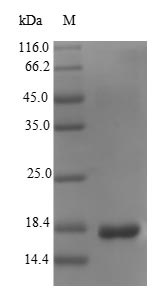
K99 Fimbrial Protein, Recombinant, E. coli, aa23-181 (fanC)

Référence 405969-100ug
Conditionnement : 100ug
Marque : US Biological
Contactez votre distributeur local :
 Téléphone : +1 850 650 7790
405969 K99 Fimbrial Protein, Recombinant, E. coli, aa23-181 (fanC)
Swiss Prot
P18103Grade
PurifiedShipping Temp
Blue IceStorage Temp
-20°CFimbriae (also called pili), polar filaments radiating from the surface of the bacterium to a length of 0.5-1.5 micrometers and numbering 100-300 per cell, enable bacteria to colonize the epithelium of specific host organs. FanC is the main component of the K99 fimbriae.
Source:
Recombinant protein corresponding to aa23-181 from E. coli K99 fimbrial protein, expressed in E. coli.
Molecular Weight:
~16.5kD
AA Sequence:
NTGTINFNGKITSATCTIDPEVNGNRTSTIDLGQAAISGHGTVVDFKLKPAPGSNDCLAKTNARIDWSGSMNSLGFNNTASGNTAAKGYHMTLRATNVGNGSGGANINTSFTTAEYTHTSAIQSFNYSAQLKKDDRAPSNGGYKAGVFTTSASFLVTYM
Storage and Stability:
Lyophilized and reconstituted products are stable for 6 months after receipt at -20°C. Reconstitute with sterile ddH2O. Aliquot to avoid repeated freezing and thawing. Store at -20°C. For maximum recovery of product, centrifuge the original vial after thawing and prior to removing the cap. Further dilutions can be made in assay buffer.