Biovalley > LDLRAP1 Detection Antibody
LDLRAP1 Detection Antibody

Référence OAOA22036
Conditionnement : 50µg
Contactez votre distributeur local :

Téléphone : +1 850 650 7790
Marque : Aviva Systems Biology
Contactez votre distributeur local :
Téléphone : +1 850 650 7790
Bulk
Order
Order
Aviva's
Satisfaction
Guarantee
Satisfaction
Guarantee
Contact Us:
- Toll Free: 888-880-0001
- Phone: 858-552-6979
- Email: info@avivasysbio.com
Shipping Info:
- : Antibody & Protein in US
- + /Kit in US
- Contact us for international orders.
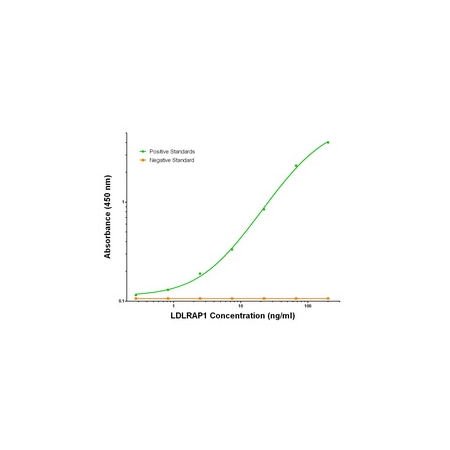
LDLRAP1 Detection Antibody : Biotin (OAOA22036)
| Datasheets/Manuals | Printable datasheet for LDLRAP1 Detection Antibody : Biotin (OAOA22036) |
|---|
| Predicted Species Reactivity | Human|Mouse|Rat |
|---|---|
| Product Format | Stored in PBS (pH 7.4) with 0.05% sodium azide, 10mg/ml BSA, 50% glycerol |
| Clonality | Monoclonal |
| Clone | OTI5A12 |
| Isotype | IgG1 |
| Host | Mouse |
| Conjugation | Biotin |
| Application | ELISA|MlpxA |
| Additional Information | Matched ELISA Pair: OAOA21569 |
| Reconstitution and Storage | -20°C |
| Immunogen | Full length human recombinant protein of human LDLRAP1 (NM_015627) produced in HEK293T cell. |
| Concentration | 0.5 mg/ml |
| Dilution | 1:250 - 1:1000 |
| Description | LDLRAP1 biotinylated mouse monoclonal detection antibody, validated for Luminex assays |
| Gene Symbol | LDLRAP1 |
|---|---|
| Gene Full Name | low density lipoprotein receptor adaptor protein 1 |
| Alias Symbols | ARH, ARH1, ARH2, autosomal recessive hypercholesterolemia protein, FHCB1, FHCB2, FHCL4, LDL receptor adaptor protein, low density lipoprotein receptor adapter protein 1. |
| NCBI Gene Id | 26119 |
| Protein Name | Homo sapiens low density lipoprotein receptor adaptor protein 1 (LDLRAP1), mRNA|Low density lipoprotein receptor adapter protein 1 |
| Description of Target | Adapter protein (clathrin-associated sorting protein (CLASP)) required for efficient endocytosis of the LDL receptor (LDLR) in polarized cells such as hepatocytes and lymphocytes, but not in non-polarized cells (fibroblasts). May be required for LDL binding and internalization but not for receptor clustering in coated pits. May facilitate the endocytocis of LDLR and LDLR-LDL complexes from coated pits by stabilizing the interaction between the receptor and the structural components of the pits. May also be involved in the internalization of other LDLR family members. Binds to phosphoinositides, which regulate clathrin bud assembly at the cell surface. Required for trafficking of LRP2 to the endocytic recycling compartment which is necessary for LRP2 proteolysis, releasing a tail fragment which translocates to the nucleus and mediates transcriptional repression (By similarity). |
| Uniprot ID | Q5SW96 |
| Protein Accession # | NP_056442 |
| Nucleotide Accession # | https://www.ncbi.nlm.nih.gov/nuccore/NM_015627 |