



Recombinant Dog TNF ALPHA
Recombinant Dog TNF ALPHA
Contact Us for Bulk Request
Product Description
Specifications
| Size | 20 µg |
| Species | Canine (dog) |
| Protein Name / Synonyms | TNF ALPHA, |
| Expression System | E. coli |
| Purity | >95% by SDS PAGE analysis |
| Molecular Weight (kDa) | 17.3kD |
| Format | Purified Recombinant Protein - lyophilized |
| Preservative | None present |
| Recommended Applications | Functional Assays |
| Endotoxin Level | <1.1EU/ug |
| Shipping Type | Ambient temperature |
| Storage | -70°C |
Introduction
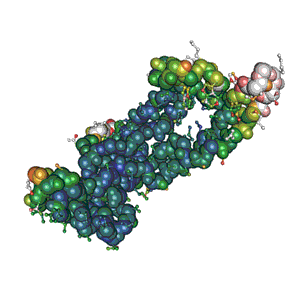
Canine Tumour Necrosis Factor alpha (TNF alpha) is produced by a range of cells, including macrophages and monocytes and is an important mediator of the canine inflammatory response.
129-20124 has an ED50 of 10pg/ml, determined by measuring the cytolytic effect of recombinant canine TNF alpha on murine WEHI-13VAR-164 cells in the presence of Actinomycin D.
129-20124 has an ED50 of 10pg/ml, determined by measuring the cytolytic effect of recombinant canine TNF alpha on murine WEHI-13VAR-164 cells in the presence of Actinomycin D.
Specifications
Size
20 ug
Assay Buffers
Phosphate buffered saline
Stability & Storage
Storage/Stability
Prior to reconstitution store at +4°C.
Following reconstitution store at -70°C.
Storage in frost-free freezers is not recommended. Avoid repeated freezing and thawing as this may denature the protein. Should this product contain a precipitate we recommend microcentrifugation before use. This protein may be stored for12 months from date of reconstitution.