

SHANK3 Antibody

Référence MBS150144-0,1mg
Conditionnement : 0.1mg
Marque : MyBiosource
Contactez votre distributeur local :

Téléphone : +1 850 650 7790
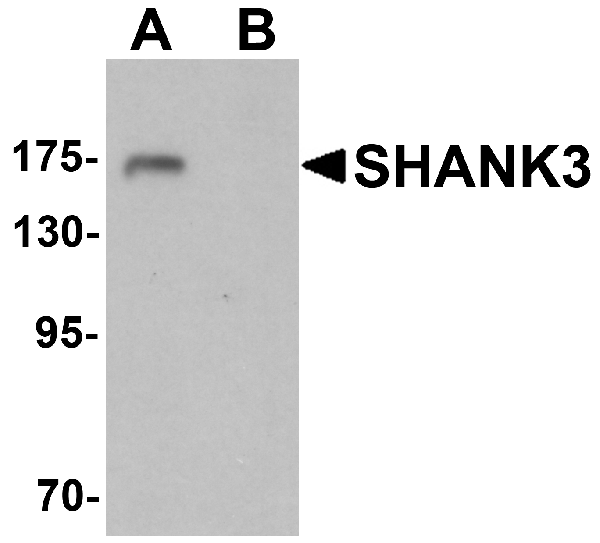
Western blot analysis of SHANK3 in 3T3 cell lysate with SHANK3 antibody at 1 μg/ml in (A) the absence and (B) the presence of blocking peptide.
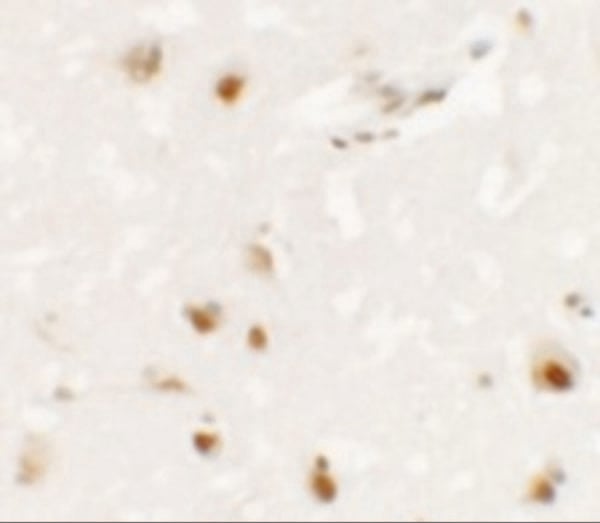
Immunohistochemistry of SHANK3 in human brain tissue with SHANK3 antibody at 2.5 μg/mL.
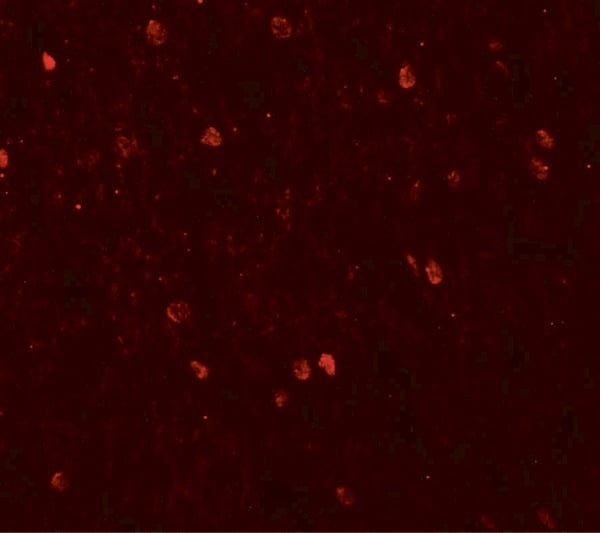
Immunofluorescence of SHANK3 in human brain tissue with SHANK3 antibody at 20 μg/mL.
SHANK3 Antibody – Rabbit Polyclonal
For Research Use Only. Not for use in diagnostic procedures. Catalog #: MBS150144SHANK3 Antibody: SH3 and multiple ankyrin repeat domains 3 (SHANK3), a member of the Shank gene family, plays a role in synapse formation and dendritic spine maturation. Shank proteins (Shank 1-3) containing PDZ domains are scaffold proteins of the… More details
Product Overview
Online Datasheet in PDFProduct Name
SHANK3, Polyclonal Antibody
Full Product Name
SHANK3 Antibody
Product Gene Name
anti-SHANK3 antibody
Product Synonym Names
SHANK3; PSAP2; SCZD15; PROSAP2; SPANK-2; DEL22q13.3; KIAA1650; PSAP2; SH3 and multiple ankyrin repeat domains protein 3; Proline-rich synapse-associated protein 2; Shank3; SH3 and multiple ankyrin repeat domains 3
Clonality
Polyclonal
Isotype
IgG
Host
Rabbit
Species Reactivity
Human, Mouse
Form/Format
Liquid; SHANK3 Antibody is supplied in PBS containing 0.02% sodium azide.
Purity/Purification
SHANK3 Antibody is affinity chromatography purified via peptide column.
Concentration
1 mg/mL (lot specific)
Specificity
At least three alternatively spliced transcript isoforms of SHANK3 are known to exist.
Preparation and Storage
SHANK3 antibody can be stored at 4°C for three months and -20°C, stable for up to one year. As with all antibodies care should be taken to avoid repeated freeze thaw cycles. Antibodies should not be exposed to prolonged high temperatures.
Antibody/Peptide Pairs
SHANK3 peptide (MBS152000) is used for blocking the activity of SHANK3 antibody (MBS150144)
OMIM
phenotype 613950
Conjugate
Unconjugated
Immunogen
SHANK3 antibody was raised against a 19 amino acid synthetic peptide near the center of human SHANK3.
Immunogen is located withing amino avids 890-940 of SHANK3
Immunogen is located withing amino avids 890-940 of SHANK3
Positive Control
1) Cat. No. MBS151593 - 3T3 (NIH) Cell Lysate
2) Cat. No. MBS154323 - Human Brain Tissue Slide
2) Cat. No. MBS154323 - Human Brain Tissue Slide
Note
Optimal dilutions for each application to be determined by the researcher.
Applications Tested/Suitable for anti-SHANK3 antibody
ELISA (EIA), Western Blot (WB), Immunohistochemistry (IHC-P), Immunofluorescence (IF)
Application Notes for anti-SHANK3 antibody
SHANK3 antibody can be used for detection of SHANK3 by Western blot at 1 ug/mL.
Antibody can also be used for immunohistochemistry starting at 2.5 ug/mL.
For immunofluorescence start at 2.5 ug/mL.
Antibody validated: Western Blot in mouse samples; Immunohistochemistry in human samples and Immunofluorescence in human samples.
All other applications and species not yet tested.
Antibody can also be used for immunohistochemistry starting at 2.5 ug/mL.
For immunofluorescence start at 2.5 ug/mL.
Antibody validated: Western Blot in mouse samples; Immunohistochemistry in human samples and Immunofluorescence in human samples.
All other applications and species not yet tested.
Other Notes
Small volumes of anti-SHANK3 antibody vial(s) may occasionally become entrapped in the seal of the product vial during shipment and storage. If necessary, briefly centrifuge the vial on a tabletop centrifuge to dislodge any liquid in the container`s cap. Certain products may require to ship with dry ice and additional dry ice fee may apply.
Searchable Terms for SHANK3 purchase
MBS150144 is an antibody targeting SHANK3. Also known as SHANK3 Antibody. Reactive in Human, Mouse. Host: Rabbit.
Additional Details
NCBI/Uniprot data below describe general gene information for SHANK3. It may not necessarily be applicable to this product.
UniProt Primary Accession #
UniProt Related Accession #
GenBank Nucleotide #
NCBI Official Synonym Full Names
SH3 and multiple ankyrin repeat domains 3
NCBI Official Symbol
SHANK3
NCBI Official Synonym Symbols
PSAP2; SCZD15; PROSAP2; SPANK-2; DEL22q13.3
UniProt Protein Name
SH3 and multiple ankyrin repeat domains protein 3
UniProt Synonym Protein Names
Proline-rich synapse-associated protein 2; ProSAP2
Protein Family
SH3 and multiple ankyrin repeat domains protein
UniProt Gene Name
SHANK3
UniProt Synonym Gene Names
KIAA1650; PROSAP2; PSAP2; Shank3; ProSAP2
UniProt Entry Name
SHAN3_HUMAN
NCBI Protein Information
SH3 and multiple ankyrin repeat domains protein 3
NCBI Summary for SHANK3
This gene is a member of the Shank gene family. Shank proteins are multidomain scaffold proteins of the postsynaptic density that connect neurotransmitter receptors, ion channels, and other membrane proteins to the actin cytoskeleton and G-protein-coupled signaling pathways. Shank proteins also play a role in synapse formation and dendritic spine maturation. Mutations in this gene are a cause of autism spectrum disorder (ASD), which is characterized by impairments in social interaction and communication, and restricted behavioral patterns and interests. Mutations in this gene also cause schizophrenia type 15, and are a major causative factor in the neurological symptoms of 22q13.3 deletion syndrome, which is also known as Phelan-McDermid syndrome. Additional isoforms have been described for this gene but they have not yet been experimentally verified. [provided by RefSeq, Mar 2012]
Show more UniProt Comments for SHANK3
SHANK3: Seems to be an adapter protein in the postsynaptic density (PSD) of excitatory synapses that interconnects receptors of the postsynaptic membrane including NMDA-type and metabotropic glutamate receptors via complexes with GKAP/PSD-95 and Homer, respectively, and the actin-based cytoskeleton. May play a role in the structural and functional organization of the dendritic spine and synaptic junction. A chromosomal aberration involving SHANK3 is found in patients with chromosome 22q13.3 deletion syndrome. Translocation t(12;22)(q24.1;q13.3) with APPL2/DIP13B. Defects in SHANK3 are associated with autism spectrum disorders (ASD). ASD are characterized by impairments in reciprocal social interaction and communication as well as restricted and stereotyped patterns of interest and activities. ASD include forms with moderate to severe cognitive impairment and milder forms with higher cognitive ability (Asperger syndrome). Defects in SHANK3 are the cause of schizophrenia type 15 (SCZD15). SCZD15 is a complex, multifactorial psychotic disorder or group of disorders characterized by disturbances in the form and content of thought (e.g. delusions, hallucinations), in mood (e.g. inappropriate affect), in sense of self and relationship to the external world (e.g. loss of ego boundaries, withdrawal), and in behavior (e.g bizarre or apparently purposeless behavior). Although it affects emotions, it is distinguished from mood disorders in which such disturbances are primary. Similarly, there may be mild impairment of cognitive function, and it is distinguished from the dementias in which disturbed cognitive function is considered primary. Some patients manifest schizophrenic as well as bipolar disorder symptoms and are often given the diagnosis of schizoaffective disorder. 2 isoforms of the human protein are produced by alternative splicing.
Protein type: Adaptor/scaffold
Chromosomal Location of Human Ortholog: 22q13.3
Cellular Component: postsynaptic membrane; neuron projection; cytoplasm; plasma membrane; dendritic spine; cell junction
Molecular Function: protein C-terminus binding; identical protein binding; ionotropic glutamate receptor binding; protein binding; zinc ion binding; GKAP/Homer scaffold activity; actin binding; SH3 domain binding
Biological Process: negative regulation of actin filament bundle formation; MAPKKK cascade; vocal learning; social behavior; learning; positive regulation of synaptic transmission, glutamatergic; positive regulation of long-term neuronal synaptic plasticity; memory; positive regulation of synapse structural plasticity; synaptogenesis; striatal medium spiny neuron differentiation; adult behavior; brain morphogenesis; negative regulation of cell volume
Disease: Schizophrenia 15; Phelan-mcdermid Syndrome
Show more Protein type: Adaptor/scaffold
Chromosomal Location of Human Ortholog: 22q13.3
Cellular Component: postsynaptic membrane; neuron projection; cytoplasm; plasma membrane; dendritic spine; cell junction
Molecular Function: protein C-terminus binding; identical protein binding; ionotropic glutamate receptor binding; protein binding; zinc ion binding; GKAP/Homer scaffold activity; actin binding; SH3 domain binding
Biological Process: negative regulation of actin filament bundle formation; MAPKKK cascade; vocal learning; social behavior; learning; positive regulation of synaptic transmission, glutamatergic; positive regulation of long-term neuronal synaptic plasticity; memory; positive regulation of synapse structural plasticity; synaptogenesis; striatal medium spiny neuron differentiation; adult behavior; brain morphogenesis; negative regulation of cell volume
Disease: Schizophrenia 15; Phelan-mcdermid Syndrome
Precautions
All of MyBioSource's Products are for scientific laboratory research purposes and are not for diagnostic, therapeutics, prophylactic or in vivo use. Through your purchase, you expressly represent and warrant to MyBioSource that you will properly test and use any Products purchased from MyBioSource in accordance with industry standards. MyBioSource and its authorized distributors reserve the right to refuse to process any order where we reasonably believe that the intended use will fall outside of our acceptable guidelines.
Disclaimer
While every efforts were made to ensure the accuracy of the information provided in this datasheet, MyBioSource will not be liable for any omissions or errors contained herein. MyBioSource reserves the right to make changes to this datasheet at any time without prior notice.
It is the responsibility of the customer to report product performance issues to MyBioSource within 30 days of receipt of the product. Please visit our Terms & Conditions page for more information.
It is the responsibility of the customer to report product performance issues to MyBioSource within 30 days of receipt of the product. Please visit our Terms & Conditions page for more information.
Product Note
Select online data sheet information is drawn from bioinformatics databases, occasionally resulting in ambiguous or non-relevant product information. It is the responsibility of the customer to review, verify, and evaluate the information to make sure it matches their requirements before purchasing the kit. Our ELISA Kit assays are dynamic research tools and sometimes they may be updated and improved. If the format of this assay is important to you then please request the current manual or contact our technical support team with a presales inquiry before placing an order. We will confirm the current details of the assay. We cannot guarantee the sample manual posted online is the most current manual, it is intended to serve as an example only. Please refer to the instructions For Use provided with the assay kit for precise details.
Product PubMed Publications
Products associated with anti-SHANK3 antibody
| Reference Product | PubMed Publications |
|---|---|
| GRM5 antibody | >2 publications with SHANK3 and GRM5 |
| ProSAPiP1 antibody | >2 publications with SHANK3 and ProSAPiP1 |
| GDNF antibody | >1 publications with SHANK3 and GDNF |
| GRB2 antibody | >1 publications with SHANK3 and GRB2 |
Pathways associated with anti-SHANK3 antibody
| Products by Pathway | Pathway Diagram |
|---|---|
| Glutamatergic Synapse Pathway antibodies | Glutamatergic Synapse Pathway Diagram |
| Glutamatergic Synapse Pathway antibodies | Glutamatergic Synapse Pathway Diagram |
| Signaling Events Regulated By Ret Tyrosine Kinase Pathway antibodies | Signaling Events Regulated By Ret Tyrosine Kinase Pathway Diagram |
Diseases associated with anti-SHANK3 antibody
| Disease Name | Pubmed Publications |
|---|---|
| Child Development Disorders, Pervasive Antibodies | >63 publications with SHANK3 and Child Development Disorders, Pervasive |
| Autistic Disorder Antibodies | >54 publications with SHANK3 and Autistic Disorder |
| Intellectual Disability Antibodies | >32 publications with SHANK3 and Intellectual Disability |
| Neurobehavioral Manifestations Antibodies | >27 publications with SHANK3 and Neurobehavioral Manifestations |
| Telomeric 22q13 Monosomy Syndrome Antibodies | >17 publications with SHANK3 and Telomeric 22q13 Monosomy Syndrome |
| Developmental Disabilities Antibodies | >14 publications with SHANK3 and Developmental Disabilities |
| Language Development Disorders Antibodies | >14 publications with SHANK3 and Language Development Disorders |
| Disease Models, Animal Antibodies | >12 publications with SHANK3 and Disease Models, Animal |
| Seizures Antibodies | >8 publications with SHANK3 and Seizures |
| Memory Disorders Antibodies | >8 publications with SHANK3 and Memory Disorders |
Organs/Tissues associated with anti-SHANK3 antibody
| Organ/Tissue Name | Pubmed Publications |
|---|---|
| Nerve Antibodies | >140 publications with SHANK3 and Nerve |
| Brain Antibodies | >95 publications with SHANK3 and Brain |
| Embryonic Tissue Antibodies | >7 publications with SHANK3 and Embryonic Tissue |
| Liver Antibodies | >4 publications with SHANK3 and Liver |
| Heart Antibodies | >4 publications with SHANK3 and Heart |
| Kidney Antibodies | >3 publications with SHANK3 and Kidney |
| Eye Antibodies | >3 publications with SHANK3 and Eye |
| Ganglia Antibodies | >1 publications with SHANK3 and Ganglia |
| Stomach Antibodies | >1 publications with SHANK3 and Stomach |
| Connective Tissue Antibodies | >1 publications with SHANK3 and Connective Tissue |
Vous serez peut-être également intéressé par les produits suivants :
Référence
Description
Cond.
Prix HT