
TFRC Antibody - N-terminal region

Référence OASG01347
Conditionnement : 100ul
Marque : Aviva Systems Biology
Contactez votre distributeur local :
 Téléphone : +1 850 650 7790
TFRC Antibody - N-terminal region (OASG01347)
| Datasheets/Manuals | Printable datasheet for anti-TFRC (OASG01347) antibody |
|---|
| Predicted Species Reactivity | Human |
|---|---|
| Product Format | Liquid. PBS containing 50% glycerol, 0.5% BSA and 0.02% sodium azide. |
| Clonality | Polyclonal |
| Isotype | IgG |
| Host | Rabbit |
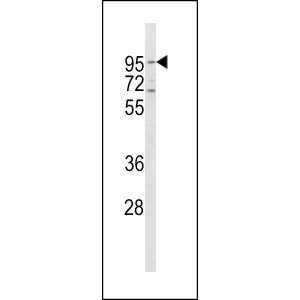
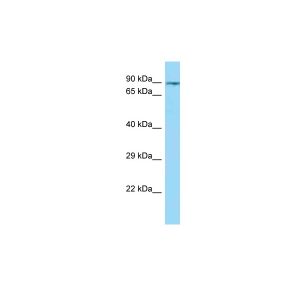
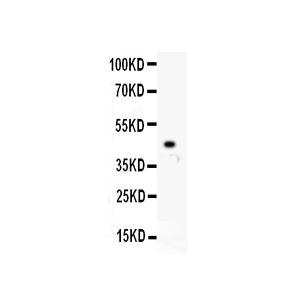
| Application | ELISA, IF, IHC, IP, WB |
| Additional Information | Cellular Localization: Cell membrane Melanosome. Identified by mass spectrometry in melanosome fractions from stage I to stage IV. Transferrin receptor protein 1, serum form: Secreted. |
| Reconstitution and Storage | Store at -20°C. Avoid repeated freeze/thaw cycles. |
| Immunogen | Synthesized peptide derived between 91-140 amino acids from the N-terminal region of human CD71. |
| Purification | The antibody was affinity-purified from rabbit antiserum by affinity-chromatography using epitope-specific immunogen. |
| Concentration | 1 mg/ml |
| Target Post-Translational Modification | N- and O-glycosylated, phosphorylated and palmitoylated. The serum form is only glycosylated. Proteolytically cleaved on Arg-100 to produce the soluble serum form (sTfR).; Palmitoylated on both Cys-62 and Cys-67. Cys-62 seems to be the major site of palmitoylation. |
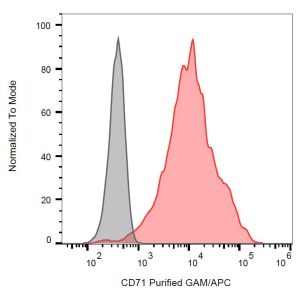
| Specificity | CD71 Polyclonal Antibody detects endogenous levels of CD71 protein. |
| Intended Use | For research use only. |
| Application Info | WB: 1:500~2000 IHC-P: 1:100~300 ELISA: 1:20000 Optimal dilutions should be determined by the end user. |
| Gene Symbol | TFRC |
|---|---|
| Gene Full Name | transferrin receptor |
| Alias Symbols | T9, TR, TFR, p90, CD71, TFR1, TRFR, IMD46 |
| NCBI Gene Id | 7037 |
| Description of Target | Cellular uptake of iron occurs via receptor-mediated endocytosis of ligand-occupied transferrin receptor into specialized endosomes. Endosomal acidification leads to iron release. The apotransferrin-receptor complex is then recycled to the cell surface with a return to neutral pH and the concomitant loss of affinity of apotransferrin for its receptor. Transferrin receptor is necessary for development of erythrocytes and the nervous system . A second ligand, the heditary hemochromatosis protein HFE, competes for binding with transferrin for an overlapping C-terminal binding site. Positively regulates T and B cell proliferation through iron uptake. (Microbial infection) Acts as a receptor for new-world arenaviruses: Guanarito, Junin and Machupo virus. |
| Uniprot ID | P02786 |
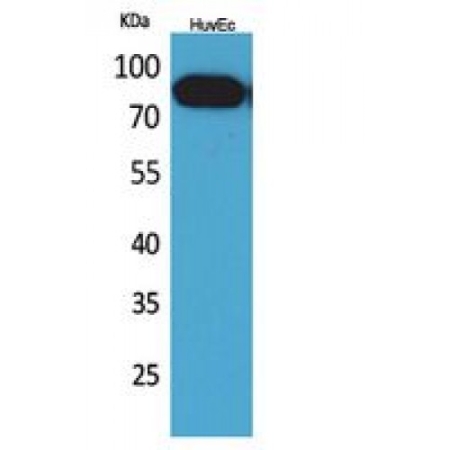
| Molecular Weight | 85 kDa |