
TGFBR1 Antibody (Phospho-S165)

Référence OAAI00768
Conditionnement : 100ug
Marque : Aviva Systems Biology
Contactez votre distributeur local :
 Téléphone : +1 850 650 7790
TGFBR1 Antibody (Phospho-S165) (OAAI00768)
| Datasheets/Manuals | Printable datasheet for TGFBR1 Antibody (Phospho-S165) (OAAI00768) |
|---|
| Publications | Disulfiram Sensitizes a Therapeutic-Resistant Glioblastoma to the TGF-β Receptor Inhibitor A pulsatile release platform based on photo-induced imine-crosslinking hydrogel promotes scarless wound healing Phenotypic characterization of adenomyosis occurring at the inner and outer myometrium |
|---|---|
| Predicted Species Reactivity | Human|Mouse|Rat |
| Product Format | Liquid. This affinity purified antibody is supplied in sterile Tris-buffered saline (pH7.2) containing antibody stabilizer |
| Clonality | Polyclonal |
| Isotype | Rabbit IgG |
| Host | Rabbit |
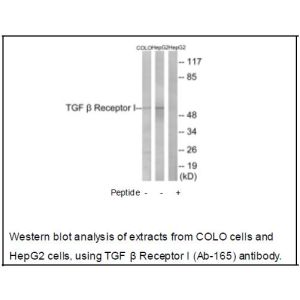
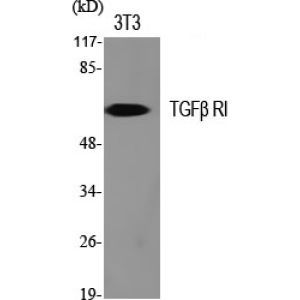
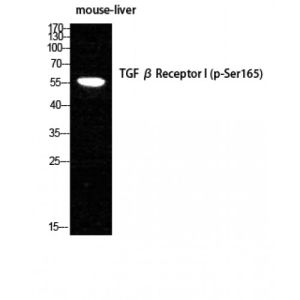
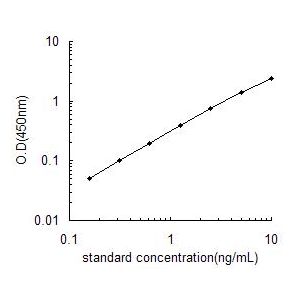
| Application | ELISA, FC, IHC-Fr, IP, WB |
| :: | Positive Control: MCF7 |
| :: | Cellular Location: Membrane/Cytoplasm |
| Reconstitution and Storage | The antibodies are stable for 24 months from date of receipt when stored at -20°C to -70°C. The antibodies can be stored at 2-8°C for three month without detectable loss of activity. Avoid repeated freezing-thawing cycles. |
| Immunogen | A synthetic peptide derived from internal sequence (-EEDP-*S-LDRP) with a phosphorylation site at Serine 165 of mouse TGFbeta receptor type-1. This sequence is also identical within human, rat, mouse, chicken, bovine and dog species. |
| Purification | Affinity Purified |
| Concentration | 0.5 mg/ml |
| Target Post-Translational Modification | Phosphorylated |
| Specificity | This antibody recognizes human protein. The other species are not tested. |
| Application Info | WB: 0.1 - 1 ug/mL ELISA: 0.01 - 0.1 ug/mL IP: 2 - 5 ug/mL IHC: 2 - 10 ug/mL |
| Reference | Wrana,J.L., et al. TGF beta signals throμgh a heteromeric protein kinase receptor Complex. Cell 71 (6), 1003-1014 (1992). Tomoda,T., Kudoh,T., Noma,T., Nakazawa,A., Muramatsu,M. and Arai,K. Molecular cloning of a Mouse counterpart for Human TGF-beta type I receptor. Biochem. Biophys. Res. Commun. 198 (3), 1054-1062 (1994) |
|---|---|
| Gene Symbol | TGFBR1 |
| Gene Full Name | transforming growth factor beta receptor 1 |
| Alias Symbols | AAT5;activin A receptor type II-like kinase, 53kDa;activin A receptor type II-like protein kinase of 53kD;activin receptor-like kinase 5;ACVRLK4;ALK5;ALK-5;ESS1;LDS1;LDS1A;LDS2A;MSSE;mutant transforming growth factor beta receptor I;serine/threonine-protein kinase receptor R4;SKR4;tbetaR-I;TBR-i;TBRI;TGF-beta receptor type-1;TGFR-1;transforming growth factor beta receptor I;transforming growth factor-beta receptor type I. |
| NCBI Gene Id | 7046 |
| Description of Target | Transforming growth factor beta isoforms (TGF-beta1, 2, 3) play vital roles in regulating cellular growth and differentiation, and they signal throμgh a highly restricted subset of receptors known as TGF-beta type I receptor (TbetaR-I) and TGF-beta type II receptor (TbetaR-II). Expression of T beta R-I is more ubiquitous than that of T beta R-II. There was no staining of T beta R-II in the central nervous system, while intense T beta R-I staining was found specifically in nervous tissues. Expression of T beta R-I and T beta R-II was mostly coincident with that of their ligands, sμggesting that TGF-beta s act as multiple mediators during organogenesis. TGF-beta binds with high affinity to its receptor, a transmembrane protein with a cytoplasmic serine/threonine kinase domain, to form a dynamic dimer with phosphorylation in the cytoplasmic Ser/Thr residuals which cause its kinase activity and association with another TGF beta-binding protein, the type I receptor, to signal growth inhibition and early gene responses. |
| Uniprot ID | P36897 |
| Molecular Weight | 55 |