



Total Antioxidant Capacity (TAC) Assay Kit provides a simple, reproducible, and sensitive tool of measuring total antioxidant capacity in cell lysates, plasma, serum, urine, food extracts and other biological liquid samples. Hydrophilic and lipophilic samples are compatible with the assay.
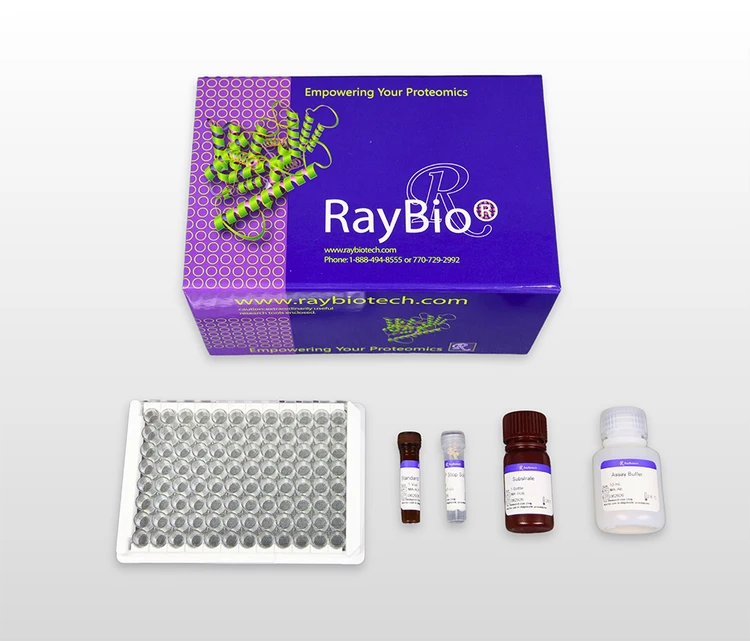
Total Antioxidant Capacity (TAC) Assay Kit (Colorimetric)
Total Antioxidant Capacity (TAC) Assay Kit (Colorimetric)
Contact Us for Bulk Request
Product Description
Specifications
| Size | 1 Plate Kit, 2 Plate Kit, 5 Plate Kit |
| Sensitivity | 3.9 µM |
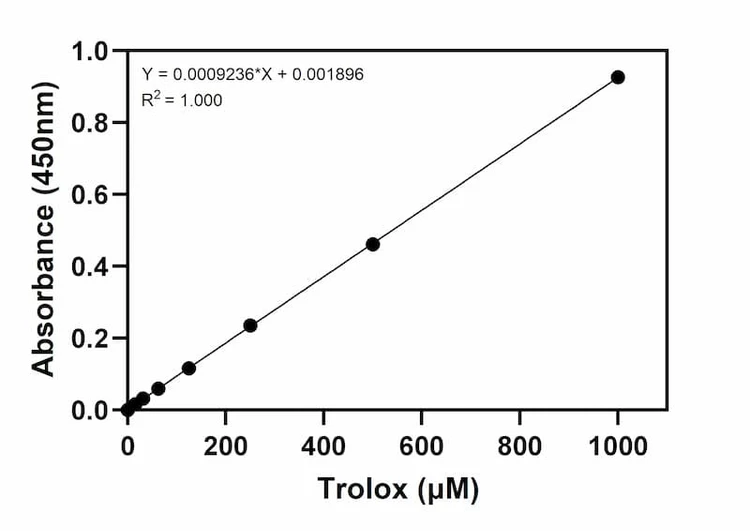
| Detection Range | 15.625 µM - 1,000 µM |
| Compatible Sample Types | Cell Culture Supernatants, Plasma, Serum, Food Products, Cell Lysates, Saliva, Urine |
| Quantitative/Semi-Quantitative | Quantitative |
| Solid Support | 96-well Microplate |
| Method Of Detection | Colorimetric |
| Research Area | Oxidative Stress, Aging |
| Shipping Type | Blue ice |
| Storage | -20°C |
Related Products
Oxidation (Carbonyl) Assay Kit (Colorimetric)
$349.00
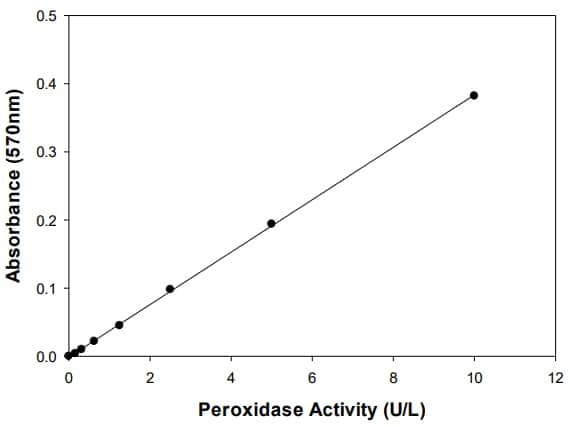
Peroxidase Activity Assay Kit (Colorimetric)
As low as $299.00
Lipid Peroxidation (MDA) Assay Kit
As low as $519.00
Introduction
An antioxidant is a molecule capable of slowing or preventing the oxidation of other molecules. It protects the cells from damages by reactive oxygen species which are produced in oxidation reactions in the cell. Antioxidants can be small molecules such as glutathione, vitamins, or macromolecules such as catalase, glutathione peroxidase. As oxidative stress contributes to the development of many diseases including Alzheimer's disease, Parkinson's disease, diabetes, rheumatoid arthritis and neurodegeneration, the use of antioxidants in pharmacology is intensively studied. Antioxidants are also widely used as dietary supplements and in industry as preservatives in food, cosmetics, rubber and gasoline.
Total Antioxidant Capacity (TAC) Assay Kit provides a simple, reproducible, and sensitive tool of measuring total antioxidant capacity in cell lysates, plasma, serum, urine, food extracts and other biological liquid samples. Hydrophilic and lipophilic samples are compatible with the assay. In this assay, Cu2+ is reduced by antioxidant to Cu+. The resulting Cu+ specifically forms a colored complex with a dye reagent. The color intensity at 450nm is proportional to total antioxidant capacity in the sample. In TAC assays, Copper is advantageous over iron-based antioxidant assays because all classes of antioxidants, including thiols, are detected with marginal radical interference. In addition, the kinetics of the copper-based reaction is also faster than the iron-based reaction, which makes the TAC Assay an ideal tool for estimating reductive or antioxidant capacity efficiently and accurately.
Kit Components
| Component | Size / Description |
|---|---|
| Microplate | A 96-well plate |
| Dilution Buffer | 20 mL |
| TAC Buffer | 10 mL |
| Trolox Standard | 1 vial |
| Copper Ion Reagent | 1 vial |
| Reaction reagent | 1 vial |
Additional Materials Required
- Microplate reader capable of measuring absorbance at 450 nm
- Precision pipettes to deliver 2 μL to 1 mL volumes
- Tubes to prepare sample dilutions
- 15 ml and 50 ml conical tubes
- Methanol or other organic solvent for lipophilic samples
- MilliQ water or another type of double distilled water (ddH2O)
Assay Procedure Summary
- Add 20 µL of the diluted Trolox Standards or samples to the 96-well microtiter plate.
- Add 180 µL of the Working Solution to each well. Carefully shake the plate for a few seconds to mix well.
- Incubate the plate for 30 minutes at room temperature with mixing in the dark.
- Measure the absorbance at 450 nm using a plate reader.
Storage/Stability
The entire kit should be stored below -20°C for up to 6 months from the date of shipment.