

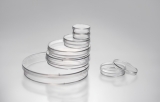
Culture dishes are generally manufactured from optical-grade polymers, most commonly polystyrene, selected for its clarity, chemical inertness, and compatibility with biological systems. The material is produced under quality-controlled conditions to meet biocompatibility standards suitable for direct contact with cells and culture media. The optical properties of the polymer allow reliable microscopic observation, while its mechanical stability supports routine handling and incubation.
Surface Treatments
Surface chemistry is a critical determinant of cell behavior. Non-treated dishes retain a hydrophobic surface that minimizes protein adsorption and cell attachment, making them suitable for suspension cultures. Tissue-culture-treated dishes undergo physical or chemical modification that introduces hydrophilic functional groups, promoting serum-protein adsorption and integrin-mediated adhesion of common adherent cell lines. Advanced superhydrophilic treatments further improve attachment and growth of fastidious cells, primary cells, and transfection cell lines, particularly under low-serum or serum-free conditions.
Design and Handling Features
Culture dishes incorporate design elements that support sterility, gas exchange, and ease of use. Ventilated lids allow air exchange while limiting microbial contamination. Ergonomic features facilitate secure gripping during manipulation, reducing contamination risk. Interlocking or stacking features enable stable arrangement during incubation and storage, while positioning markers assist in locating cells or colonies for microscopic examination.