



Citrate Assay Kit provides a simple, reproducible, and sensitive tool of measuring citrate concentration in plasma, serum, cell lysates, urine, saliva, and other biological liquid samples.
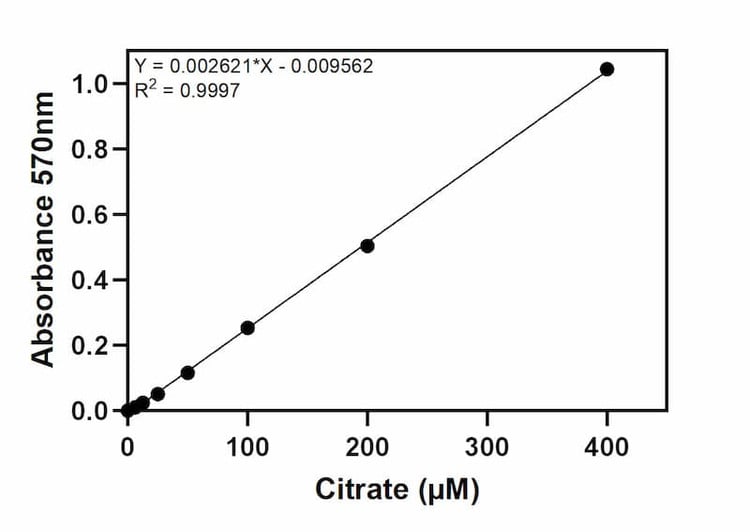

Citrate Assay Kit Standard Curve
Citrate Assay Kit (Colorimetric)
Contact Us for Bulk Request
Product Description
Specifications
| Size | 1 Plate Kit, 2 Plate Kit, 5 Plate Kit |
| Sensitivity | 0.39 µM |
| Detection Range | 6.25 µM - 400 µM |
| Compatible Sample Types | Plasma, Serum, Tissue Lysates, Cell Lysates, Saliva, Urine |
| Quantitative/Semi-Quantitative | Quantitative |
| Solid Support | 96-well Microplate |
| Method Of Detection | Colorimetric |
| Research Area | Energy Metabolism, Mitochondria Function |
| Shipping Type | Blue ice |
| Storage | -20°C |
Related Products
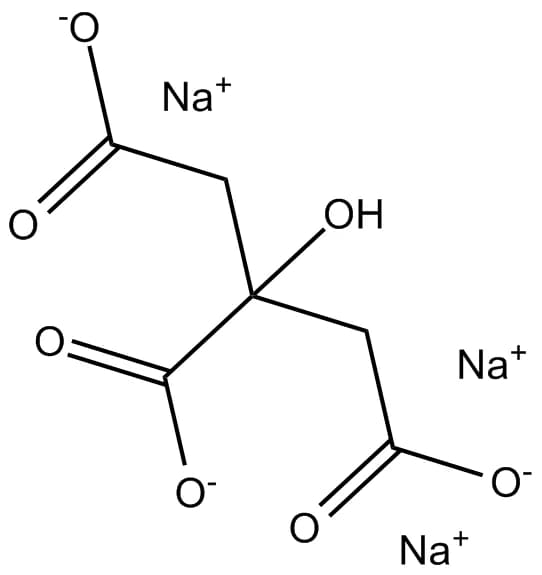
Sodium citrate
$90.00

Human Citrate Synthase ELISA Kit
As low as $679.00
Introduction
Citrate, the anion of citric acid, is an important intermediate in tricarboxylic acid (TCA) cycle where it is converted to acetyl-CoA for fatty acid synthesis and lipid metabolism. Citrate is metabolized and excreted by the kidneys, and during hypocitraturia, crystallization of calcium salt in urine occurs leading to kidney stones. It is also important in food and agriculture industries for quality and control of food processes aiding in preservation and as an antioxidant. Monitoring citrate levels is important for indication of diabetes, osteoporosis, and other conditions.
Citrate Assay Kit provides a simple, reproducible, and sensitive tool of measuring citrate concentration in plasma, serum, cell lysates, urine, saliva, and other biological liquid samples. This assay employs a coupled enzymatic reaction system that combines multiple steps. Initially, citrate lyase catalyzes the conversion of citrate into oxaloacetate which is later converted to pyruvate. Pyruvate is then oxidized with the conversion of the dye into a colored product that is measurable at 570 nm. The optical density measured at 570 nm is directly proportional to the concentration of citrate present in the sample.
Kit Components
| Component | Size / Description |
|---|---|
| Microplate | A 96-well plate |
| Assay Buffer | 20 mL |
| Citrate Standard | 1 vial |
| Citrate Lyase | 2 vials |
| Enzyme Mix | 1 vial |
| Cofactor | 2 vials |
| Colorimetric Probe | 1 vial |
Additional Materials Required
- Microplate reader capable of measuring absorbance at 570 nm
- Precision pipettes to deliver 2 µL to 1 mL volumes
- Tubes to prepare sample dilutions
- 5 mL tubes
- Orbital shaker capable of 37°C
- MilliQ water or another type of double distilled water (ddH2O)
- Microplate sealer or plastic wrap
Assay Procedure Summary
- Add 50 µL of the diluted Citrate Standards or samples to the 96-well microtiter plate.
- Add 50 µL Reaction Mix to each standard and one half of the paired sample wells, mix thoroughly.
- Add 50 µL of Control Mix to other half of the paired sample wells. Carefully shake the plate for a few seconds to mix.
- Seal the plate with a plate sealer or plastic wrap to reduce evaporation. Incubate the plate for 30 minutes at 37°C with mixing in the dark.
- Measure the absorbance at 570 nm using a plate reader.
Storage/Stability
The entire kit should be stored below -20°C for up to 6 months from the date of shipment.