

HSP60 Antibody

Référence MBS856785-0,1mL-AF488
Conditionnement : 0.1mL(AF488)
Marque : MyBiosource
Contactez votre distributeur local :

Téléphone : +1 850 650 7790
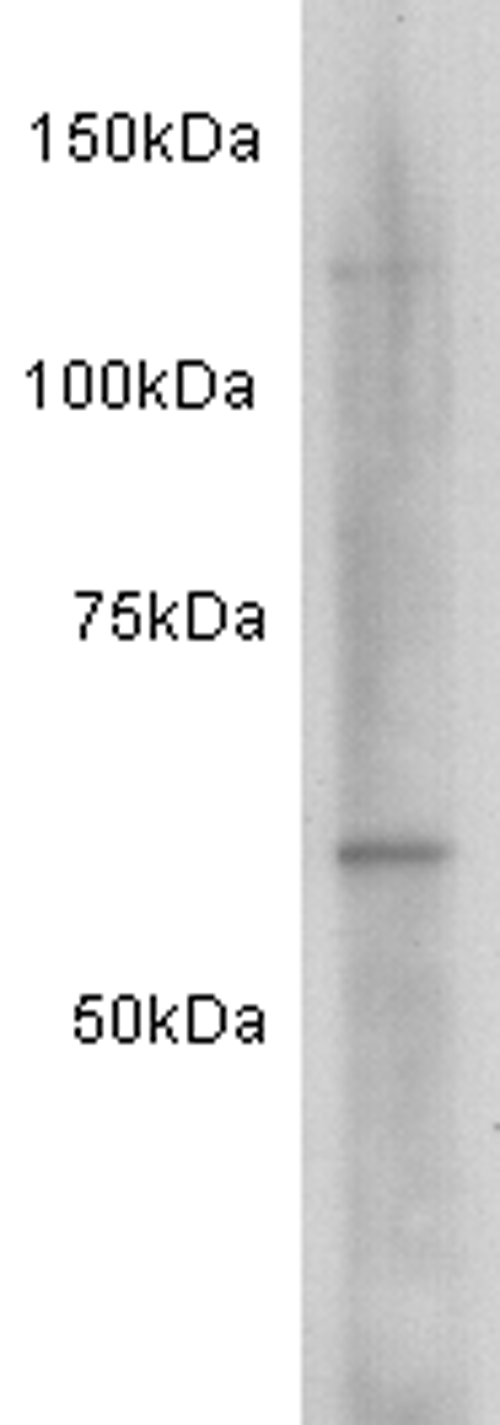
HSP60 Antibody
For Research Use Only. Not for use in diagnostic procedures. Catalog #: MBS856785The 60 kDa heat shock protein (HSP60) is a highly conserved protein that acts as a chaperone involved in correct folding of newly synthesized proteins. Mainly expressed in mitochondria, HPS60 has also been found in the cytosol of normal heart and muscle… More details
Product Overview
Online Datasheet in PDFProduct Name
HSP60, Antibody
Full Product Name
HSP60 Antibody
Product Gene Name
anti-HSP60 antibody
Clone Number
9-49
Species Reactivity
Human, Mouse, Rat
Form/Format
In 1*TBS (pH7.4), 0.5%BSA, 25%Glycerol.
Specificity
This antibody is produced by immunizing mouse with a synthetic peptide (KLH-coupled) corresponding to the residues of HSP60
Preparation and Storage
Store at +4 degree C after thawing. Aliquot store at-20 degree C or-80 degree C. Avoid repeated freeze/thaw cycles.
Applications Tested/Suitable for anti-HSP60 antibody
Western Blot (WB)
Application Notes for anti-HSP60 antibody
WB: 1:500-1,000
Other Notes
Small volumes of anti-HSP60 antibody vial(s) may occasionally become entrapped in the seal of the product vial during shipment and storage. If necessary, briefly centrifuge the vial on a tabletop centrifuge to dislodge any liquid in the container`s cap. Certain products may require to ship with dry ice and additional dry ice fee may apply.
Searchable Terms for HSP60 purchase
MBS856785 is an antibody targeting HSP60. Also known as HSP60 Antibody. Reactive in Human, Mouse, Rat.
Additional Details
NCBI/Uniprot data below describe general gene information for HSP60. It may not necessarily be applicable to this product.
NCBI Official Full Name
60 kDa heat shock protein, mitochondrial
NCBI Official Synonym Full Names
heat shock protein family D (Hsp60) member 1
NCBI Official Symbol
HSPD1
NCBI Official Synonym Symbols
HLD4; CPN60; GROEL; HSP60; HSP65; SPG13; HSP-60; HuCHA60
UniProt Protein Name
60 kDa heat shock protein, mitochondrial
UniProt Synonym Protein Names
60 kDa chaperonin; Chaperonin 60; CPN60; Heat shock protein 60; HSP-60; Hsp60; HuCHA60; Mitochondrial matrix protein P1; P60 lymphocyte protein
Protein Family
Hydrogenosomal chaperonin
UniProt Gene Name
HSPD1
UniProt Synonym Gene Names
HSP60; CPN60; HSP-60; Hsp60
NCBI Protein Information
60 kDa heat shock protein, mitochondrial
NCBI Summary for HSP60
This gene encodes a member of the chaperonin family. The encoded mitochondrial protein may function as a signaling molecule in the innate immune system. This protein is essential for the folding and assembly of newly imported proteins in the mitochondria. This gene is adjacent to a related family member and the region between the 2 genes functions as a bidirectional promoter. Several pseudogenes have been associated with this gene. Two transcript variants encoding the same protein have been identified for this gene. Mutations associated with this gene cause autosomal recessive spastic paraplegia 13. [provided by RefSeq, Jun 2010]
Show more UniProt Comments for HSP60
Chaperonin implicated in mitochondrial protein import and macromolecular assembly. Together with Hsp10, facilitates the correct folding of imported proteins. May also prevent misfolding and promote the refolding and proper assembly of unfolded polypeptides generated under stress conditions in the mitochondrial matrix (PubMed:1346131, PubMed:11422376). The functional units of these chaperonins consist of heptameric rings of the large subunit Hsp60, which function as a back-to-back double ring. In a cyclic reaction, Hsp60 ring complexes bind one unfolded substrate protein per ring, followed by the binding of ATP and association with 2 heptameric rings of the co-chaperonin Hsp10. This leads to sequestration of the substrate protein in the inner cavity of Hsp60 where, for a certain period of time, it can fold undisturbed by other cell components. Synchronous hydrolysis of ATP in all Hsp60 subunits results in the dissociation of the chaperonin rings and the release of ADP and the folded substrate protein (Probable).
Show more Precautions
All of MyBioSource's Products are for scientific laboratory research purposes and are not for diagnostic, therapeutics, prophylactic or in vivo use. Through your purchase, you expressly represent and warrant to MyBioSource that you will properly test and use any Products purchased from MyBioSource in accordance with industry standards. MyBioSource and its authorized distributors reserve the right to refuse to process any order where we reasonably believe that the intended use will fall outside of our acceptable guidelines.
Disclaimer
While every efforts were made to ensure the accuracy of the information provided in this datasheet, MyBioSource will not be liable for any omissions or errors contained herein. MyBioSource reserves the right to make changes to this datasheet at any time without prior notice.
It is the responsibility of the customer to report product performance issues to MyBioSource within 30 days of receipt of the product. Please visit our Terms & Conditions page for more information.
It is the responsibility of the customer to report product performance issues to MyBioSource within 30 days of receipt of the product. Please visit our Terms & Conditions page for more information.
Product Note
Select online data sheet information is drawn from bioinformatics databases, occasionally resulting in ambiguous or non-relevant product information. It is the responsibility of the customer to review, verify, and evaluate the information to make sure it matches their requirements before purchasing the kit. Our ELISA Kit assays are dynamic research tools and sometimes they may be updated and improved. If the format of this assay is important to you then please request the current manual or contact our technical support team with a presales inquiry before placing an order. We will confirm the current details of the assay. We cannot guarantee the sample manual posted online is the most current manual, it is intended to serve as an example only. Please refer to the instructions For Use provided with the assay kit for precise details.
Product PubMed Publications
Products associated with anti-HSP60 antibody
| Reference Product | PubMed Publications |
|---|---|
| HSPE1 antibody | >8 publications with HSP60 and HSPE1 |
| CASP3 antibody | >3 publications with HSP60 and CASP3 |
| PPP2R1B antibody | >1 publications with HSP60 and PPP2R1B |
| PPP2R1A antibody | >1 publications with HSP60 and PPP2R1A |
| BAK1 antibody | >1 publications with HSP60 and BAK1 |
| ALDH2 antibody | >1 publications with HSP60 and ALDH2 |
| PRNP antibody | >1 publications with HSP60 and PRNP |
Pathways associated with anti-HSP60 antibody
| Products by Pathway | Pathway Diagram |
|---|---|
| Legionellosis Pathway antibodies | Legionellosis Pathway Diagram |
| Legionellosis Pathway antibodies | Legionellosis Pathway Diagram |
| Metabolism Of Proteins Pathway antibodies | Metabolism Of Proteins Pathway Diagram |
| Mitochondrial Protein Import Pathway antibodies | Mitochondrial Protein Import Pathway Diagram |
| RNA Degradation Pathway antibodies | RNA Degradation Pathway Diagram |
| RNA Degradation Pathway antibodies | RNA Degradation Pathway Diagram |
| SIDS Susceptibility Pathways antibodies | SIDS Susceptibility Pathways Diagram |
| Tuberculosis Pathway antibodies | Tuberculosis Pathway Diagram |
| Tuberculosis Pathway antibodies | Tuberculosis Pathway Diagram |
| Type I Diabetes Mellitus Pathway antibodies | Type I Diabetes Mellitus Pathway Diagram |
Diseases associated with anti-HSP60 antibody
| Disease Name | Pubmed Publications |
|---|---|
| Nervous System Diseases Antibodies | >17 publications with HSP60 and Nervous System Diseases |
| Cardiovascular Diseases Antibodies | >10 publications with HSP60 and Cardiovascular Diseases |
| Inflammation Antibodies | >9 publications with HSP60 and Inflammation |
| Carcinoma Antibodies | >8 publications with HSP60 and Carcinoma |
| Brain Diseases Antibodies | >8 publications with HSP60 and Brain Diseases |
| Hyperplasia Antibodies | >4 publications with HSP60 and Hyperplasia |
| Atherosclerosis Antibodies | >4 publications with HSP60 and Atherosclerosis |
| Lung Diseases Antibodies | >4 publications with HSP60 and Lung Diseases |
| Necrosis Antibodies | >3 publications with HSP60 and Necrosis |
| Lung Neoplasms Antibodies | >3 publications with HSP60 and Lung Neoplasms |
Organs/Tissues associated with anti-HSP60 antibody
| Organ/Tissue Name | Pubmed Publications |
|---|---|
| Blood Antibodies | >11 publications with HSP60 and Blood |
| Brain Antibodies | >7 publications with HSP60 and Brain |
| Liver Antibodies | >5 publications with HSP60 and Liver |
| Vascular Antibodies | >5 publications with HSP60 and Vascular |
| Testis Antibodies | >4 publications with HSP60 and Testis |
| Heart Antibodies | >4 publications with HSP60 and Heart |
| Muscle Antibodies | >4 publications with HSP60 and Muscle |
| Lung Antibodies | >3 publications with HSP60 and Lung |
| Embryonic Tissue Antibodies | >3 publications with HSP60 and Embryonic Tissue |
| Bone Antibodies | >3 publications with HSP60 and Bone |