

Mouse CCAAT/enhancer-binding protein alpha ELISA Kit

Référence MBS2880355-96
Conditionnement : 96-Strip-Wells
Marque : MyBiosource
Contactez votre distributeur local :

Téléphone : +1 850 650 7790
CCAAT/Enhancer-Binding Protein Alpha (CEBPA) ELISA Kit for Mouse
For Research Use Only. Not for use in diagnostic procedures. Catalog #: MBS2880355Principle of the Assay: The microtiter plate provided in this kit has been pre-coated with an antibody specific to target antigen. Standards or samples are then added to the appropriate microtiter plate wells with a biotin-conjugated antibody preparation… More details
Product Overview
Online Datasheet in PDFProduct Name
CCAAT/enhancer-binding protein alpha (Cebpa), ELISA Kit
Full Product Name
Mouse CCAAT/enhancer-binding protein alpha ELISA Kit
Product Gene Name
Cebpa elisa kit
Product Synonym Names
CCAAT/enhancer-binding protein alpha; C/EBP alpha; Cebpa
Species Reactivity
Mouse
Samples
Serum, plasma, tissue homogenates, cell culture supernates or other biological fluids
Detection Range
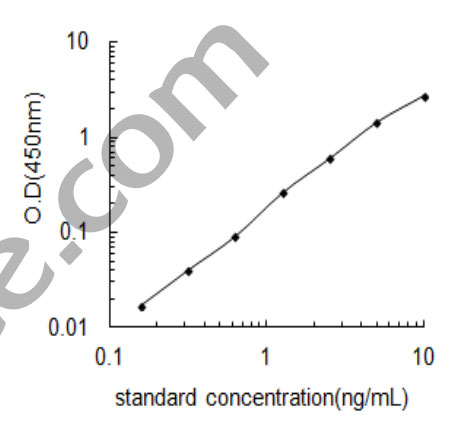
0.156-10 ng/mL
Sensitivity
< 0.064 ng/mL
Specificity
Recombinant and natural Mouse C/EBP alpha
Preparation and Storage
For long term storage, please store the entire kit at -20 degree C.
Other Notes
Small volumes of Cebpa elisa kit vial(s) may occasionally become entrapped in the seal of the product vial during shipment and storage. If necessary, briefly centrifuge the vial on a tabletop centrifuge to dislodge any liquid in the container`s cap. Certain products may require to ship with dry ice and additional dry ice fee may apply.
Searchable Terms for Cebpa purchase
MBS2880355 is a ready-to-use microwell, strip plate ELISA (enzyme-linked immunosorbent assay) Kit for analyzing the presence of the CCAAT/enhancer-binding protein alpha (Cebpa) ELISA Kit target analytes in biological samples. The concentration gradients of the kit standards or positive controls render a theoretical kit detection range in biological research samples containing Cebpa. The ELISA analytical biochemical technique of the MBS2880355 kit is based on Cebpa antibody-Cebpa antigen interactions (immunosorbency) and an HRP colorimetric detection system to detect Cebpa antigen targets in samples. The ELISA Kit is designed to detect native, not recombinant, Cebpa. Appropriate sample types may include undiluted body fluids and/or tissue homogenates, secretions. Quality control assays assessing reproducibility identified the intra-assay CV (%) and inter-assay CV(%).
Additional Details
NCBI/Uniprot data below describe general gene information for Cebpa. It may not necessarily be applicable to this product.
UniProt Primary Accession #
UniProt Secondary Accession #
UniProt Related Accession #
GenBank Nucleotide #
NCBI Official Full Name
CCAAT/enhancer-binding protein alpha isoform c
NCBI Official Synonym Full Names
CCAAT/enhancer binding protein (C/EBP), alpha
NCBI Official Symbol
Cebpa
NCBI Official Synonym Symbols
Cebp; CBF-A; C/ebpalpha
UniProt Protein Name
CCAAT/enhancer-binding protein alpha
Protein Family
CCAAT/enhancer-binding protein
UniProt Gene Name
Cebpa
UniProt Synonym Gene Names
C/EBP alpha
UniProt Entry Name
CEBPA_MOUSE
NCBI Protein Information
CCAAT/enhancer-binding protein alpha
NCBI Summary for Cebpa
This intronless gene encodes a transcription factor that contains a basic leucine zipper (bZIP) domain and recognizes the CCAAT motif in the promoters of target genes. The encoded protein functions in homodimers and also heterodimers with CCAAT/enhancer-binding proteins beta and gamma. Activity of this protein can modulate the expression of genes involved in cell cycle regulation as well as in body weight homeostasis. The use of alternative in-frame non-AUG (CUG) and AUG start codons results in several protein isoforms with different lengths. Differential translation initiation is mediated by an out-of-frame, upstream open reading frame which is located between the CUG and the first AUG start codons. [provided by RefSeq, Sep 2014]
Show more UniProt Comments for Cebpa
C/EBP-alpha: a bZIP transcription factor which can form homodimers or heterodimers with the related proteins CEBP-beta and CEBP-gamma. Binds to the promoter and modulate the expression of the gene encoding leptin, a protein that plays an important role in body weight homeostasis. Can interact with CDK2 and CDK4, thereby inhibiting these kinases and causing growth arrest in cultured cells.
Protein type: DNA-binding; Transcription factor
Cellular Component: nuclear matrix; nucleolus; nucleus; protein complex; Rb-E2F complex; transcription factor complex
Molecular Function: DNA binding; histone deacetylase binding; kinase binding; protein binding; protein complex binding; protein domain specific binding; protein heterodimerization activity; protein homodimerization activity; RNA polymerase II transcription factor activity, enhancer binding; sequence-specific DNA binding; transcription coactivator activity; transcription factor activity; transcription factor binding
Biological Process: brown fat cell differentiation; cell maturation; cholesterol metabolic process; cytokine and chemokine mediated signaling pathway; embryonic placenta development; fat cell differentiation; glucose homeostasis; granulocyte differentiation; inner ear development; lipid homeostasis; liver development; lung development; macrophage differentiation; mitochondrion organization and biogenesis; multicellular organismal development; myeloid cell differentiation; negative regulation of cell cycle; negative regulation of cell proliferation; negative regulation of transcription from RNA polymerase II promoter; negative regulation of transcription, DNA-dependent; Notch signaling pathway; positive regulation of fat cell differentiation; positive regulation of osteoblast differentiation; positive regulation of transcription from RNA polymerase II promoter; positive regulation of transcription from RNA polymerase III promoter; positive regulation of transcription, DNA-dependent; regulation of cell proliferation; regulation of transcription from RNA polymerase II promoter; regulation of transcription, DNA-dependent; transcription from RNA polymerase I promoter; transcription from RNA polymerase II promoter; transcription, DNA-dependent; urea cycle; white fat cell differentiation
Show more Protein type: DNA-binding; Transcription factor
Cellular Component: nuclear matrix; nucleolus; nucleus; protein complex; Rb-E2F complex; transcription factor complex
Molecular Function: DNA binding; histone deacetylase binding; kinase binding; protein binding; protein complex binding; protein domain specific binding; protein heterodimerization activity; protein homodimerization activity; RNA polymerase II transcription factor activity, enhancer binding; sequence-specific DNA binding; transcription coactivator activity; transcription factor activity; transcription factor binding
Biological Process: brown fat cell differentiation; cell maturation; cholesterol metabolic process; cytokine and chemokine mediated signaling pathway; embryonic placenta development; fat cell differentiation; glucose homeostasis; granulocyte differentiation; inner ear development; lipid homeostasis; liver development; lung development; macrophage differentiation; mitochondrion organization and biogenesis; multicellular organismal development; myeloid cell differentiation; negative regulation of cell cycle; negative regulation of cell proliferation; negative regulation of transcription from RNA polymerase II promoter; negative regulation of transcription, DNA-dependent; Notch signaling pathway; positive regulation of fat cell differentiation; positive regulation of osteoblast differentiation; positive regulation of transcription from RNA polymerase II promoter; positive regulation of transcription from RNA polymerase III promoter; positive regulation of transcription, DNA-dependent; regulation of cell proliferation; regulation of transcription from RNA polymerase II promoter; regulation of transcription, DNA-dependent; transcription from RNA polymerase I promoter; transcription from RNA polymerase II promoter; transcription, DNA-dependent; urea cycle; white fat cell differentiation
Precautions
All of MyBioSource's Products are for scientific laboratory research purposes and are not for diagnostic, therapeutics, prophylactic or in vivo use. Through your purchase, you expressly represent and warrant to MyBioSource that you will properly test and use any Products purchased from MyBioSource in accordance with industry standards. MyBioSource and its authorized distributors reserve the right to refuse to process any order where we reasonably believe that the intended use will fall outside of our acceptable guidelines.
Disclaimer
While every efforts were made to ensure the accuracy of the information provided in this datasheet, MyBioSource will not be liable for any omissions or errors contained herein. MyBioSource reserves the right to make changes to this datasheet at any time without prior notice.
It is the responsibility of the customer to report product performance issues to MyBioSource within 30 days of receipt of the product. Please visit our Terms & Conditions page for more information.
It is the responsibility of the customer to report product performance issues to MyBioSource within 30 days of receipt of the product. Please visit our Terms & Conditions page for more information.
Product Note
Select online data sheet information is drawn from bioinformatics databases, occasionally resulting in ambiguous or non-relevant product information. It is the responsibility of the customer to review, verify, and evaluate the information to make sure it matches their requirements before purchasing the kit. Our ELISA Kit assays are dynamic research tools and sometimes they may be updated and improved. If the format of this assay is important to you then please request the current manual or contact our technical support team with a presales inquiry before placing an order. We will confirm the current details of the assay. We cannot guarantee the sample manual posted online is the most current manual, it is intended to serve as an example only. Please refer to the instructions For Use provided with the assay kit for precise details.
Product PubMed Publications
Products associated with Cebpa elisa kit
| Reference Product | PubMed Publications |
|---|---|
| Flt3 elisa kit | >253 publications with Cebpa and Flt3 |
| Jun elisa kit | >234 publications with Cebpa and Jun |
| Runx1 elisa kit | >100 publications with Cebpa and Runx1 |
| Fabp4 elisa kit | >90 publications with Cebpa and Fabp4 |
| Cebpb elisa kit | >67 publications with Cebpa and Cebpb |
| Gata2 elisa kit | >46 publications with Cebpa and Gata2 |
| Tnf elisa kit | >43 publications with Cebpa and Tnf |
| Slc2a4 elisa kit | >39 publications with Cebpa and Slc2a4 |
| Ep300 elisa kit | >9 publications with Cebpa and Ep300 |
Pathways associated with Cebpa elisa kit
| Products by Pathway | Pathway Diagram |
|---|---|
| Acute Myeloid Leukemia Pathway antibodies | Acute Myeloid Leukemia Pathway Diagram |
| Acute Myeloid Leukemia Pathway antibodies | Acute Myeloid Leukemia Pathway Diagram |
| Adipogenesis Pathway antibodies | Adipogenesis Pathway Diagram |
| EGFR1 Signaling Pathway antibodies | EGFR1 Signaling Pathway Diagram |
| Mus Musculus Biological Processes Pathway antibodies | Mus Musculus Biological Processes Pathway Diagram |
| Non-alcoholic Fatty Liver Disease (NAFLD) Pathway antibodies | Non-alcoholic Fatty Liver Disease (NAFLD) Pathway Diagram |
| Non-alcoholic Fatty Liver Disease (NAFLD) Pathway antibodies | Non-alcoholic Fatty Liver Disease (NAFLD) Pathway Diagram |
| Pathways In Cancer antibodies | Pathways In Cancer Diagram |
| Transcriptional Regulation Of Adipocyte Differentiation In 3T3-L1 Pre-adipocytes Pathway antibodies | Transcriptional Regulation Of Adipocyte Differentiation In 3T3-L1 Pre-adipocytes Pathway Diagram |
| Transcriptional Misregulation In Cancer Pathway antibodies | Transcriptional Misregulation In Cancer Pathway Diagram |
Diseases associated with Cebpa elisa kit
| Disease Name | Pubmed Publications |
|---|---|
| Leukemia, Myeloid, Acute Antibodies | >529 publications with Cebpa and Leukemia, Myeloid, Acute |
| Liver Diseases Antibodies | >110 publications with Cebpa and Liver Diseases |
| Insulin Resistance Antibodies | >99 publications with Cebpa and Insulin Resistance |
| Inflammation Antibodies | >98 publications with Cebpa and Inflammation |
| Necrosis Antibodies | >90 publications with Cebpa and Necrosis |
| Fatty Liver Antibodies | >74 publications with Cebpa and Fatty Liver |
| Disease Models, Animal Antibodies | >65 publications with Cebpa and Disease Models, Animal |
| Weight Gain Antibodies | >63 publications with Cebpa and Weight Gain |
| Liver Neoplasms Antibodies | >56 publications with Cebpa and Liver Neoplasms |
| Carcinoma, Hepatocellular Antibodies | >49 publications with Cebpa and Carcinoma, Hepatocellular |
Organs/Tissues associated with Cebpa elisa kit
| Organ/Tissue Name | Pubmed Publications |
|---|---|
| Blood Antibodies | >496 publications with Cebpa and Blood |
| Liver Antibodies | >396 publications with Cebpa and Liver |
| Bone Antibodies | >253 publications with Cebpa and Bone |
| Lung Antibodies | >79 publications with Cebpa and Lung |
| Embryonic Tissue Antibodies | >53 publications with Cebpa and Embryonic Tissue |
| Kidney Antibodies | >44 publications with Cebpa and Kidney |
| Skin Antibodies | >38 publications with Cebpa and Skin |
| Intestine Antibodies | >24 publications with Cebpa and Intestine |
| Spleen Antibodies | >21 publications with Cebpa and Spleen |
| Pancreas Antibodies | >12 publications with Cebpa and Pancreas |