

NMDA 1 Receptor (NMDAR1, N-methyl-D-aspartate) (AP)

Référence MBS6241766-5x0,1mL
Conditionnement : 5x0.1mL
Marque : MyBiosource
Contactez votre distributeur local :

Téléphone : +1 850 650 7790
NMDA 1 Receptor (NMDAR1, N-methyl-D-aspartate) (AP)
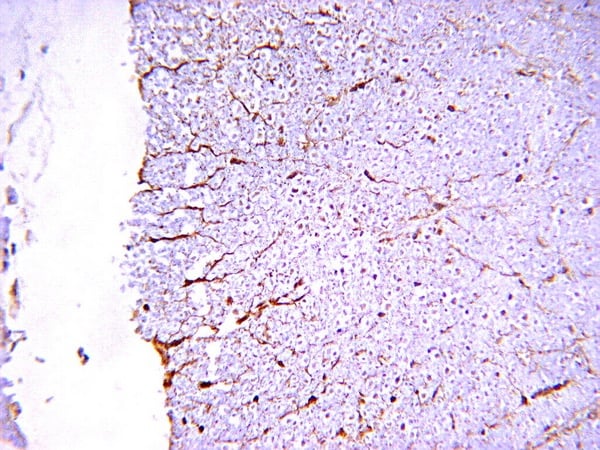
Immunohistochemistry representative staining pattern/morphology in rat spinal cord using N2904-35 (1:200). Tissue pretreated with TE, pH 9-antigen retrieval. Immunohistochemistry reagents used with HRP-DAB. Immunoreactivity is seen as nerve fiber staining of neurons. Frozen section. Low magnification.
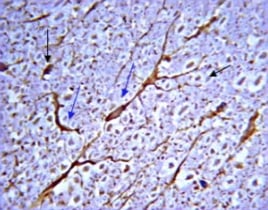
Immunohistochemistry representative staining pattern/morphology in rat spinal cord using N2904-35 (1:200). Immunoreactivity is seen as integral membrane and nerve fiber staining of neurons. Note: Black arrows denote integral membrane staining of neurons. Blue arrows denote nerve fiber staining. Frozen section. High magnification
1 Receptor (NMDA) Antibody – Mouse Monoclonal
For Research Use Only. Not for use in diagnostic procedures. Catalog #: MBS6241766MBS6241766 is an antibody targeting NMDAR1. Also known as NMDA 1 Receptor (NMDAR1, N-methyl-D-aspartate) (AP). Reactive in Human, Monkey, Rat, Xenopus. Host: Mouse. More details
Product Overview
Online Datasheet in PDFProduct Name
NMDA 1 Receptor (NMDAR1), Monoclonal Antibody
Full Product Name
NMDA 1 Receptor (NMDAR1, N-methyl-D-aspartate) (AP)
Product Gene Name
anti-NMDAR1 antibody
Clonality
Monoclonal
Isotype
IgG2a
Clone Number
2Q187
Host
Mouse
Species Reactivity
Human, Monkey, Rat, Xenopus
Form/Format
Supplied as a liquid in PBS, pH 7.2. No preservative added. Labeled with Alkaline Phosphatase.
Purity/Purification
Purified by Protein A Affinity Chromatography.
Specificity
Recognizes an epitope between amino acids 660-811 of the NMDAR1 receptor. Shows no crossreactivity with NMDAR2, NMDAR3, NMDAR4 or NMDAR5. Species Crossreactivity: human, monkey, rat, Xenopus
Preparation and Storage
Store at 4 degree C. Do Not Freeze.
Molecular Weight
105,373 Da
Chromosome Location
Chromosome: 9; NC_000009.11 (140033609..140063214). Location: 9q34.3
OMIM
138249
Immunogen
Recombinant fusion protein containing GST and NMDAR1 (aa660-811). Epitope: extracellular loop between transmembrane regions III and IV.
Conjugate
AP
Product Categories/Family for anti-NMDAR1 antibody
Antibodies; Ion Channel
Applications Tested/Suitable for anti-NMDAR1 antibody
ELISA (EIA), Immunocytochemistry (ICC), Immunohistochemistry (IHC), Radioimmunoassay (RIA)
Immunohistochemistry (IHC) of anti-NMDAR1 antibody
Immunohistochemistry representative staining pattern/morphology in rat spinal cord using N2904-35 (1:200). Tissue pretreated with TE, pH 9-antigen retrieval. Immunohistochemistry reagents used with HRP-DAB. Immunoreactivity is seen as nerve fiber staining of neurons. Frozen section. Low magnification.
Immunohistochemistry (IHC) of anti-NMDAR1 antibody
Immunohistochemistry representative staining pattern/morphology in rat spinal cord using N2904-35 (1:200). Immunoreactivity is seen as integral membrane and nerve fiber staining of neurons. Note: Black arrows denote integral membrane staining of neurons. Blue arrows denote nerve fiber staining. Frozen section. High magnification
Product References and Citations for anti-NMDAR1 antibody
1. J. Neuroscience (1994) 14:3603-3619. 2. J. Neuroscience (1995) 15:2707-2719. 3. J. Neuroscience (1996) 16:6830-6838. 4. Naskar, R., et al., Invest. Ophthalmol. Vis. Sci. (2000) 41:1940-1944. 5. Menna, Kumari, J. Biological Chemistry (2001) 276:29764-29771.
Other Notes
Small volumes of anti-NMDAR1 antibody vial(s) may occasionally become entrapped in the seal of the product vial during shipment and storage. If necessary, briefly centrifuge the vial on a tabletop centrifuge to dislodge any liquid in the container`s cap. Certain products may require to ship with dry ice and additional dry ice fee may apply.
Additional Details
NCBI/Uniprot data below describe general gene information for NMDAR1. It may not necessarily be applicable to this product.
NCBI Official Full Name
glutamate receptor ionotropic, NMDA 1 isoform NR1-1
NCBI Official Synonym Full Names
glutamate receptor, ionotropic, N-methyl D-aspartate 1
NCBI Official Symbol
GRIN1
NCBI Official Synonym Symbols
NR1; MRD8; GluN1; NMDA1; NMDAR1
UniProt Protein Name
Glutamate receptor ionotropic, NMDA 1
UniProt Synonym Protein Names
Glutamate [NMDA] receptor subunit zeta-1; N-methyl-D-aspartate receptor subunit NR1
Protein Family
Glutamate [NMDA] receptor
UniProt Gene Name
GRIN1
UniProt Synonym Gene Names
NMDAR1; GluN1; NMD-R1
UniProt Entry Name
NMDZ1_HUMAN
NCBI Protein Information
glutamate receptor ionotropic, NMDA 1; NMD-R1; glutamate [NMDA] receptor subunit zeta 1; glutamate [NMDA] receptor subunit zeta-1; N-methyl-D-aspartate receptor subunit NR1; N-methyl-D-aspartate receptor channel, subunit zeta-1
NCBI Summary for NMDAR1
The protein encoded by this gene is a critical subunit of N-methyl-D-aspartate receptors, members of the glutamate receptor channel superfamily which are heteromeric protein complexes with multiple subunits arranged to form a ligand-gated ion channel. These subunits play a key role in the plasticity of synapses, which is believed to underlie memory and learning. Cell-specific factors are thought to control expression of different isoforms, possibly contributing to the functional diversity of the subunits. Alternatively spliced transcript variants have been described. [provided by RefSeq, Jul 2008]
Show more UniProt Comments for NMDAR1
NMDAR1: a subunit of N-methyl-D-aspartate (NMDA) receptors, members of the glutamate receptor channel superfamily. Possesses high calcium permeability and voltage-dependent sensitivity to magnesium and is modulated by glycine. Plays a key role in synaptic plasticity, synaptogenesis, excitotoxicity, memory acquisition and learning. Mediates neuronal functions in glutamate neurotransmission. Three alternatively-spliced isoforms have been described.
Protein type: Membrane protein, multi-pass; Channel, calcium; Channel, ligand-gated; Membrane protein, integral
Chromosomal Location of Human Ortholog: 9q34.3
Cellular Component: neuron projection; cell surface; endoplasmic reticulum; integral to plasma membrane; dendrite; postsynaptic density; dendritic spine; excitatory synapse; terminal button; N-methyl-D-aspartate selective glutamate receptor complex; postsynaptic membrane; synaptic vesicle; plasma membrane; synapse; cell junction
Molecular Function: voltage-gated cation channel activity; neurotransmitter binding; glutamate receptor binding; calcium channel activity; calcium ion binding; calmodulin binding; protein binding; enzyme binding; extracellular-glutamate-gated ion channel activity; glutamate binding; protein heterodimerization activity; N-methyl-D-aspartate selective glutamate receptor activity; glycine binding
Biological Process: regulation of long-term neuronal synaptic plasticity; axon guidance; male mating behavior; prepulse inhibition; adult locomotory behavior; positive regulation of apoptosis; regulation of dendrite morphogenesis; rhythmic process; response to morphine; regulation of axonogenesis; sensory perception of pain; calcium ion homeostasis; synaptic transmission; regulation of respiratory gaseous exchange; conditioned taste aversion; ephrin receptor signaling pathway; visual learning; negative regulation of neuron apoptosis; protein tetramerization; cation transport; synaptic transmission, glutamatergic; response to amphetamine; social behavior; respiratory gaseous exchange; pons maturation; cellular calcium ion homeostasis; regulation of membrane potential; response to ethanol; regulation of synaptogenesis; long-term memory; suckling behavior; olfactory learning; propylene metabolic process; ionotropic glutamate receptor signaling pathway; positive regulation of transcription from RNA polymerase II promoter; cerebral cortex development; regulation of excitatory postsynaptic membrane potential; response to calcium ion
Disease: Mental Retardation, Autosomal Dominant 8
Show more Protein type: Membrane protein, multi-pass; Channel, calcium; Channel, ligand-gated; Membrane protein, integral
Chromosomal Location of Human Ortholog: 9q34.3
Cellular Component: neuron projection; cell surface; endoplasmic reticulum; integral to plasma membrane; dendrite; postsynaptic density; dendritic spine; excitatory synapse; terminal button; N-methyl-D-aspartate selective glutamate receptor complex; postsynaptic membrane; synaptic vesicle; plasma membrane; synapse; cell junction
Molecular Function: voltage-gated cation channel activity; neurotransmitter binding; glutamate receptor binding; calcium channel activity; calcium ion binding; calmodulin binding; protein binding; enzyme binding; extracellular-glutamate-gated ion channel activity; glutamate binding; protein heterodimerization activity; N-methyl-D-aspartate selective glutamate receptor activity; glycine binding
Biological Process: regulation of long-term neuronal synaptic plasticity; axon guidance; male mating behavior; prepulse inhibition; adult locomotory behavior; positive regulation of apoptosis; regulation of dendrite morphogenesis; rhythmic process; response to morphine; regulation of axonogenesis; sensory perception of pain; calcium ion homeostasis; synaptic transmission; regulation of respiratory gaseous exchange; conditioned taste aversion; ephrin receptor signaling pathway; visual learning; negative regulation of neuron apoptosis; protein tetramerization; cation transport; synaptic transmission, glutamatergic; response to amphetamine; social behavior; respiratory gaseous exchange; pons maturation; cellular calcium ion homeostasis; regulation of membrane potential; response to ethanol; regulation of synaptogenesis; long-term memory; suckling behavior; olfactory learning; propylene metabolic process; ionotropic glutamate receptor signaling pathway; positive regulation of transcription from RNA polymerase II promoter; cerebral cortex development; regulation of excitatory postsynaptic membrane potential; response to calcium ion
Disease: Mental Retardation, Autosomal Dominant 8
Precautions
All of MyBioSource's Products are for scientific laboratory research purposes and are not for diagnostic, therapeutics, prophylactic or in vivo use. Through your purchase, you expressly represent and warrant to MyBioSource that you will properly test and use any Products purchased from MyBioSource in accordance with industry standards. MyBioSource and its authorized distributors reserve the right to refuse to process any order where we reasonably believe that the intended use will fall outside of our acceptable guidelines.
Disclaimer
While every efforts were made to ensure the accuracy of the information provided in this datasheet, MyBioSource will not be liable for any omissions or errors contained herein. MyBioSource reserves the right to make changes to this datasheet at any time without prior notice.
It is the responsibility of the customer to report product performance issues to MyBioSource within 30 days of receipt of the product. Please visit our Terms & Conditions page for more information.
It is the responsibility of the customer to report product performance issues to MyBioSource within 30 days of receipt of the product. Please visit our Terms & Conditions page for more information.
Product Note
Select online data sheet information is drawn from bioinformatics databases, occasionally resulting in ambiguous or non-relevant product information. It is the responsibility of the customer to review, verify, and evaluate the information to make sure it matches their requirements before purchasing the kit. Our ELISA Kit assays are dynamic research tools and sometimes they may be updated and improved. If the format of this assay is important to you then please request the current manual or contact our technical support team with a presales inquiry before placing an order. We will confirm the current details of the assay. We cannot guarantee the sample manual posted online is the most current manual, it is intended to serve as an example only. Please refer to the instructions For Use provided with the assay kit for precise details.
Product PubMed Publications
Products associated with anti-NMDAR1 antibody
| Reference Product | PubMed Publications |
|---|---|
| GRIN2B antibody | >20 publications with NMDAR1 and GRIN2B |
| GRIN2A antibody | >16 publications with NMDAR1 and GRIN2A |
| GRIN2D antibody | >5 publications with NMDAR1 and GRIN2D |
| SP3 antibody | >2 publications with NMDAR1 and SP3 |
| GRIN3A antibody | >2 publications with NMDAR1 and GRIN3A |
| DRD1 antibody | >2 publications with NMDAR1 and DRD1 |
| SYNGAP1 antibody | >1 publications with NMDAR1 and SYNGAP1 |
| PLCG1 antibody | >1 publications with NMDAR1 and PLCG1 |
| DLG4 antibody | >1 publications with NMDAR1 and DLG4 |
| CAMK2A antibody | >1 publications with NMDAR1 and CAMK2A |
Pathways associated with anti-NMDAR1 antibody
| Products by Pathway | Pathway Diagram |
|---|---|
| Activation Of NMDA Receptor Upon Glutamate Binding And Postsynaptic Events Pathway antibodies | Activation Of NMDA Receptor Upon Glutamate Binding And Postsynaptic Events Pathway Diagram |
| Alcoholism Pathway antibodies | Alcoholism Pathway Diagram |
| Alcoholism Pathway antibodies | Alcoholism Pathway Diagram |
| Alzheimer's Disease Pathway antibodies | Alzheimer's Disease Pathway Diagram |
| Alzheimer's Disease Pathway antibodies | Alzheimer's Disease Pathway Diagram |
| Alzheimers Disease Pathway antibodies | Alzheimers Disease Pathway Diagram |
| Amphetamine Addiction Pathway antibodies | Amphetamine Addiction Pathway Diagram |
| Amphetamine Addiction Pathway antibodies | Amphetamine Addiction Pathway Diagram |
| Amyotrophic Lateral Sclerosis (ALS) Pathway antibodies | Amyotrophic Lateral Sclerosis (ALS) Pathway Diagram |
| Amyotrophic Lateral Sclerosis (ALS) Pathway antibodies | Amyotrophic Lateral Sclerosis (ALS) Pathway Diagram |
Diseases associated with anti-NMDAR1 antibody
| Disease Name | Pubmed Publications |
|---|---|
| Nervous System Diseases Antibodies | >16 publications with NMDAR1 and Nervous System Diseases |
| Brain Diseases Antibodies | >9 publications with NMDAR1 and Brain Diseases |
| Disease Models, Animal Antibodies | >7 publications with NMDAR1 and Disease Models, Animal |
| Memory Disorders Antibodies | >5 publications with NMDAR1 and Memory Disorders |
| Movement Disorders Antibodies | >4 publications with NMDAR1 and Movement Disorders |
| Nerve Degeneration Antibodies | >4 publications with NMDAR1 and Nerve Degeneration |
| Learning Disorders Antibodies | >4 publications with NMDAR1 and Learning Disorders |
| Neoplasms Antibodies | >4 publications with NMDAR1 and Neoplasms |
| Pain Antibodies | >4 publications with NMDAR1 and Pain |
| Seizures Antibodies | >3 publications with NMDAR1 and Seizures |
Organs/Tissues associated with anti-NMDAR1 antibody
| Organ/Tissue Name | Pubmed Publications |
|---|---|
| Brain Antibodies | >48 publications with NMDAR1 and Brain |
| Nerve Antibodies | >45 publications with NMDAR1 and Nerve |
| Eye Antibodies | >2 publications with NMDAR1 and Eye |