

pGFP-C-shLenti shRNA Vector

Référence TR30023
Conditionnement : 5ug
Contactez votre distributeur local :
Téléphone :
pGFP-C-shLenti shRNA Vector
SKU
TR30023
HuSH shRNA GFP Lenti Cloning Vector (pGFP-C-shLenti Vector), 5 ug

| Product Manuals |
| FAQs |
|
| SDS |
Citations
Functional Contribution of Multienzyme Glucosome Condensates to Cellular Redox Homeostasis in Cancer Cells
Sharma, K., Kyoung et al
bioRxiv (2026)
Sharma, K., Kyoung et al
bioRxiv (2026)
AI Summary: OriGene's pGFP-C-ShLenti vector (Cat. #TR30023) was used to construct shRNA expression plasmids, enabling gene knockdown experiments that were crucial for investigating the role of specific enzymes in glucosome-mediated redox homeostasis in cancer cells.
Snippet: Plasmids expressing short-hairpin RNA (shRNA) were constructed by ligating validated oligonucleotide sequences into the pGFP-C-ShLenti vector (Origene, Cat. #TR30023) using BamHI and BsmBI restriction sites. Briefly, a set of 5’-phosphate oligonucleotide sequences for human catalase (hCAT) [70]
The cytoskeletal regulator Coronin-1A plays a multidirectional role in glioblastoma stemness
Zhang, Shibahara, Hide et al
Sci Rep (2026)
Zhang, Shibahara, Hide et al
Sci Rep (2026)
AI Summary: OriGene contributed to this study by providing the pGFP-C-shLenti vector encoding shRNA against human Coro1A (Cat. No. TR30023), which was used to generate Coro1A-knockdown glioblastoma cell clones for functional analyses.
Snippet: The pGFP-C-shLenti vector encoding shRNA against human Coro1A was purchased from Origene Technologies (Rockville, MD, USA;Cat. No. TR30023). The effective shRNA sequences were: #A, 5′- GACACCAACATCGTCTACCTCTGTGGCAA-3′;and
Metabolic Coherence of the Mouse Brain
Liu, Ma, Ribas et al
bioRxiv (2026)
Liu, Ma, Ribas et al
bioRxiv (2026)
AI Summary: OriGene products, specifically the lentivirus encoding shRNA targeting HIF1α (TL517255V) and the control scrambled shRNA lentivirus (TR30023), were used to achieve targeted gene knockdown in the hippocampus, enabling the study of metabolic and behavioral effects in the mouse brain.
Snippet: For HIF1α knockdown experiments, lentivirus encoding shRNA targeting HIF1α (TL517255V;OriGene) or control scrambled shRNA lentivirus (TR30023;OriGene) was
Targeting the STK39/ARID2 Axis to Inhibit NF-κB Signaling: A Novel Pathway for Mesenchymal Stem Cell Osteogenic Differentiation in Osteoporosis Management
Wang, Wei, Chen et al
J Musculoskelet Neuronal Interact (2026) 26 (1), 124-133 DOI: 10.22540/JMNI-26-124
Wang, Wei, Chen et al
J Musculoskelet Neuronal Interact (2026) 26 (1), 124-133 DOI: 10.22540/JMNI-26-124
AI Summary: OriGene products, specifically the negative control siRNA (siNC; TR30023) and negative control plasmid (NC; PS100093), were used as experimental controls in gene silencing and overexpression studies to investigate the roles of ARID2 and STK39 in mesenchymal stem cell differentiation in osteoporosis research.
Snippet: ding negative controls (siNC;TR30023 and NC;PS100093), were obtained from OriGene (Rockville, MD, USA). BMSCs were allocated to the following groups: siNC, siARID2, NC + siNC, NC + siARID2, STK39 overexpression + siNC, and STK39 overexpression + siARID2. For transduction, 1
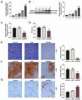
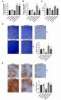
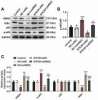
APOs as promising prognostic biomarkers: correlation with tumor-infiltrating leukocytes in endometrial cancer
Zhou, Wang, Du et al
Front Immunol (2026) 17, 1646920 DOI: 10.3389/fimmu.2026.1646920
Zhou, Wang, Du et al
Front Immunol (2026) 17, 1646920 DOI: 10.3389/fimmu.2026.1646920
AI Summary: OriGene products, specifically the negative control (TR30023) and transfection reagent (TF81001), were used for transfecting endometrial cancer cells in experiments assessing the functional roles of APO genes in this study.
Snippet: ), and the corresponding control (negative control;TR30023;OriGene) were transfected with reagents (TF81001;OriGene) for 12 h. The culture was then continued with a
Toxoplasma gondii infection and chronic IL-1 elevation drive hippocampal DNA double-strand break signaling, leading to cognitive deficits
Belloy, Schmitt, Marty et al
Nat Neurosci (2025)
Belloy, Schmitt, Marty et al
Nat Neurosci (2025)
Cited by 10
AI Summary: OriGene products, specifically the anti-Il1r1 shRNA and scramble control shRNA (TR30021) in the pGFP-C-shLenti shRNA vector (TR30023), were used to reduce IL-1R1 expression in neuronal cultures, enabling the study of IL-1 signaling's role in Toxoplasma gondii-induced cognitive deficits.
Snippet: Anti-Il1r1 and scramble (TR30021) shRNAs were obtained from Origene (pGFP-C-shLenti shRNA vector TR30023). Reduction in IL-1R1 mRNA levels was assessed in primary mouse neuronal cultures 1 week after transduction. The sequence of the effective shIL-1R1 is 5′-CCGTACTTTCTGATGGTGTTT-3′. Lentiviral particles were obtained as previously described53
Showing 1-6 of 32 papers.
Powered by BizGenius
*Delivery time may vary from web posted schedule. Occasional delays may occur due to unforeseen complexities in the preparation of your product. International customers may expect an additional 1-2 weeks in shipping.
Related Products
Vous serez peut-être également intéressé par les produits suivants :
Référence
Description
Cond.
Prix HT