

Phospho-MAX (Ser11) Antibody

Référence MBS9614035-5x0,2mL
Conditionnement : 5x0.2mL
Marque : MyBiosource
Contactez votre distributeur local :

Téléphone : +1 850 650 7790
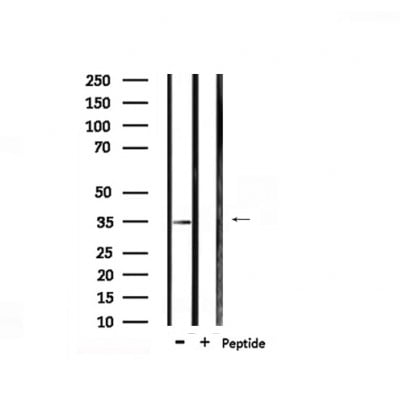
Western blot analysis of extracts from rat brain, using MAX (Phospho-Ser11) Antibody.
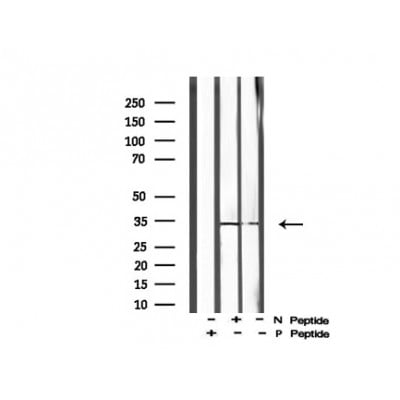
Western blot analysis of MAX (Phospho-Ser11) using HepG2 whole cell lysates.
-/+ means absence or presence of N peptide(non-phospho peptide) and P peptide(phospho peptide).
-/+ means absence or presence of N peptide(non-phospho peptide) and P peptide(phospho peptide).
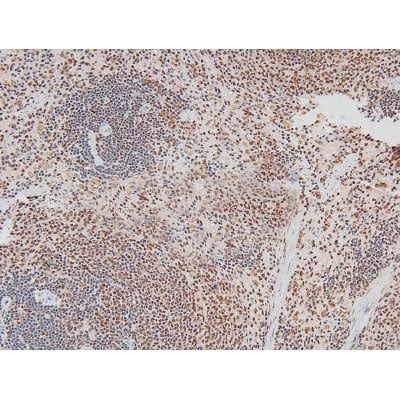
At 1/200 staining Rat spleen tissue sections by IHC-P. The tissue was formaldehyde fixed and a heat mediated antigen retrieval step in citrate buffer was performed. The tissue was then blocked and incubated with the antibody for 1.5 hours at 22 degree C. An HRP conjugated goat anti-rabbit antibody was used as the secondary antibody.
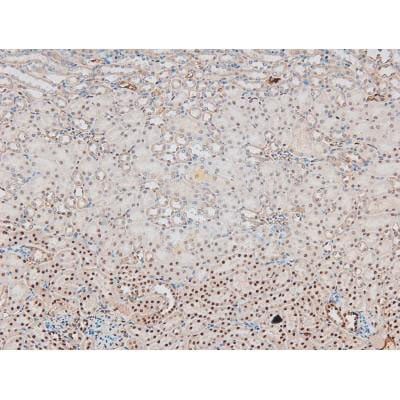
At 1/200 staining Mouse kidney tissue sections by IHC-P. The tissue was formaldehyde fixed and a heat mediated antigen retrieval step in citrate buffer was performed. The tissue was then blocked and incubated with the antibody for 1.5 hours at 22 degree C. An HRP conjugated goat anti-rabbit antibody was used as the secondary antibody.
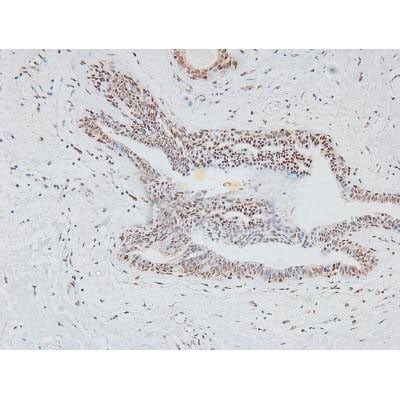
At 1/200 staining Human breast tissue sections by IHC-P. The tissue was formaldehyde fixed and a heat mediated antigen retrieval step in citrate buffer was performed. The tissue was then blocked and incubated with the antibody for 1.5 hours at 22 degree C. An HRP conjugated goat anti-rabbit antibody was used as the secondary antibody.
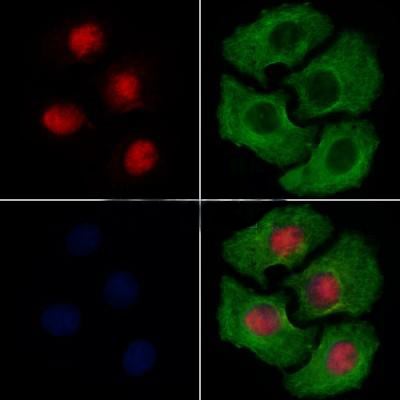
At 25 degree C. Samples were then incubated with primary Ab(At 37 degree C. An AlexaFluor594 conjugated goat anti-rabbit IgG(H+L) Ab(Red) and an AlexaFluor488 conjugated goat anti-mouse IgG(H+L) Ab(Green) were used as the secondary antibody.
The nuclear counter stain is DAPI(blue).
The nuclear counter stain is DAPI(blue).
MAX Antibody – Rabbit Polyclonal
For Research Use Only. Not for use in diagnostic procedures. Catalog #: MBS9614035Transcription regulator. Forms a sequence-specific DNA-binding protein complex with MYC or MAD which recognizes the core sequence 5'-CAC[GA]TG-3'. The MYC:MAX complex is a transcriptional activator, whereas the MAD:MAX complex is a repressor. May repress… More details
Product Overview
Online Datasheet in PDFProduct Name
MAX, Polyclonal Antibody
Full Product Name
Phospho-MAX (Ser11) Antibody
Product Gene Name
anti-MAX antibody
Product Synonym Names
bHLHd4; bHLHd5; bHLHd6; bHLHd7; bHLHd8; Helix loop helix zipper protein; MAX protein; MGC10775; MGC11225; MGC18164; MGC34679; MGC36767; MYC associated factor X; Myc binding novel HLH/LZ protein; Orf 1; Orf1; Protein max
Clonality
Polyclonal
Isotype
Rabbit IgG
Host
Rabbit
Species Reactivity
Human, Mouse, Rat
Predicted Reactivity: Pig (100%), Zebrafish (83%), Bovine (100%), Horse (100%), Rabbit (100%), Dog (100%), Chicken (100%), Xenopus (100%)
Predicted Reactivity: Pig (100%), Zebrafish (83%), Bovine (100%), Horse (100%), Rabbit (100%), Dog (100%), Chicken (100%), Xenopus (100%)
Form/Format
Liquid. Rabbit IgG in phosphate buffered saline, pH7.4, 150mM NaCl, 0.02% sodium azide and 50% glycerol.
Purity/Purification
The antibody is from purified rabbit serum by affinity purification via sequential chromatography on phospho-peptide and non-phospho-peptide affinity columns.
Concentration
1mg/ml (lot specific)
Specificity
Phospho-MAX (Ser11) Antibody detects endogenous levels of MAX only when phosphorylated at Ser11.
Tissue Specificity: High levels found in the brain, heart and lung while lower levels are seen in the liver, kidney and skeletal muscle.
Tissue Specificity: High levels found in the brain, heart and lung while lower levels are seen in the liver, kidney and skeletal muscle.
Preparation and Storage
Store at -20 degree C. Stable for 12 months from date of receipt.
Antibody/Peptide Pairs
MAX (Ser11) peptide (MBS9618997) is used for blocking the activity of MAX (Ser11) antibody (MBS9614035)
Molecular Weight
160
OMIM
154950
Supply Chain Verification
Manufactured in a lab with traceable raw materials manufactured on site. Coordinated product portfolio of antibodies, pairs, conjugates, recombinant proteins, and immunoassay materials available, please inquire.
Immunogen
A synthesized peptide derived from human MAX around the phosphorylation site of Ser11.
Conjugation
Unconjugated
Fragment
Fab fragment
Post Translational Modifications
Reversible lysine acetylation might regulate the nuclear-cytoplasmic shuttling of specific Max complexes.
Subunit Structure
Efficient DNA binding requires dimerization with another bHLH protein. Binds DNA as a heterodimer with MYC or MAD. Part of the E2F6.com-1 complex in G0 phase composed of E2F6, MGA, MAX, TFDP1, CBX3, BAT8, EUHMTASE1, RING1, RNF2, MBLR, L3MBTL2 and YAF2. Component of some MLL1/MLL complex, at least composed of the core components KMT2A/MLL1, ASH2L, HCFC1/HCF1, WDR5 and RBBP5, as well as the facultative components BAP18, CHD8, E2F6, HSP70, INO80C, KANSL1, LAS1L, MAX, MCRS1, MGA, MYST1/MOF, PELP1, PHF20, PRP31, RING2, RUVB1/TIP49A, RUVB2/TIP49B, SENP3, TAF1, TAF4, TAF6, TAF7, TAF9 and TEX10. Interacts with SPAG9. The heterodimer MYC:MAX interacts with ABI1; the interaction may enhance MYC:MAX transcriptional activity.
Similarity
Belongs to the MAX family.
Subcellular Location
Nucleus. Cell projection>Dendrite.
ISO Certification
Manufactured in an ISO 9001:2015 Certified Laboratory.
Applications Tested/Suitable for anti-MAX antibody
Western Blot (WB), Immunohistochemistry (IHC), Immunofluorescence (IF), Immunocytochemistry (ICC), Peptide ELISA (EIA)
Application Notes for anti-MAX antibody
WB: 1:1000-3000
IHC: 1:50-1:200
IF/ICC: 1:100-1:500
Peptide ELISA: 1:20,000-1:40,000
IHC: 1:50-1:200
IF/ICC: 1:100-1:500
Peptide ELISA: 1:20,000-1:40,000
Immunohistochemistry (IHC) of anti-MAX antibody
At 1/200 staining Rat spleen tissue sections by IHC-P. The tissue was formaldehyde fixed and a heat mediated antigen retrieval step in citrate buffer was performed. The tissue was then blocked and incubated with the antibody for 1.5 hours at 22 degree C. An HRP conjugated goat anti-rabbit antibody was used as the secondary antibody.
Immunohistochemistry (IHC) of anti-MAX antibody
At 1/200 staining Mouse kidney tissue sections by IHC-P. The tissue was formaldehyde fixed and a heat mediated antigen retrieval step in citrate buffer was performed. The tissue was then blocked and incubated with the antibody for 1.5 hours at 22 degree C. An HRP conjugated goat anti-rabbit antibody was used as the secondary antibody.
Immunohistochemistry (IHC) of anti-MAX antibody
At 1/200 staining Human breast tissue sections by IHC-P. The tissue was formaldehyde fixed and a heat mediated antigen retrieval step in citrate buffer was performed. The tissue was then blocked and incubated with the antibody for 1.5 hours at 22 degree C. An HRP conjugated goat anti-rabbit antibody was used as the secondary antibody.
Testing Data of anti-MAX antibody
At 25 degree C. Samples were then incubated with primary Ab(At 37 degree C. An AlexaFluor594 conjugated goat anti-rabbit IgG(H+L) Ab(Red) and an AlexaFluor488 conjugated goat anti-mouse IgG(H+L) Ab(Green) were used as the secondary antibody.
The nuclear counter stain is DAPI(blue).
The nuclear counter stain is DAPI(blue).
Other Notes
Small volumes of anti-MAX antibody vial(s) may occasionally become entrapped in the seal of the product vial during shipment and storage. If necessary, briefly centrifuge the vial on a tabletop centrifuge to dislodge any liquid in the container`s cap. Certain products may require to ship with dry ice and additional dry ice fee may apply.
Searchable Terms for MAX purchase
MBS9614035 is an antibody targeting MAX. Also known as Phospho-MAX (Ser11) Antibody. Reactive in Human, Mouse, Rat
Predicted Reactivity: Pig (100%), Zebrafish (83%), Bovine (100%), Horse (100%), Rabbit (100%), Dog (100%), Chicken (100%), Xenopus (100%). Host: Rabbit.
Predicted Reactivity: Pig (100%), Zebrafish (83%), Bovine (100%), Horse (100%), Rabbit (100%), Dog (100%), Chicken (100%), Xenopus (100%). Host: Rabbit.
Additional Details
NCBI/Uniprot data below describe general gene information for MAX. It may not necessarily be applicable to this product.
NCBI Official Full Name
Protein max
NCBI Official Synonym Full Names
MYC associated factor X
NCBI Official Symbol
MAX
NCBI Official Synonym Symbols
bHLHd4
UniProt Protein Name
Protein max
UniProt Synonym Protein Names
Class D basic helix-loop-helix protein 4; bHLHd4; Myc-associated factor X
Protein Family
Protein max
UniProt Gene Name
MAX
UniProt Synonym Gene Names
BHLHD4; bHLHd4
UniProt Entry Name
MAX_HUMAN
NCBI Protein Information
protein max; class D basic helix-loop-helix protein 4
NCBI Summary for MAX
The protein encoded by this gene is a member of the basic helix-loop-helix leucine zipper (bHLHZ) family of transcription factors. It is able to form homodimers and heterodimers with other family members, which include Mad, Mxi1 and Myc. Myc is an oncoprotein implicated in cell proliferation, differentiation and apoptosis. The homodimers and heterodimers compete for a common DNA target site (the E box) and rearrangement among these dimer forms provides a complex system of transcriptional regulation. Mutations of this gene have been reported to be associated with hereditary pheochromocytoma. A pseudogene of this gene is located on the long arm of chromosome 7. Alternative splicing results in multiple transcript variants. [provided by RefSeq, Aug 2012]
Show more UniProt Comments for MAX
MAX: a transcription factor. Forms a DNA- binding protein complex with MYC or MAD. The MYC-MAX complex is a transcriptional activator, whereas the MAD-MAX complex is a repressor. CPG methylation of the recognition site greatly inhibits DNA binding, suggesting that DNA methylation may regulate the MYC/MAX complex in vivo. May repress transcription via the recruitment of a chromatin remodeling complex containing H3-K9 histone methyltransferase activity. Three alternatively spliced isoforms have been reported.
Protein type: DNA-binding; Transcription factor
Chromosomal Location of Human Ortholog: 14q23
Cellular Component: nucleoplasm; PML body; dendrite; cytoplasm; nucleus
Molecular Function: protein binding; protein homodimerization activity; sequence-specific DNA binding; protein heterodimerization activity; transcription coactivator activity; transcription cofactor activity; protein complex binding; transcription factor activity
Biological Process: transcription from RNA polymerase II promoter; neuron apoptosis; regulation of transcription, DNA-dependent; retina development in camera-type eye; protein complex assembly; response to axon injury; cellular response to starvation; response to insulin stimulus
Show more Protein type: DNA-binding; Transcription factor
Chromosomal Location of Human Ortholog: 14q23
Cellular Component: nucleoplasm; PML body; dendrite; cytoplasm; nucleus
Molecular Function: protein binding; protein homodimerization activity; sequence-specific DNA binding; protein heterodimerization activity; transcription coactivator activity; transcription cofactor activity; protein complex binding; transcription factor activity
Biological Process: transcription from RNA polymerase II promoter; neuron apoptosis; regulation of transcription, DNA-dependent; retina development in camera-type eye; protein complex assembly; response to axon injury; cellular response to starvation; response to insulin stimulus
Precautions
All of MyBioSource's Products are for scientific laboratory research purposes and are not for diagnostic, therapeutics, prophylactic or in vivo use. Through your purchase, you expressly represent and warrant to MyBioSource that you will properly test and use any Products purchased from MyBioSource in accordance with industry standards. MyBioSource and its authorized distributors reserve the right to refuse to process any order where we reasonably believe that the intended use will fall outside of our acceptable guidelines.
Disclaimer
While every efforts were made to ensure the accuracy of the information provided in this datasheet, MyBioSource will not be liable for any omissions or errors contained herein. MyBioSource reserves the right to make changes to this datasheet at any time without prior notice.
It is the responsibility of the customer to report product performance issues to MyBioSource within 30 days of receipt of the product. Please visit our Terms & Conditions page for more information.
It is the responsibility of the customer to report product performance issues to MyBioSource within 30 days of receipt of the product. Please visit our Terms & Conditions page for more information.
Product Note
Select online data sheet information is drawn from bioinformatics databases, occasionally resulting in ambiguous or non-relevant product information. It is the responsibility of the customer to review, verify, and evaluate the information to make sure it matches their requirements before purchasing the kit. Our ELISA Kit assays are dynamic research tools and sometimes they may be updated and improved. If the format of this assay is important to you then please request the current manual or contact our technical support team with a presales inquiry before placing an order. We will confirm the current details of the assay. We cannot guarantee the sample manual posted online is the most current manual, it is intended to serve as an example only. Please refer to the instructions For Use provided with the assay kit for precise details.
Product PubMed Publications
Products associated with anti-MAX antibody
| Reference Product | PubMed Publications |
|---|---|
| MYC antibody | >986 publications with MAX and MYC |
| MYCN antibody | >571 publications with MAX and MYCN |
| MXI1 antibody | >75 publications with MAX and MXI1 |
| MXD1 antibody | >67 publications with MAX and MXD1 |
| TRRAP antibody | >11 publications with MAX and TRRAP |
| ZBTB17 antibody | >9 publications with MAX and ZBTB17 |
| MAPK14 antibody | >8 publications with MAX and MAPK14 |
| EP300 antibody | >8 publications with MAX and EP300 |
| MXD4 antibody | >6 publications with MAX and MXD4 |
| MXD3 antibody | >5 publications with MAX and MXD3 |
Pathways associated with anti-MAX antibody
| Products by Pathway | Pathway Diagram |
|---|---|
| C-MYC Pathway antibodies | C-MYC Pathway Diagram |
| Cell Cycle Pathway antibodies | Cell Cycle Pathway Diagram |
| Cell Cycle, Mitotic Pathway antibodies | Cell Cycle, Mitotic Pathway Diagram |
| Cyclin A:Cdk2-associated Events At S Phase Entry Pathway antibodies | Cyclin A:Cdk2-associated Events At S Phase Entry Pathway Diagram |
| Cyclin E Associated Events During G1/S Transition Pathway antibodies | Cyclin E Associated Events During G1/S Transition Pathway Diagram |
| G1/S Transition Pathway antibodies | G1/S Transition Pathway Diagram |
| Integrated Breast Cancer Pathway antibodies | Integrated Breast Cancer Pathway Diagram |
| MAPK Signaling Pathway antibodies | MAPK Signaling Pathway Diagram |
| MAPK Signaling Pathway antibodies | MAPK Signaling Pathway Diagram |
| MAPK Signaling Pathway antibodies | MAPK Signaling Pathway Diagram |
Diseases associated with anti-MAX antibody
| Disease Name | Pubmed Publications |
|---|---|
| Nervous System Diseases Antibodies | >4770 publications with MAX and Nervous System Diseases |
| Heart Diseases Antibodies | >3194 publications with MAX and Heart Diseases |
| Brain Diseases Antibodies | >2772 publications with MAX and Brain Diseases |
| Immune System Diseases Antibodies | >1894 publications with MAX and Immune System Diseases |
| Disease Models, Animal Antibodies | >1671 publications with MAX and Disease Models, Animal |
| Inflammation Antibodies | >1245 publications with MAX and Inflammation |
| Necrosis Antibodies | >935 publications with MAX and Necrosis |
| Liver Diseases Antibodies | >779 publications with MAX and Liver Diseases |
| Kidney Diseases Antibodies | >643 publications with MAX and Kidney Diseases |
| Congenital Abnormalities Antibodies | >584 publications with MAX and Congenital Abnormalities |
Organs/Tissues associated with anti-MAX antibody
| Organ/Tissue Name | Pubmed Publications |
|---|---|
| Blood Antibodies | >16083 publications with MAX and Blood |
| Brain Antibodies | >10570 publications with MAX and Brain |
| Heart Antibodies | >7304 publications with MAX and Heart |
| Muscle Antibodies | >6013 publications with MAX and Muscle |
| Vascular Antibodies | >3721 publications with MAX and Vascular |
| Liver Antibodies | >3212 publications with MAX and Liver |
| Nerve Antibodies | >2897 publications with MAX and Nerve |
| Lung Antibodies | >2330 publications with MAX and Lung |
| Eye Antibodies | >2310 publications with MAX and Eye |
| Kidney Antibodies | >2217 publications with MAX and Kidney |