

RNA pol II antibody (mAb)(Clone 4H8)

Référence MBS388365-0,2mL
Conditionnement : 0.2mL
Marque : MyBiosource
Contactez votre distributeur local :

Téléphone : +1 850 650 7790
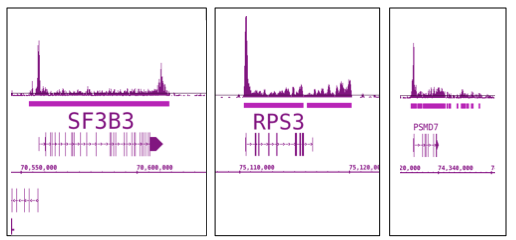
RNA pol II antibody (mAb) tested by ChIP-Seq. ChIP was performed using the ChIP-IT High Sensitivity Kit with chromatin from 2.3 million HL-60 cells and 20 ul of antibody. ChIP DNA was sequenced on the Illumina HiSeq and 30 million sequence tags were mapped to identify Pol II binding. ChIP-Seq data from three specific genes is shown as an example. Pol II binding is detected at the 5´ end of the genes, throughout the gene bodies and at the 3´ end of the genes.
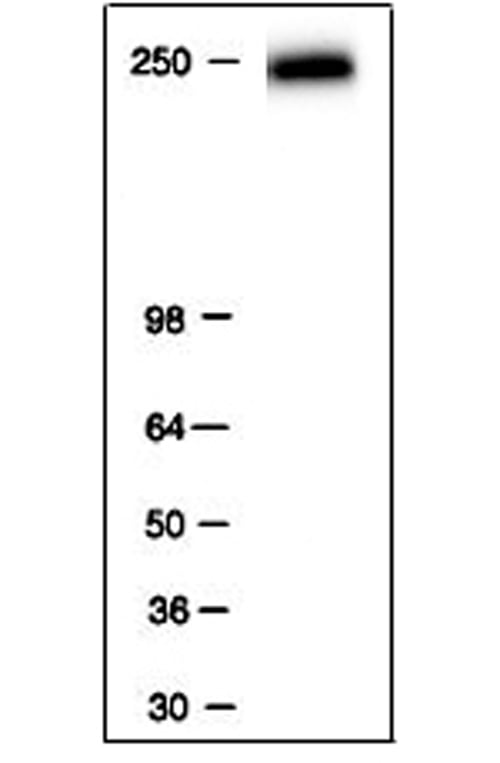
RNA pol II antibody tested by Western blot. RNA pol II detection by Western blot analysis. RNA pol II is detected in HeLa nuclear extracts using RNA pol II mouse monoclonal antibody at a 1:2,000 dilution.
RNA Pol II (RNApolII) Antibody – Mouse Monoclonal
For Research Use Only. Not for use in diagnostic procedures. Catalog #: MBS388365Short Description: Our RNA pol II antibody (mAb)(Clone 4H8) was raised in a Mouse host. It has been validated for use in Chromatin Immunoprecipitation, ChIP-Seq, Immunocytochemistry, Immunofluorescence and Western blot; it has been shown to react with Budding… More details
Product Overview
Online Datasheet in PDFProduct Name
RNA pol II (RNApolII), Monoclonal Antibody
Full Product Name
RNA pol II antibody (mAb)(Clone 4H8)
Product Gene Name
anti-RNApolII antibody
Product Synonym Names
RPB1; RPO2; POLR2; POLRA; RPBh1; RPOL2; RpIILS; hsRPB1; hRPB220
Clonality
Monoclonal
Isotype
IgG1
Clone Number
4H8
Host
Mouse
Species Reactivity
Budding Yeast, C. elegans, Human, Mouse, Rat
Form/Format
PBS containing 0.2% gelatin, 0.01% thimerosal and 0.1% sodium azide. Thimerosal and sodium azide are highly toxic.
Purity/Purification
Affinity Purified
Concentration
0.2ug/ul (lot specific)
Preparation and Storage
Some products may be shipped at room temperature. This will not affect their stability or performance. Avoid repeated freeze/thaw cycles by aliquoting items into single-use fractions for storage at -20 degree C for up to 2 years. Keep all reagents on ice when not in storage.1ug/ul
Molecular Weight
63,641 Da
OMIM
180660
Immunogen
This RNA pol II antibody was raised against a synthetic peptide YSPTSpPS corresponding to human RNA pol II. It recognizes both the phosphorylated and unphosphorylated forms of the largest subunit of RNA pol II.
Product Categories/Family for anti-RNApolII antibody
Primary Antibodies
Applications Tested/Suitable for anti-RNApolII antibody
Chromatin Immunoprecipitation (ChIP), Chromatin Immunoprecipitation-Seq (ChIP-Seq), Immunocytochemistry (ICC), Immunofluorescence (IF), Western Blot (WB)
Application Notes for anti-RNApolII antibody
Applications Validated:
ChIP: 10ul per ChIP
ChIP-Seq: 20ul each
WB: 1:2,000-1:5,000 dilution
For optimal results in Western blotting, primary antibody incubations should be performed overnight at 4 degree C. The addition of 0.1% Tween 20 to all blocking solutions may also reduce background.
ChIP: 10ul per ChIP
ChIP-Seq: 20ul each
WB: 1:2,000-1:5,000 dilution
For optimal results in Western blotting, primary antibody incubations should be performed overnight at 4 degree C. The addition of 0.1% Tween 20 to all blocking solutions may also reduce background.
Chromatin Immunoprecipitation (ChIP) of anti-RNApolII antibody
RNA pol II antibody (mAb) tested by ChIP-Seq. ChIP was performed using the ChIP-IT High Sensitivity Kit with chromatin from 2.3 million HL-60 cells and 20 ul of antibody. ChIP DNA was sequenced on the Illumina HiSeq and 30 million sequence tags were mapped to identify Pol II binding. ChIP-Seq data from three specific genes is shown as an example. Pol II binding is detected at the 5´ end of the genes, throughout the gene bodies and at the 3´ end of the genes.
Other Notes
Small volumes of anti-RNApolII antibody vial(s) may occasionally become entrapped in the seal of the product vial during shipment and storage. If necessary, briefly centrifuge the vial on a tabletop centrifuge to dislodge any liquid in the container`s cap. Certain products may require to ship with dry ice and additional dry ice fee may apply.
Searchable Terms for RNApolII purchase
MBS388365 is an antibody targeting RNApolII. Also known as RNA pol II antibody (mAb)(Clone 4H8). Reactive in Budding Yeast, C. elegans, Human, Mouse, Rat. Host: Mouse.
Additional Details
NCBI/Uniprot data below describe general gene information for RNApolII. It may not necessarily be applicable to this product.
NCBI Official Full Name
DNA-directed RNA polymerase II subunit RPB1
NCBI Official Synonym Full Names
polymerase (RNA) II (DNA directed) polypeptide A, 220kDa
NCBI Official Symbol
POLR2A
NCBI Official Synonym Symbols
RPB1; RPO2; POLR2; POLRA; RPBh1; RPOL2; RpIILS; hsRPB1; hRPB220
UniProt Protein Name
DNA-directed RNA polymerase II subunit RPB1
UniProt Synonym Protein Names
DNA-directed RNA polymerase II subunit A; DNA-directed RNA polymerase III largest subunit; RNA-directed RNA polymerase II subunit RPB1
UniProt Gene Name
POLR2A
UniProt Synonym Gene Names
POLR2; RNA polymerase II subunit B1
UniProt Entry Name
RPB1_HUMAN
NCBI Protein Information
DNA-directed RNA polymerase II subunit RPB1; DNA-directed RNA polymerase II largest subunit, RNA polymerase II 220 kd subunit; DNA-directed RNA polymerase II subunit A; DNA-directed RNA polymerase III largest subunit; RNA polymerase II subunit B1; RNA-dir
UniProt Comments for RNApolII
POLR2A: DNA-dependent RNA polymerase catalyzes the transcription of DNA into RNA using the four ribonucleoside triphosphates as substrates. Largest and catalytic component of RNA polymerase II which synthesizes mRNA precursors and many functional non-coding RNAs. Forms the polymerase active center together with the second largest subunit. Pol II is the central component of the basal RNA polymerase II transcription machinery. It is composed of mobile elements that move relative to each other. RPB1 is part of the core element with the central large cleft, the clamp element that moves to open and close the cleft and the jaws that are thought to grab the incoming DNA template. At the start of transcription, a single stranded DNA template strand of the promoter is positioned within the central active site cleft of Pol II. A bridging helix emanates from RPB1 and crosses the cleft near the catalytic site and is thought to promote translocation of Pol II by acting as a ratchet that moves the RNA-DNA hybrid through the active site by switching from straight to bent conformations at each step of nucleotide addition. During transcription elongation, Pol II moves on the template as the transcript elongates. Elongation is influenced by the phosphorylation status of the C-terminal domain (CTD) of Pol II largest subunit (RPB1), which serves as a platform for assembly of factors that regulate transcription initiation, elongation, termination and mRNA processing. Acts as a RNA- dependent RNA polymerase when associated with small delta antigen of Hepatitis delta virus, acting both as a replicate and transcriptase for the viral RNA circular genome. Component of the RNA polymerase II (Pol II) complex consisting of 12 subunits. The phosphorylated C-terminal domain interacts with FNBP3 and SYNCRIP. Interacts with SAFB/SAFB1. Interacts with CCNL1 and MYO1C. Interacts with CCNL2 and SFRS19. Component of a complex which is at least composed of HTATSF1/Tat-SF1, the P-TEFb complex components CDK9 and CCNT1, RNA polymerase II, SUPT5H, and NCL/nucleolin. Interacts with PAF1. Interacts (via C-terminus) with FTSJD2, CTDSP1 and SCAF8. Interacts via the phosphorylated C-terminal domain with WDR82 and with SETD1A and SETD1B only in the presence of WDR82. Interacts with ATF7IP. When phosphorylated at 'Ser-5', interacts with MEN1; the unphosphorylated form, or phosphorylated at 'Ser-2' does not interact. Interacts with DDX5. Belongs to the RNA polymerase beta' chain family.
Protein type: Nucleotide Metabolism - purine; Nucleotide Metabolism - pyrimidine; Transferase; EC 2.7.7.6; Transcription initiation complex; EC 2.7.7.48
Chromosomal Location of Human Ortholog: 17p13.1
Cellular Component: nucleoplasm; nucleolus; DNA-directed RNA polymerase II, core complex; nucleus
Molecular Function: protein binding; RNA-directed RNA polymerase activity; DNA binding; DNA-directed RNA polymerase activity; ubiquitin protein ligase binding; metal ion binding
Biological Process: transcription from RNA polymerase II promoter; transcription initiation from RNA polymerase II promoter; viral reproduction; somatic stem cell maintenance; positive regulation of viral transcription; RNA splicing; DNA repair; positive regulation of RNA splicing; nuclear mRNA splicing, via spliceosome; mRNA capping; regulation of transcription, DNA-dependent; nucleotide-excision repair; transcription-coupled nucleotide-excision repair; RNA elongation from RNA polymerase II promoter; gene expression
Show more Protein type: Nucleotide Metabolism - purine; Nucleotide Metabolism - pyrimidine; Transferase; EC 2.7.7.6; Transcription initiation complex; EC 2.7.7.48
Chromosomal Location of Human Ortholog: 17p13.1
Cellular Component: nucleoplasm; nucleolus; DNA-directed RNA polymerase II, core complex; nucleus
Molecular Function: protein binding; RNA-directed RNA polymerase activity; DNA binding; DNA-directed RNA polymerase activity; ubiquitin protein ligase binding; metal ion binding
Biological Process: transcription from RNA polymerase II promoter; transcription initiation from RNA polymerase II promoter; viral reproduction; somatic stem cell maintenance; positive regulation of viral transcription; RNA splicing; DNA repair; positive regulation of RNA splicing; nuclear mRNA splicing, via spliceosome; mRNA capping; regulation of transcription, DNA-dependent; nucleotide-excision repair; transcription-coupled nucleotide-excision repair; RNA elongation from RNA polymerase II promoter; gene expression
Precautions
All of MyBioSource's Products are for scientific laboratory research purposes and are not for diagnostic, therapeutics, prophylactic or in vivo use. Through your purchase, you expressly represent and warrant to MyBioSource that you will properly test and use any Products purchased from MyBioSource in accordance with industry standards. MyBioSource and its authorized distributors reserve the right to refuse to process any order where we reasonably believe that the intended use will fall outside of our acceptable guidelines.
Disclaimer
While every efforts were made to ensure the accuracy of the information provided in this datasheet, MyBioSource will not be liable for any omissions or errors contained herein. MyBioSource reserves the right to make changes to this datasheet at any time without prior notice.
It is the responsibility of the customer to report product performance issues to MyBioSource within 30 days of receipt of the product. Please visit our Terms & Conditions page for more information.
It is the responsibility of the customer to report product performance issues to MyBioSource within 30 days of receipt of the product. Please visit our Terms & Conditions page for more information.
Product Note
Select online data sheet information is drawn from bioinformatics databases, occasionally resulting in ambiguous or non-relevant product information. It is the responsibility of the customer to review, verify, and evaluate the information to make sure it matches their requirements before purchasing the kit. Our ELISA Kit assays are dynamic research tools and sometimes they may be updated and improved. If the format of this assay is important to you then please request the current manual or contact our technical support team with a presales inquiry before placing an order. We will confirm the current details of the assay. We cannot guarantee the sample manual posted online is the most current manual, it is intended to serve as an example only. Please refer to the instructions For Use provided with the assay kit for precise details.
Product PubMed Publications
Products associated with anti-RNApolII antibody
| Reference Product | PubMed Publications |
|---|---|
| ACTB antibody | >11 publications with RNApolII and ACTB |
| MYC antibody | >2 publications with RNApolII and MYC |
| ABL1 antibody | >1 publications with RNApolII and ABL1 |
| NRIP1 antibody | >1 publications with RNApolII and NRIP1 |
| CDK9 antibody | >1 publications with RNApolII and CDK9 |
| CCND1 antibody | >1 publications with RNApolII and CCND1 |
Pathways associated with anti-RNApolII antibody
| Products by Pathway | Pathway Diagram |
|---|---|
| Abortive Elongation Of HIV-1 Transcript In The Absence Of Tat Pathway antibodies | Abortive Elongation Of HIV-1 Transcript In The Absence Of Tat Pathway Diagram |
| DNA Repair Pathway antibodies | DNA Repair Pathway Diagram |
| Developmental Biology Pathway antibodies | Developmental Biology Pathway Diagram |
| Disease Pathway antibodies | Disease Pathway Diagram |
| Dual Incision Reaction In TC-NER Pathway antibodies | Dual Incision Reaction In TC-NER Pathway Diagram |
| Epstein-Barr Virus Infection Pathway antibodies | Epstein-Barr Virus Infection Pathway Diagram |
| Epstein-Barr Virus Infection Pathway antibodies | Epstein-Barr Virus Infection Pathway Diagram |
| Eukaryotic Transcription Initiation Pathway antibodies | Eukaryotic Transcription Initiation Pathway Diagram |
| Formation Of HIV Elongation Complex In The Absence Of HIV Tat Pathway antibodies | Formation Of HIV Elongation Complex In The Absence Of HIV Tat Pathway Diagram |
| Formation Of HIV-1 Elongation Complex Containing HIV-1 Tat Pathway antibodies | Formation Of HIV-1 Elongation Complex Containing HIV-1 Tat Pathway Diagram |
Diseases associated with anti-RNApolII antibody
| Disease Name | Pubmed Publications |
|---|---|
| Neoplasms Antibodies | >14 publications with RNApolII and Neoplasms |
| Cardiovascular Diseases Antibodies | >4 publications with RNApolII and Cardiovascular Diseases |
| Adenocarcinoma Antibodies | >4 publications with RNApolII and Adenocarcinoma |
| Disease Models, Animal Antibodies | >3 publications with RNApolII and Disease Models, Animal |
| Adenoma Antibodies | >2 publications with RNApolII and Adenoma |
| Colonic Neoplasms Antibodies | >1 publications with RNApolII and Colonic Neoplasms |
| Stomach Neoplasms Antibodies | >1 publications with RNApolII and Stomach Neoplasms |
| Poisoning Antibodies | >1 publications with RNApolII and Poisoning |
| Drug Toxicity Antibodies | >1 publications with RNApolII and Drug Toxicity |
| Inflammation Antibodies | >1 publications with RNApolII and Inflammation |
Organs/Tissues associated with anti-RNApolII antibody
| Organ/Tissue Name | Pubmed Publications |
|---|---|
| Brain Antibodies | >7 publications with RNApolII and Brain |
| Heart Antibodies | >5 publications with RNApolII and Heart |
| Liver Antibodies | >4 publications with RNApolII and Liver |
| Lung Antibodies | >4 publications with RNApolII and Lung |
| Kidney Antibodies | >3 publications with RNApolII and Kidney |
| Muscle Antibodies | >3 publications with RNApolII and Muscle |
| Adipose Tissue Antibodies | >2 publications with RNApolII and Adipose Tissue |
| Connective Tissue Antibodies | >2 publications with RNApolII and Connective Tissue |
| Stomach Antibodies | >1 publications with RNApolII and Stomach |
| Embryonic Tissue Antibodies | >1 publications with RNApolII and Embryonic Tissue |