

Thyroglobulin

Référence MBS370325-0,5mL-C
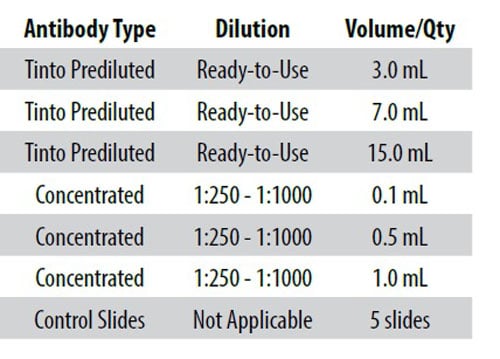
Conditionnement : 0.5mL(Concentrate)
Marque : MyBiosource
Contactez votre distributeur local :

Téléphone : +1 850 650 7790
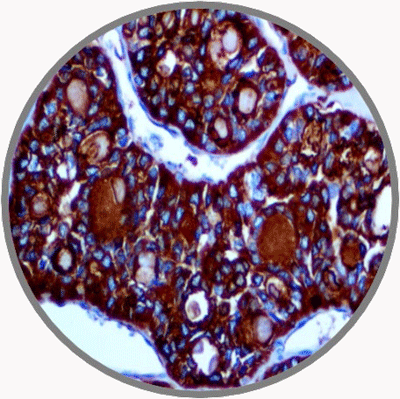
nset: IHC of Thyroglobulin on a FFPE Papillary Thyroid Carcinoma Tissue
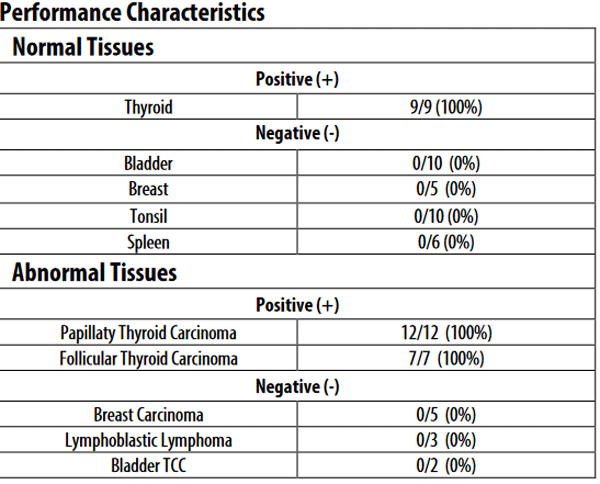
Performance Characteristics
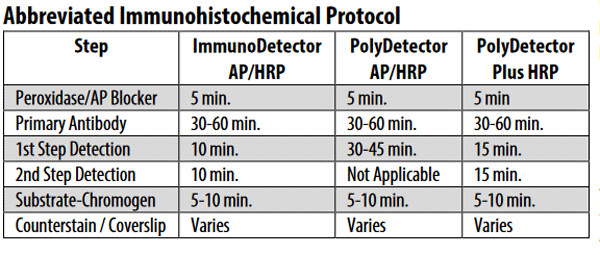
Thyroglobulin (TG) Antibody – Mouse Monoclonal
For Research Use Only. Not for use in diagnostic procedures. Catalog #: MBS370325Thyroglobulin (Tg) is a 660 kDa, dimeric protein produced by and used entirely within the thyroid gland. Tg is used by the thyroid gland to produce the thyroid hormones thyroxine (T4) and triiodothyronine (T3). The active form of thyroxine, triiodothyronine,… More details
Product Overview
Online Datasheet in PDFProduct Name
Thyroglobulin (TG), Monoclonal Antibody
Full Product Name
Thyroglobulin
Product Gene Name
anti-TG antibody
Clonality
Monoclonal
Isotype
IgG1
Clone Number
2H11/6E1
Host
Mouse
Species Reactivity
Human, Mouse, Rat
Ractivity note: Paraffin, Frozen
Ractivity note: Paraffin, Frozen
Form/Format
Thyroglobulin is a mouse monoclonal antibody derived from cell culture supernatant that is concentrated, dialyzed, filter sterilized and diluted in buffer pH 7.5, containing BSA and sodium azide as a preservative.
Preparation and Storage
Store at 2°C to 8°C.
Stability: This product is stable up to the expiration date on the product label. Do not use after expiration date listed on package label. Temperature fluctuations should be avoided. Store appropriately when not in use, and avoid prolonged exposure to room temperature conditions.
Stability: This product is stable up to the expiration date on the product label. Do not use after expiration date listed on package label. Temperature fluctuations should be avoided. Store appropriately when not in use, and avoid prolonged exposure to room temperature conditions.
OMIM
188450
Localization
Cytoplasmic
Control
Thyroid, Thyroid Carcinoma
Intended Use
This antibody is intended for use in Immunohistochemical applications on formalinfixed paraffin-embedded tissues (FFPE), frozen tissue sections and cell preparations. Interpretation of results should be performed by a qualified medical professional.
Immunogen
Purified human thyroglobulin.
Precautions
1. For professional users only. Results should be interpreted by a qualified medical professional.
2. This product contains <0.1% sodium azide (NaN?) as a preservative. Ensure proper handling procedures are used with this reagent.
3. Always wear personal protective equipment such as laboratory coat, goggles and gloves when handling reagents.
4. Dispose of unused solution with copious amount of water.
5. Do not ingest reagent. If reagent is ingested, seek medical advice immediately.
6. Avoid contact with eyes. If contact occurs, flush with large quantities of water.
7. Follow safety precautions of the heating device used for epitope retrieval (TintoRetriever Pressure Cooker or similar).
8. For additional safety information refer to Safety Data Sheet for this product.
9. For complete recommendations for handling biological specimens, please refer to the CDC document, “Guidelines for Safe Work Practices in Human and AMDL”
Staining Procedure
1. Cut and mount 3-5 micron formalin-fixed paraffin-embedded tissues on positively charged slides such as Hydrophilic Plus Slides (please inquire).
2. Air dry for 2 hours at 58° C.
3. Deparaffinize, dehydrate and rehydrate tissues.
4. Subject tissues to heat induced epitope retrieval (HIER) using a suitable retrieval solution such as ImmunoDNA Retriever with Citrate (please inquire) or EDTA (please inquire).
5. Any of three heating methods may be used:
a. TintoRetriever Pressure Cooker or Equivalent Place tissues/slides in a staining dish or coplin jar containing the ImmunoDNA Retriever with Citrate or EDTA, and place on trivet in the pressure cooker. Add 1-2 inches of distilled water to the pressure cooker and turn heat to high. Incubate for 15 minutes. Open and immediately transfer slides to room temperature.
b. TintoRetriever PT Module or Water Bath Method Place tissues/slides in a pre-warmed staining dish or coplin jar containing the ImmunoDNA Retriever with Citrate or EDTA at 95°-99° C. Incubate for 30-60 minutes.
c. Conventional Steamer Method Place tissues/slides in a pre-warmed staining dish or coplin jar containing the ImmunoDNA Retriever with Citrate or EDTA in a steamer, cover and steam for 30-60 minutes.
6. After heat treatment, transfer slides in ImmunoDNA Retriever with Citrate or EDTA to room temperature and let stand for 15-20 minutes.
7. For manual staining, perform antibody incubation at ambient temperature. For automated staining methods, perform antibody incubation according to instrument manufacturer’s instructions.
8. Wash slides with ImmunoDNA washer or DI water.
9. Continue IHC staining protocol. Wash slides between each step with ImmunoDNA washer solution.
Mounting Protocols
For detailed instructions using biodegradable permanent mounting media such as XyGreen PermaMounter (please inquire) or organic solvent based resin such as PermaMounter (please inquire).
Product Limitations
Due to inherent variability present in immunohistochemical procedures (including fixation time of tissues, dilution factor of antibody, retrieval method utilized and incubation time), optimal performance should be established through the use of positive and negative controls. Results should be interpreted by a qualified medical professional.
ISO Certification
Manufactured in an ISO 13485:2016 Certified Laboratory.
Applications Tested/Suitable for anti-TG antibody
Immunohistochemistry (IHC) Formalin/Paraffin
Application Notes for anti-TG antibody
Specimen Preparation: Paraffin sections: The antibody can be used on formalin-fixed paraffin-embedded (FFPE) tissue sections. Ensure tissue undergoes appropriate fixation for best results. Pre-treatment of tissues with heat-induced epitope retrieval (HIER) is recommended using ImmunoDNA Retriever with Citrate (Please inquire), ImmunoDNA Retriever with EDTA (Please inquire) or ImmunoDNA Digestor (Please inquire). Tissue should remain hydrated via use of Immuno/DNA Washer solutions (Please inquire). Frozen sections and cell preparations: The antibody can be used for labeling acetone-fixed frozen sections and acetone-fixed cell preparations.
Other Notes
Small volumes of anti-TG antibody vial(s) may occasionally become entrapped in the seal of the product vial during shipment and storage. If necessary, briefly centrifuge the vial on a tabletop centrifuge to dislodge any liquid in the container`s cap. Certain products may require to ship with dry ice and additional dry ice fee may apply.
Searchable Terms for TG purchase
MBS370325 is an antibody targeting TG. Also known as Thyroglobulin. Reactive in Human, Mouse, Rat
Ractivity note: Paraffin, Frozen. Host: Mouse.
Ractivity note: Paraffin, Frozen. Host: Mouse.
Additional Details
NCBI/Uniprot data below describe general gene information for TG. It may not necessarily be applicable to this product.
NCBI Official Full Name
thyroglobulin
NCBI Official Synonym Full Names
thyroglobulin
NCBI Official Symbol
TG
NCBI Official Synonym Symbols
TGN; AITD3
UniProt Protein Name
Thyroglobulin
Protein Family
Thyroglobulin
UniProt Gene Name
TG
UniProt Synonym Gene Names
Tg
UniProt Entry Name
THYG_HUMAN
NCBI Protein Information
thyroglobulin
NCBI Summary for TG
Thyroglobulin (Tg) is a glycoprotein homodimer produced predominantly by the thryroid gland. It acts as a substrate for the synthesis of thyroxine and triiodothyronine as well as the storage of the inactive forms of thyroid hormone and iodine. Thyroglobulin is secreted from the endoplasmic reticulum to its site of iodination, and subsequent thyroxine biosynthesis, in the follicular lumen. Mutations in this gene cause thyroid dyshormonogenesis, manifested as goiter, and are associated with moderate to severe congenital hypothyroidism. Polymorphisms in this gene are associated with susceptibility to autoimmune thyroid diseases (AITD) such as Graves disease and Hashimoto thryoiditis. [provided by RefSeq, Nov 2009]
Show more UniProt Comments for TG
TG: Precursor of the iodinated thyroid hormones thyroxine (T4) and triiodothyronine (T3). Defects in TG are the cause of thyroid dyshormonogenesis 3 (TDH3). A disorder due to thyroid dyshormonogenesis, causing large goiters of elastic and soft consistency in the majority of patients. Although the degree of thyroid dysfunction varies considerably among patients with defective thyroglobulin synthesis, patients usually have a relatively high serum free triiodothyronine (T3) concentration with disproportionately low free tetraiodothyronine (T4) level. The maintenance of relatively high free T3 levels prevents profound tissue hypothyroidism except in brain and pituitary, which are dependent on T4 supply, resulting in neurologic and intellectual defects in some cases. Variations in TG are associated with susceptibility to autoimmune thyroid disease type 3 (AITD3). AITDs including Graves disease (GD) and Hashimoto thyroiditis (HT), are among the most common human autoimmune diseases. They are complex diseases, which are caused by an interaction between susceptibility genes and nongenetic factors, such as infection. Belongs to the type-B carboxylesterase/lipase family. 2 isoforms of the human protein are produced by alternative splicing.
Protein type: Secreted, signal peptide; Secreted
Chromosomal Location of Human Ortholog: 8q24
Cellular Component: endoplasmic reticulum; extracellular region; extracellular space; Golgi apparatus; perinuclear region of cytoplasm; protein complex
Molecular Function: anion binding; chaperone binding; hormone activity; protein complex binding; protein homodimerization activity
Biological Process: hormone biosynthetic process; iodide transport; regulation of myelination; response to lipopolysaccharide; response to pH; signal transduction; thyroid gland development; thyroid hormone generation; transcytosis
Disease: Autoimmune Thyroid Disease, Susceptibility To, 3; Thyroid Dyshormonogenesis 3
Show more Protein type: Secreted, signal peptide; Secreted
Chromosomal Location of Human Ortholog: 8q24
Cellular Component: endoplasmic reticulum; extracellular region; extracellular space; Golgi apparatus; perinuclear region of cytoplasm; protein complex
Molecular Function: anion binding; chaperone binding; hormone activity; protein complex binding; protein homodimerization activity
Biological Process: hormone biosynthetic process; iodide transport; regulation of myelination; response to lipopolysaccharide; response to pH; signal transduction; thyroid gland development; thyroid hormone generation; transcytosis
Disease: Autoimmune Thyroid Disease, Susceptibility To, 3; Thyroid Dyshormonogenesis 3
Research Articles on TG
Precautions
All of MyBioSource's Products are for scientific laboratory research purposes and are not for diagnostic, therapeutics, prophylactic or in vivo use. Through your purchase, you expressly represent and warrant to MyBioSource that you will properly test and use any Products purchased from MyBioSource in accordance with industry standards. MyBioSource and its authorized distributors reserve the right to refuse to process any order where we reasonably believe that the intended use will fall outside of our acceptable guidelines.
Disclaimer
While every efforts were made to ensure the accuracy of the information provided in this datasheet, MyBioSource will not be liable for any omissions or errors contained herein. MyBioSource reserves the right to make changes to this datasheet at any time without prior notice.
It is the responsibility of the customer to report product performance issues to MyBioSource within 30 days of receipt of the product. Please visit our Terms & Conditions page for more information.
It is the responsibility of the customer to report product performance issues to MyBioSource within 30 days of receipt of the product. Please visit our Terms & Conditions page for more information.
Product Note
Select online data sheet information is drawn from bioinformatics databases, occasionally resulting in ambiguous or non-relevant product information. It is the responsibility of the customer to review, verify, and evaluate the information to make sure it matches their requirements before purchasing the kit. Our ELISA Kit assays are dynamic research tools and sometimes they may be updated and improved. If the format of this assay is important to you then please request the current manual or contact our technical support team with a presales inquiry before placing an order. We will confirm the current details of the assay. We cannot guarantee the sample manual posted online is the most current manual, it is intended to serve as an example only. Please refer to the instructions For Use provided with the assay kit for precise details.
Product PubMed Publications
Products associated with anti-TG antibody
| Reference Product | PubMed Publications |
|---|---|
| TPO antibody | >722 publications with TG and TPO |
| TSHR antibody | >146 publications with TG and TSHR |
| ALB antibody | >137 publications with TG and ALB |
| INS antibody | >133 publications with TG and INS |
| NKX2-1 antibody | >25 publications with TG and NKX2-1 |
| HSPA5 antibody | >11 publications with TG and HSPA5 |
| LRP2 antibody | >4 publications with TG and LRP2 |
| HHEX antibody | >3 publications with TG and HHEX |
Pathways associated with anti-TG antibody
| Products by Pathway | Pathway Diagram |
|---|---|
| Autoimmune Thyroid Disease Pathway antibodies | Autoimmune Thyroid Disease Pathway Diagram |
| Autoimmune Thyroid Disease Pathway antibodies | Autoimmune Thyroid Disease Pathway Diagram |
| Thyroid Hormone Synthesis Pathway antibodies | Thyroid Hormone Synthesis Pathway Diagram |
| Thyroid Hormone Synthesis Pathway antibodies | Thyroid Hormone Synthesis Pathway Diagram |
| Thyroxine (Thyroid Hormone) Production Pathway antibodies | Thyroxine (Thyroid Hormone) Production Pathway Diagram |
Diseases associated with anti-TG antibody
| Disease Name | Pubmed Publications |
|---|---|
| Cardiovascular Diseases Antibodies | >5260 publications with TG and Cardiovascular Diseases |
| Thyroid Diseases Antibodies | >2593 publications with TG and Thyroid Diseases |
| Heart Diseases Antibodies | >2339 publications with TG and Heart Diseases |
| Fatty Liver Antibodies | >1952 publications with TG and Fatty Liver |
| Inflammation Antibodies | >1800 publications with TG and Inflammation |
| Liver Diseases Antibodies | >1731 publications with TG and Liver Diseases |
| Hypertension Antibodies | >1538 publications with TG and Hypertension |
| Thyroid Neoplasms Antibodies | >1304 publications with TG and Thyroid Neoplasms |
| Necrosis Antibodies | >1000 publications with TG and Necrosis |
| Kidney Diseases Antibodies | >896 publications with TG and Kidney Diseases |
Organs/Tissues associated with anti-TG antibody
| Organ/Tissue Name | Pubmed Publications |
|---|---|
| Blood Antibodies | >17904 publications with TG and Blood |
| Liver Antibodies | >4518 publications with TG and Liver |
| Thyroid Antibodies | >3390 publications with TG and Thyroid |
| Muscle Antibodies | >2522 publications with TG and Muscle |
| Brain Antibodies | >2499 publications with TG and Brain |
| Kidney Antibodies | >1408 publications with TG and Kidney |
| Connective Tissue Antibodies | >1188 publications with TG and Connective Tissue |
| Lymph Node Antibodies | >760 publications with TG and Lymph Node |
| Intestine Antibodies | >663 publications with TG and Intestine |
| Pancreas Antibodies | >519 publications with TG and Pancreas |
Vous serez peut-être également intéressé par les produits suivants :
Référence
Description
Cond.
Prix HT