CD28 Antibody

Cat# OAEE00773
Size : 100tests(T100)
Brand : Aviva Systems Biology
Contact local distributor :

Phone : +1 850 650 7790
| Datasheets/Manuals | Printable datasheet for CD28 Antibody |
|---|
| Predicted Species Reactivity | Human|Non-human Primate |
|---|---|
| Product Format | Stabilizing phosphate buffered saline (PBS), pH 7.4, 15 mM sodium azide |
| Clonality | Monoclonal |
| Clone | CD28.2 |
| Isotype | IgG1 |
| Host | Mouse |
| Conjugation | R-PE |
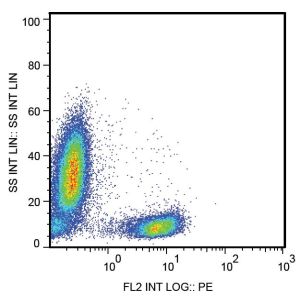
| Application | FC |
| Reconstitution and Storage | 2°C to 8°C |
| Immunogen | DC28.1.3.3 murine T cell hybridoma transfected with human CD28 cDNA |
| Purification | Purified by size-exclusion chromatography |
| Concentration | 20 ul / test |
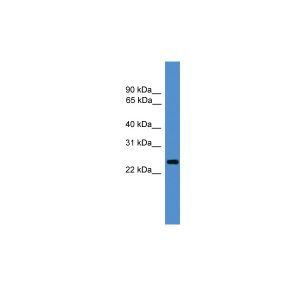
| Specificity | The antibody CD28.2 reacts with CD28, a disulfide-linked homodimeric type I glycoprotein (monomer of Mw 44 kDa) which is a critical costimulatory receptor of T cells. HLDA V.; WS Code 5T CD28.05 |
| Formulation | PE |
| Storage Buffer | The reagent is provided in phosphate buffered saline (PBS) containing 15 mM sodium azide and 0.2% (w/v) high-grade protease free Bovine Serum Albumin (BSA) as a stabilizing agent. |
| Reference | Schlossman, S., et al., Eds. 1995. Leucocyte Typing V. Oxford University Press. New York. Jeong SH, Qiao M, Nascimbeni M, Hu Z, Rehermann B, Murthy K, Liang TJ. Immunization with hepatitis C virus-like particles induces humoral and cellular immune responses in nonhuman primates. J Virol. 2004 Jul;78(13):6995-7003. Scharschmidt E, Wegener E, Heissmeyer V, Rao A, Krappmann D: Degradation of Bcl10 induced by T-cell activation negatively regulates NF-kappa B signaling. Mol Cell Biol. 2004 May;24(9):3860-73. Marti F, Krause A, Post NH, Lyddane C, Dupont B, Sadelain M, King PD: Negative-feedback regulation of CD28 costimulation by a novel mitogen-activated protein kinase phosphatase, MKP6. J Immunol. 2001 Jan 1;166(1):197-206. Tazi A, Moreau J, Bergeron A, Dominique S, Hance AJ, Soler P: Evidence that Langerhans cells in adult pulmonary Langerhans cell histiocytosisare mature dendritic cells: importance of the cytokine microenvironment. J Immunol. 1999 Sep 15;163(6):3511-5. Nunes J, Klasen S, Franco MD, Lipcey C, Mawas C, Bagnasco M, Olive D: Signalling through CD28 T-cell activation pathway involves an inositolphospholipid-specific phospholipase C activity. Biochem J. 1993 Aug 1;293 ( Pt 3):835-42. Galea-Lauri J, Darling D, Gan SU, Krivochtchapov L, Kuiper M, Gäken J, Souberbielle B, Farzaneh F: Expression of a variant of CD28 on a subpopulation of human NK cells: implications for B7-mediated stimulation of NK cells. J Immunol. 1999 Jul 1;163(1):62-70. Nunès J, Klasen S, Ragueneau M, Pavon C, Couez D, Mawas C, Bagnasco M, Olive D: CD28 mAbs with distinct binding properties differ in their ability to induce T cell activation: analysis of early and late activation events. Int Immunol. 1993 Mar;5(3):311-5. |
|---|---|
| Gene Symbol | CD28 |
| Gene Full Name | CD28 molecule |
| Alias Symbols | T-cell-specific surface glycoprotein CD28, Tp44. |
| NCBI Gene Id | 940 |
| Protein Name | T-cell-specific surface glycoprotein CD28 |
| Description of Target | Involved in T-cell activation, the induction of cell proliferation and cytokine production and promotion of T-cell survival. Enhances the production of IL4 and IL10 in T-cells in conjunction with TCR/CD3 ligation and CD40L costimulation (PubMed:8617933). Isoform 3 enhances CD40L-mediated activation of NF-kappa-B and kinases MAPK8 and PAK2 in T-cells (PubMed:15067037). |
| Uniprot ID | P10747 |
| Protein Accession # | NP_001230006.1; NP_001230007.1; NP_006130.1 |
| Nucleotide Accession # | NM_001243077.1; NM_001243078.1; NM_006139.3 |