
GCLC Antibody

Cat# OALA02549
Size : 50ul
Brand : Aviva Systems Biology
Contact local distributor :
 Phone : +1 850 650 7790

| Datasheets/Manuals | Printable datasheet for OALA02549 |
|---|
| Tested Species Reactivity | Rat |
|---|---|
| Predicted Species Reactivity | Mouse, Bovine, Rat, Human, Monkey |
| Product Format | Liquid PBS (pH 7.4) with 0.2% BSA and 0.09% sodium azide |
| Clonality | Polyclonal |
| Host | Rabbit |
| Conjugation | Unconjugated |
| Application | ELISA, IHC, IHC-P, IP, WB |
| Additional Information | Antigen Type: Synthetic peptide |
| Reconstitution and Storage | Store at 4C or -20C. Avoid freeze-thaw cycles. |
| Immunogen | A synthetic peptide derived from corresponding to aa 295-313 of rat GCLC (heavy subunit of GCS). |
| Purification | Protein A purified |
| Concentration | 1 mg/ml |
| Specificity | Recognizes the heavy subunit of rat GCS. Species cross-reactivity: human, monkey and mouse. Cross-reacts weakly with bovine. |
| Epitope | aa295-313 |
| Warning | For research use only. |
| Application Info | ELISA, IHC, IHC-P (5 ug/ml), IP, WB |
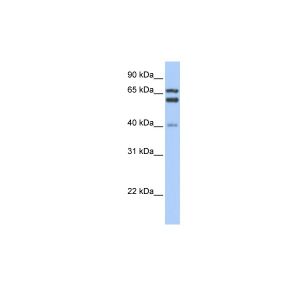
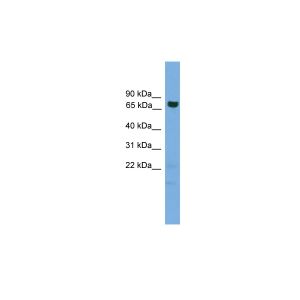
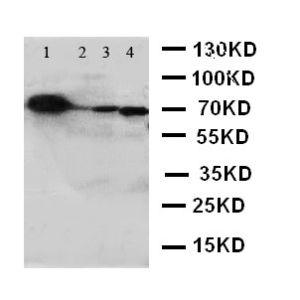
| Application Data | Immunohistochemistry: OALA02549 was validated for use in immunohistochemistry on a panel of 21 formalin-fixed, paraffin-embedded (FFPE) human tissues after heat induced antigen retrieval in pH 6.0 citrate buffer. After incubation with the primary antibody, slides were incubated with biotinylated secondary antibody, followed by alkaline phosphatase-streptavidin and chromogen. The stained slides were evaluated by a pathologist to confirm staining specificity. The optimal working concentration for OALA02549 was determined to be 5 ug/ml. Suitable for use in Western Blot and Immunoprecipitation. Western Blot: 2.5-5 ug/ml for 2hrs at RT. Immunoprecipitation: 10 ug/mg protein lysate. Denatured verified. Use Protein A. Positive control: Jurkat, MAD109, PC12 cells. |
| Storage Buffer | PBS, pH 7.4, 0.09% Sodium Azide, 0.2% BSA |
| Protein Range | aa295-313 |
| Gene Symbol | GCLC |
|---|---|
| Alias Symbols | GCLC, GCL, GCS heavy chain, Gamma-ECS, GCS, GLCL, GLCLC |
| NCBI Gene Id | 2729 |
| Uniprot ID | P48506 |
| Protein Accession # | NP_001489.1 |
| Nucleotide Accession # | NM_001498 |