



The RayBiotech Inorganic Phosphorus Colorimetric Assay Kit provides a simple, reproducible, and sensitive tool for measuring inorganic phosphorus concentration in serum, cell lysates, urine, saliva, and other biological liquid samples.
Phosphorus (Inorganic) Assay Kit (Colorimetric)
Phosphorus (Inorganic) Assay Kit (Colorimetric)
Contact Us for Bulk Request
Product Description
Specifications
| Size | 2 Plate Kit, 4 Plate Kit |
| Sensitivity | 3.1 μM |
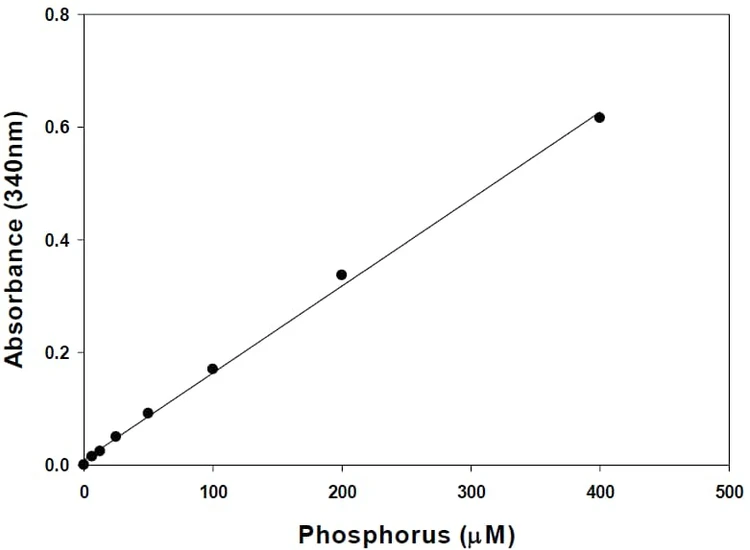
| Detection Range | 3.1 μM - 400 μM |
| Compatible Sample Types | Serum, Cell Lysates, Saliva, Urine |
| Quantitative/Semi-Quantitative | Quantitative |
| Solid Support | 96-well Microplate |
| Method Of Detection | Colorimetric |
| Research Area | Inorganic Ions, Energy Metabolism, Liver & Renal Function, Bone Biology |
| Shipping Type | Blue ice |
| Storage | 4°C |
Related Products
Calcium Assay Kit (Colorimetric)
As low as
Copper Assay Kit (Colorimetric)
As low as
Magnesium Assay Kit (Colorimetric)
As low as
Introduction
Phosphorus is an essential component in living organisms and contributes to a variety of biological functions, including structural roles within nucleic acids, cellular membranes, and bone. Phosphorus is also important in cellular energy transport, nucleic acid metabolism, and signal transduction. Hyperphosphatemia, a condition of excessive levels of phosphorus in the blood, can lead to organ calcification and interfere with the utilization of other inorganic ions, such as iron, calcium, magnesium, and zinc.
RayBio® Phosphorus (Inorganic) Colorimetric Assay Kit provides a simple, reproducible, and sensitive tool for measuring inorganic phosphorus concentration in serum, cell lysates, urine, saliva, and other biological liquid samples. In this assay, inorganic phosphorus reacts with ammonium molybdate in an acid medium to form a phosphomolybdate complex that absorbs light at 340nm. The absorbance at this wavelength is directly proportional to the amount of inorganic phosphorus present in the sample.
Kit Components
| Component | Size / Description |
|---|---|
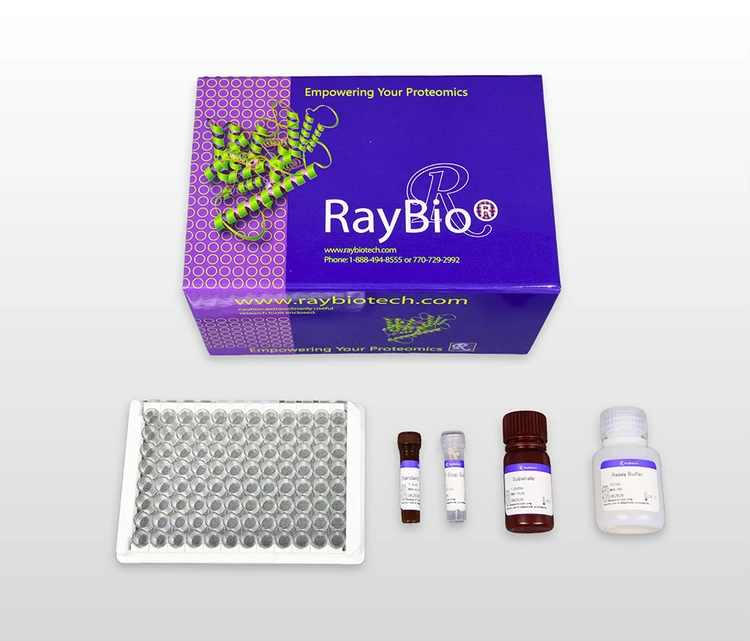
| Microplate | Two 96-well plates |
| Phosphorus Standard | 1 vial |
| Assay Buffer | 2 × 22mL |
Additional Materials Required
- Microplate reader capable of measuring absorbance at 340 nm
- Precision pipettes to deliver 2 μL to 1 mL volumes
- Multi-channel pipettes to deliver 20 μL to 200 μL volumes
- Tubes to prepare sample dilutions
- MilliQ water or another type of double-distilled water (ddHtion
Phosphorus is an essential component in living organisms and contributes to a variety of biological functions, including structural roles within nucleic acids, cellular membranes, and bone. Phosphorus is also important in cellular energy transport, nucleic acid metabolism, and signal transduction. Hyperphosphatemia, a condition of excessive levels of phosphorus in the blood, can lead to organ calcification and interfere with the utilization of other inorganic ions, such as iron, calcium, magnesium, and zinc.
RayBio® Phosphorus (Inorganic) Colorimetric Assay Kit provides a simple, reproducible, and sensitive tool for measuring inorganic phosphorus concentration in serum, cell lysates, urine, saliva, and other biological liquid samples. In this assay, inorganic phosphorus reacts with ammonium molybdate in an acid medium to form a phosphomolybdate complex that absorbs light at 340nm. The absorbance at this wavelength is directly proportional to the amount of inorganic phosphorus present in the sample.
Kit Components
Component Size / Description Microplate Two 96-well plates Phosphorus Standard 1 vial Assay Buffer 2 × 22mL Additional Materials Required
- Microplate reader capable of measuring absorbance at 340 nm
- Precision pipettes to deliver 2 μL to 1 mL volumes
- Multi-channel pipettes to deliver 20 μL to 200 μL volumes
- Tubes to prepare sample dilutions
- MilliQ water or another type of double-distilled water (ddH2O)
Assay Procedure Summary
- Add 50 μL of the diluted phosphorus standards or samples to the 96-well Microplate.
- Initiate the reaction by adding 200 μL Assay Buffer to each well.
- Cover with the plate cover. Carefully shake the plate for a few seconds to mix.
- Incubate the plate for 30 minutes at room temperature in the dark.
- Measure the absorbance at 340 nm using a plate reader.
Storage/Stability
The entire kit may be stored at 2–8 °C for up to 6 months from the date of shipment.
documents
citations
A pilot clinical trial to explore the effects of UV exposure on vitamin D synthesis and inflammatory responses in vitamin D-Deficient adults
- Species:
- Human
- Sample Type:
- Serum (vitamin D-deficient adults)
- Year:
- 2025
- Journal Name:
- Scientific Reports
- PubMed ID:
- 40595199