TPSAB1 Antibody

Cat# OALA02645
Size : 50µg
Brand : Aviva Systems Biology
Contact local distributor :

Phone : +1 850 650 7790
TPSAB1 Antibody (OALA02645)

| Datasheets/Manuals | Printable datasheet for TPSAB1 Antibody (OALA02645) |
|---|
| Tested Species Reactivity | Human |
|---|---|
| Predicted Species Reactivity | Cat|Dog|Human|Monkey |
| Product Format | Liquid |
| Clonality | Monoclonal |
| Clone | AA1 |
| Isotype | IgG1 |
| Host | Mouse |
| Conjugation | Unconjugated |
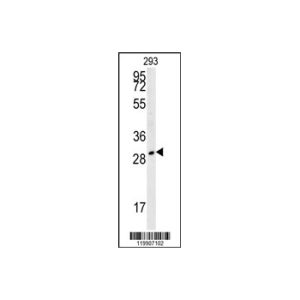
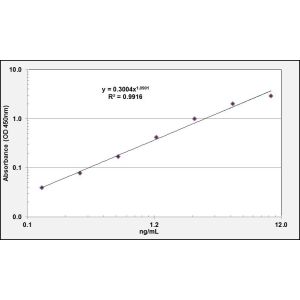
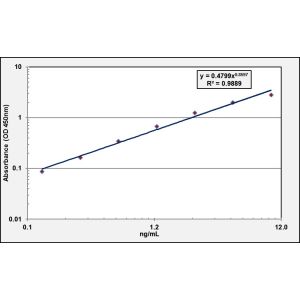
| Application | ELISA|IHC|IHC-Fr|IHC-P|WB |
| Reconstitution and Storage | -20°C|2°C to 8°C |
| Immunogen | Human mast cell tryptase purified from human lung tissue. |
| Purification | Protein G Purified |
| Concentration | 1 mg/ml |
| Specificity | Recognizes human mast cell tryptase, both alpha and beta isoforms. The antibody is an excellent marker for mast cells and does not bind to any other cell type in Immunohistochemistry. Species cross-reactivity: feline, canine and monkey. |
| Warning | For research use only. |
| Application Info | ELISA, IHC, IHC-F, IHC-P (5 ug/ml), WB |
| Application Data | Immunohistochemistry: OALA02645 was validated for use in immunohistochemistry on a panel of 21 formalin-fixed, paraffin-embedded (FFPE) human tissues after heat induced antigen retrieval in pH 6.0 citrate buffer. After incubation with the primary antibody, slides were incubated with biotinylated secondary antibody, followed by alkaline phosphatase-streptavidin and chromogen. The stained slides were evaluated by a pathologist to confirm staining specificity. The optimal working concentration for OALA02645 was determined to be 5 ug/ml. Positive control: Tonsil. |
| Storage Buffer | PBS, 0.09% Sodium Azide |
| Gene Symbol | TPSAB1 |
|---|---|
| Gene Full Name | tryptase alpha/beta 1 |
| Alias Symbols | epididymis secretory sperm binding protein, mast cell alpha II tryptase, mast cell beta I tryptase, TPS1, TPS2, TPSB1, TPSB2, tryptase alpha II, tryptase alpha-1, tryptase alpha/beta-1, tryptase beta I, tryptase beta-1, Tryptase beta-2, Tryptase II, tryptase-1, Tryptase-2, tryptase-I, tryptase-III. |
| NCBI Gene Id | 7177 |
| Uniprot ID | Q15661 |
| Protein Accession # | NP_003285.2 |
| Nucleotide Accession # | NM_003294 |