

Alkaline Phosphatase Assay Kit

Cat# MBS822355-5x100
Size : 5x100Assays
Brand : MyBiosource
Contact local distributor :

Phone : +1 850 650 7790
Alkaline Phosphatase (ALPL) Assay Kit for General
For Research Use Only. Not for use in diagnostic procedures. Catalog #: MBS822355Background: Alkaline phosphatase (ALP) catalyzes the hydrolysis of phosphate esters in an alkaline environment, resulting in the formation of an organic radical and inorganic phosphate. In mammals, this enzyme is found mainly in the liver and bones. Marked… More details
Product Overview
Online Datasheet in PDFProduct Name
Alkaline Phosphatase (ALPL), Assay Kit
Full Product Name
Alkaline Phosphatase Assay Kit
Product Gene Name
ALPL assay kit
Species Reactivity
General
Samples
Urine, Serum, Plasma, Tissue extracts, Cell lysate, Cell culture media and Other biological fluids Samples
Detection Range
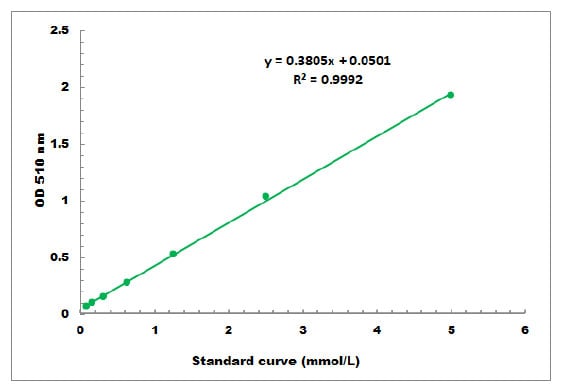
0.04 mmol/L - 4 mmol/L
Preparation and Storage
Shipped and store at 4 degree C for 6 months.
Molecular Weight
51,045 Da
OMIM
phenotype 241510
Applications Tested/Suitable for ALPL assay kit
Functional Assay
Other Notes
Small volumes of ALPL assay kit vial(s) may occasionally become entrapped in the seal of the product vial during shipment and storage. If necessary, briefly centrifuge the vial on a tabletop centrifuge to dislodge any liquid in the container`s cap. Certain products may require to ship with dry ice and additional dry ice fee may apply.
Searchable Terms for ALPL purchase
MBS822355 is an assay kit targeting ALPL. Also known as Alkaline Phosphatase Assay Kit. Reactive in General.
Additional Details
NCBI/Uniprot data below describe general gene information for ALPL. It may not necessarily be applicable to this product.
NCBI Official Full Name
alkaline phosphatase
NCBI Official Synonym Full Names
alkaline phosphatase, liver/bone/kidney
NCBI Official Symbol
ALPL
NCBI Official Synonym Symbols
HOPS; TNAP; APTNAP; TNSALP; AP-TNAP
UniProt Protein Name
Alkaline phosphatase, tissue-nonspecific isozyme
UniProt Synonym Protein Names
Alkaline phosphatase liver/bone/kidney isozyme
Protein Family
Alkaline phosphatase
UniProt Gene Name
ALPL
UniProt Synonym Gene Names
AP-TNAP; TNSALP
UniProt Entry Name
PPBT_HUMAN
NCBI Protein Information
alkaline phosphatase, tissue-nonspecific isozyme; glycerophosphatase; tissue-nonspecific ALP; alkaline phosphomonoesterase; liver/bone/kidney-type alkaline phosphatase; alkaline phosphatase liver/bone/kidney isozyme
NCBI Summary for ALPL
There are at least four distinct but related alkaline phosphatases: intestinal, placental, placental-like, and liver/bone/kidney (tissue non-specific). The first three are located together on chromosome 2, while the tissue non-specific form is located on chromosome 1. The product of this gene is a membrane bound glycosylated enzyme that is not expressed in any particular tissue and is, therefore, referred to as the tissue-nonspecific form of the enzyme. The exact physiological function of the alkaline phosphatases is not known. A proposed function of this form of the enzyme is matrix mineralization; however, mice that lack a functional form of this enzyme show normal skeletal development. This enzyme has been linked directly to hypophosphatasia, a disorder that is characterized by hypercalcemia and includes skeletal defects. The character of this disorder can vary, however, depending on the specific mutation since this determines age of onset and severity of symptoms. Alternatively spliced transcript variants have been described. [provided by RefSeq, Apr 2010]
Show more UniProt Comments for ALPL
ALPL: This isozyme may play a role in skeletal mineralization. Defects in ALPL are a cause of hypophosphatasia (HOPS). HOPS is an inherited metabolic bone disease characterized by defective skeletal mineralization. Four hypophosphatasia forms are distinguished, depending on the age of onset: perinatal, infantile, childhood and adult type. The perinatal form is the most severe and is almost always fatal. Patients with only premature loss of deciduous teeth, but with no bone disease are regarded as having odontohypophosphatasia (odonto). Defects in ALPL are a cause of hypophosphatasia childhood type (HOPSC). Defects in ALPL are a cause of hypophosphatasia infantile type (HOPSI). Belongs to the alkaline phosphatase family. 3 isoforms of the human protein are produced by alternative splicing.
Protein type: Cofactor and Vitamin Metabolism - folate biosynthesis; Motility/polarity/chemotaxis; EC 3.1.3.1; Membrane protein, GPI anchor; Phosphatase (non-protein)
Chromosomal Location of Human Ortholog: 1p36.12
Cellular Component: extracellular matrix; extracellular space; membrane; integral to membrane; plasma membrane
Molecular Function: protein binding; pyrophosphatase activity; alkaline phosphatase activity; metal ion binding
Biological Process: response to antibiotic; osteoblast differentiation; response to vitamin D; dephosphorylation; response to glucocorticoid stimulus; reproductive developmental process; response to lipopolysaccharide; skeletal development; endochondral ossification
Disease: Hypophosphatasia, Infantile; Hypophosphatasia, Adult; Hypophosphatasia, Childhood
Show more Protein type: Cofactor and Vitamin Metabolism - folate biosynthesis; Motility/polarity/chemotaxis; EC 3.1.3.1; Membrane protein, GPI anchor; Phosphatase (non-protein)
Chromosomal Location of Human Ortholog: 1p36.12
Cellular Component: extracellular matrix; extracellular space; membrane; integral to membrane; plasma membrane
Molecular Function: protein binding; pyrophosphatase activity; alkaline phosphatase activity; metal ion binding
Biological Process: response to antibiotic; osteoblast differentiation; response to vitamin D; dephosphorylation; response to glucocorticoid stimulus; reproductive developmental process; response to lipopolysaccharide; skeletal development; endochondral ossification
Disease: Hypophosphatasia, Infantile; Hypophosphatasia, Adult; Hypophosphatasia, Childhood
Research Articles on ALPL
Precautions
All of MyBioSource's Products are for scientific laboratory research purposes and are not for diagnostic, therapeutics, prophylactic or in vivo use. Through your purchase, you expressly represent and warrant to MyBioSource that you will properly test and use any Products purchased from MyBioSource in accordance with industry standards. MyBioSource and its authorized distributors reserve the right to refuse to process any order where we reasonably believe that the intended use will fall outside of our acceptable guidelines.
Disclaimer
While every efforts were made to ensure the accuracy of the information provided in this datasheet, MyBioSource will not be liable for any omissions or errors contained herein. MyBioSource reserves the right to make changes to this datasheet at any time without prior notice.
It is the responsibility of the customer to report product performance issues to MyBioSource within 30 days of receipt of the product. Please visit our Terms & Conditions page for more information.
It is the responsibility of the customer to report product performance issues to MyBioSource within 30 days of receipt of the product. Please visit our Terms & Conditions page for more information.
Product Note
Select online data sheet information is drawn from bioinformatics databases, occasionally resulting in ambiguous or non-relevant product information. It is the responsibility of the customer to review, verify, and evaluate the information to make sure it matches their requirements before purchasing the kit. Our ELISA Kit assays are dynamic research tools and sometimes they may be updated and improved. If the format of this assay is important to you then please request the current manual or contact our technical support team with a presales inquiry before placing an order. We will confirm the current details of the assay. We cannot guarantee the sample manual posted online is the most current manual, it is intended to serve as an example only. Please refer to the instructions For Use provided with the assay kit for precise details.
Product PubMed Publications
Pathways associated with ALPL assay kit
| Products by Pathway | Pathway Diagram |
|---|---|
| AGE/RAGE Pathway antibodies | AGE/RAGE Pathway Diagram |
| BDNF Signaling Pathway antibodies | BDNF Signaling Pathway Diagram |
| Endochondral Ossification Pathway antibodies | Endochondral Ossification Pathway Diagram |
| Folate Biosynthesis Pathway antibodies | Folate Biosynthesis Pathway Diagram |
| Folate Biosynthesis Pathway antibodies | Folate Biosynthesis Pathway Diagram |
| Metabolic Pathways antibodies | Metabolic Pathways Diagram |
| TNF-alpha/NF-kB Signaling Pathway antibodies | TNF-alpha/NF-kB Signaling Pathway Diagram |
Diseases associated with ALPL assay kit
| Disease Name | Pubmed Publications |
|---|---|
| Kidney Diseases Antibodies | >12 publications with ALPL and Kidney Diseases |
| Seizures Antibodies | >11 publications with ALPL and Seizures |
| Cardiovascular Diseases Antibodies | >10 publications with ALPL and Cardiovascular Diseases |
| Inflammation Antibodies | >8 publications with ALPL and Inflammation |
| Pain Antibodies | >8 publications with ALPL and Pain |
| Calcinosis Antibodies | >5 publications with ALPL and Calcinosis |
| Liver Diseases Antibodies | >5 publications with ALPL and Liver Diseases |
| Necrosis Antibodies | >4 publications with ALPL and Necrosis |
| Hypertension Antibodies | >4 publications with ALPL and Hypertension |
| Hypertrophy Antibodies | >4 publications with ALPL and Hypertrophy |
Organs/Tissues associated with ALPL assay kit
| Organ/Tissue Name | Pubmed Publications |
|---|---|
| Bone Antibodies | >169 publications with ALPL and Bone |
| Blood Antibodies | >52 publications with ALPL and Blood |
| Kidney Antibodies | >42 publications with ALPL and Kidney |
| Liver Antibodies | >40 publications with ALPL and Liver |
| Connective Tissue Antibodies | >38 publications with ALPL and Connective Tissue |
| Adipose Tissue Antibodies | >15 publications with ALPL and Adipose Tissue |
| Mouth Antibodies | >14 publications with ALPL and Mouth |
| Brain Antibodies | >14 publications with ALPL and Brain |
| Skin Antibodies | >8 publications with ALPL and Skin |
| Embryonic Tissue Antibodies | >7 publications with ALPL and Embryonic Tissue |