



Cathepsin D Activity Assay Kit provides a simple, reproducible, and sensitive tool of measuring the activity of Cathepsin D in cell lysates, plasma, serum, urine, saliva and other biological liquid samples.
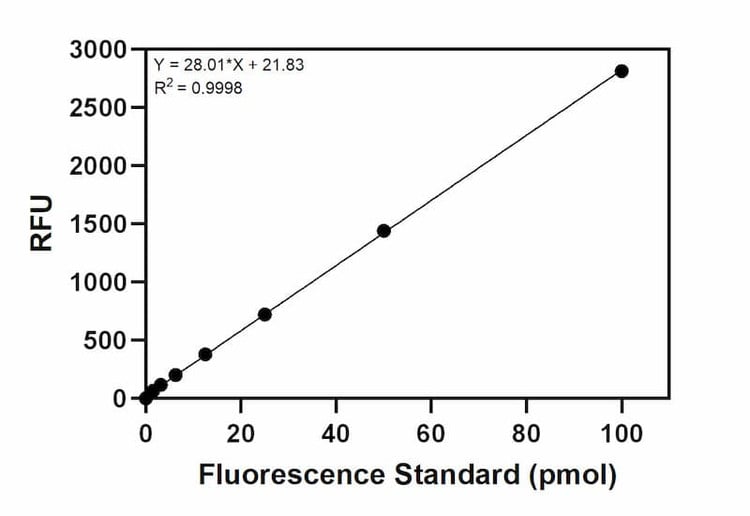
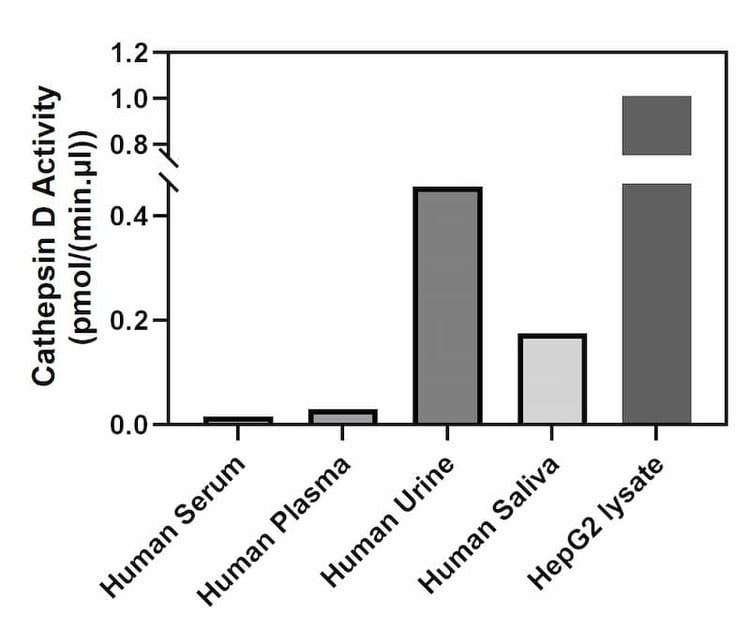
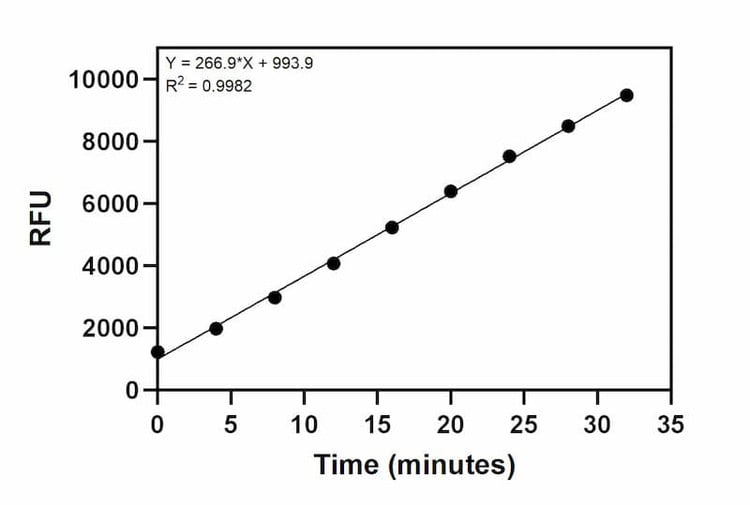
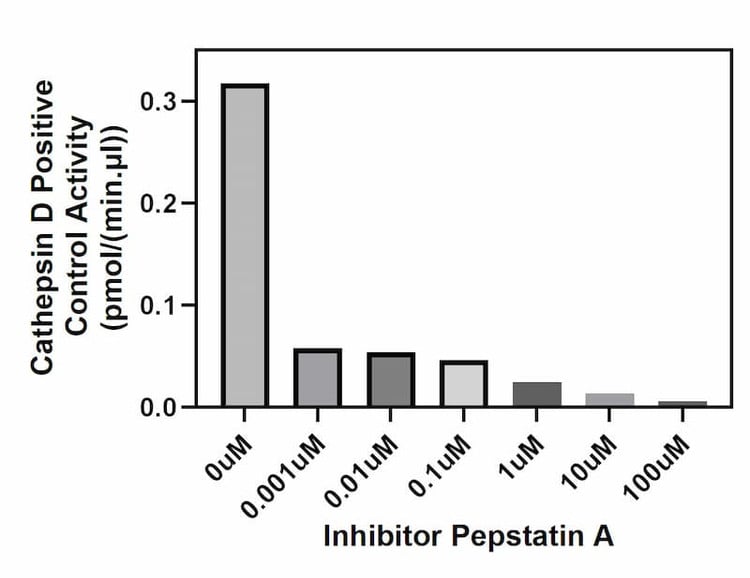
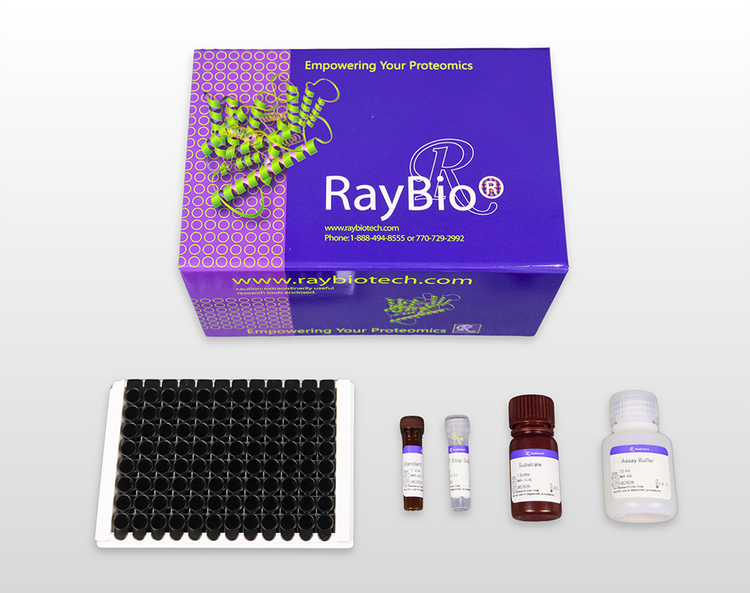
Cathepsin D Activity Assay Kit Standard Curve
Cathepsin D Activity Assay Kit (Fluorometric)
Contact Us for Bulk Request
Product Description
Specifications
| Size | 1 Plate Kit, 2 Plate Kit, 5 Plate Kit |
| Sensitivity | 1 mU/L |
| Compatible Sample Types | Plasma, Serum, Cell Lysates, Saliva, Urine |
| Accession Number | P07339 |
| Gene Id | 1509 |
| Gene Symbols | CTSD, CPSD |
| Protein Name / Synonyms | Cathepsin D |
| Quantitative/Semi-Quantitative | Quantitative |
| Solid Support | 96-well Microplate |
| Method Of Detection | Fluorometer |
| Research Area | Apoptosis, Cancer, Autophagy, Aging |
| Shipping Type | Blue ice |
| Storage | -20°C |
Related Products
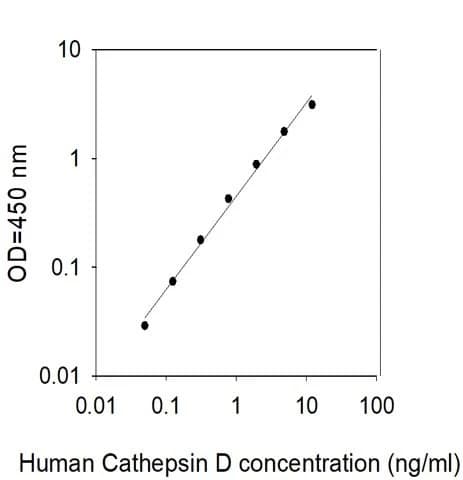
Human Cathepsin D ELISA Kit
As low as $469.00
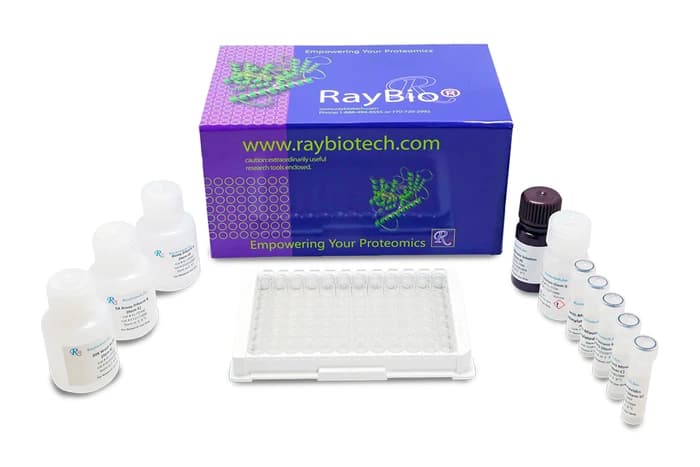
Mouse Cathepsin D ELISA Kit
As low as $679.00

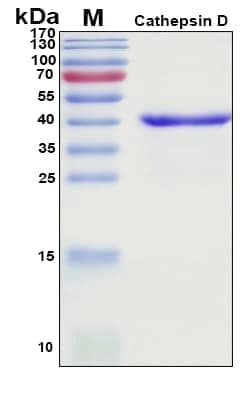
Recombinant Human Cathepsin D Protein, Antigen Grade
As low as $94.00
Introduction
Cathepsin D is a lysosomal aspartyl protease, of the peptidase A1 family. Cathepsin D performs a variety of functions in the cell, including recycling protein through autophagy, maturation of proteins by cleaving precursor proteins and apoptosis. Cathepsin D has a dual role with respect to apoptosis. On the one hand, under conditions of cellular stress such as DNA damage or oxidative stress, Cathepsin D is released from the lysosomes and activates apoptotic pathways by cleaving pro-apoptotic proteins. On the other hand, Cathepsin D can prevent apoptosis by regulating the stability and activity of anti-apoptotic proteins, inhibiting apoptotic pathways, enhancing cellular survival and tissue protection.
Cathepsin D Activity Assay Kit provides a simple, reproducible, and sensitive tool of measuring the activity of Cathepsin D in cell lysates, plasma, serum, urine, saliva and other biological liquid samples. In this assay, Cathepsin D cleaves a synthetic specific substrate releasing a fluorophore. The fluorescence signal is measured at Ex/Em = 320/405 nm. The increase in fluorescence intensity is directly proportional to Cathepsin D activity in the sample.
Kit Components
| Component | Size / Description |
|---|---|
| Microplate | A 96-well plate |
| Assay Buffer | 15 mL |
| Fluorescence Standard | 1 vial |
| Cathepsin D Substrate | 1 vial |
| Cathepsin D Positive Control | 1 vial |
Additional Materials Required
- Microplate reader capable of measuring fluorescence intensity at Ex/Em = 320/405 nm
- Precision pipettes to deliver 2 µL to 1 mL volumes
- Incubator at 37°C
- Tubes to prepare sample dilutions
- 15 mL and 50 mL conical tubes
- MilliQ water or another type of double distilled water (ddH2O)
Assay Procedure Summary
- Add 40 µL of samples, positive control, substrate background to the 96-well microtiter plate.
- Add 10 µL assay buffer to each well.
- Add 100 µL of standard to the 96-well microtiter plate.
- Initiate the reaction by adding 50 µL diluted Cathepsin D substrate solution to each well. Do NOT add to standard wells. Carefully shake the plate for a few seconds to mix well.
- Measure fluorescence signal. For kinetic reading: Immediately start measuring fluorescence intensity at Ex/Em=320/405 nm continuously at 37°C and record data every 5 min for 30 min.
Storage/Stability
The entire kit should be stored below -20°C for up to 6 months from the date of shipment.