

CFTR Antibody

Cat# MBS153561-0,1mg
Size : 0.1mg
Brand : MyBiosource
Contact local distributor :

Phone : +1 850 650 7790
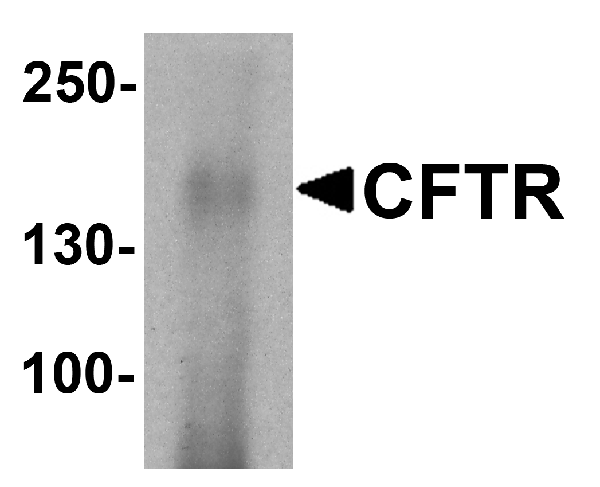
Western blot analysis of CFTR in human small intestine tissue lysate with CFTR antibody at 1 μg/ml.
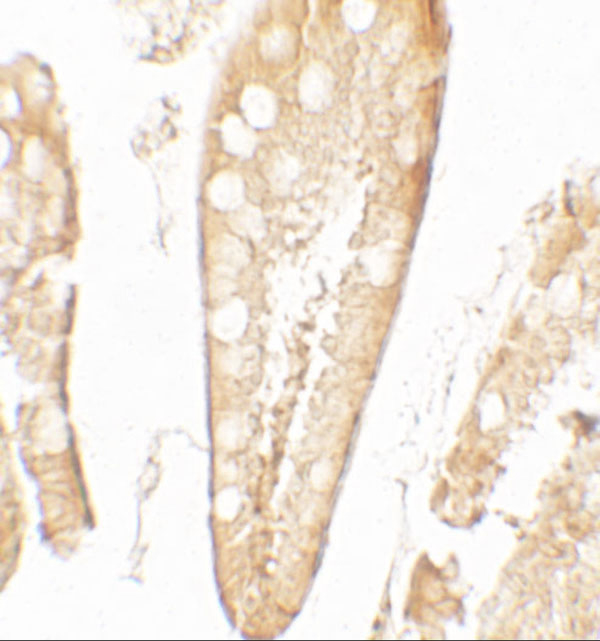
Immunohistochemistry of CFTR in human small intestine tissue with CFTR antibody at 5 μg/mL.
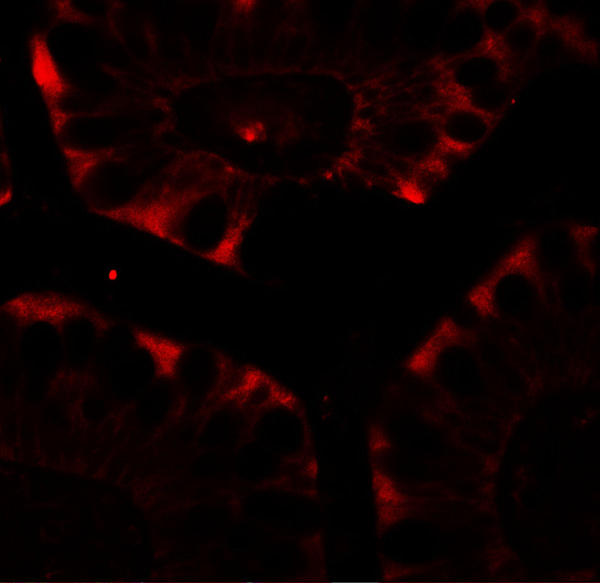
Immunofluorescence of CFTR in human small intestine tissue with CFTR antibody at 20 μg/mL.
CFTR Antibody – Rabbit Polyclonal
For Research Use Only. Not for use in diagnostic procedures. Catalog #: MBS153561The cystic fibrosis transmembrane conductance regulator (CFTR) protein is a member of the ATP-binding cassette (ABC) transporter superfamily, and a member of the MRP subfamily that is involved in multi-drug resistance (1,2). CFTR functions as a chloride… More details
Product Overview
Online Datasheet in PDFProduct Name
CFTR, Polyclonal Antibody
Full Product Name
CFTR Antibody
Product Gene Name
anti-CFTR antibody
Product Synonym Names
CFTR; CF; MRP7; ABC35; ABCC7; CFTR/MRP; TNR-CFTR; dJ760C5.1; Cystic fibrosis transmembrane conductance regulator; ATP-binding cassette sub-family C member 7; CFTR; cystic fibrosis transmembrane conductance regulator (ATP-binding cassette sub-family C, member 7)
Clonality
Polyclonal
Isotype
IgG
Host
Rabbit
Species Reactivity
Human, Mouse, Rat
Form/Format
Liquid; CFTR Antibody is supplied in PBS containing 0.02% sodium azide.
Purity/Purification
CFTR antibody is affinity chromatography purified via peptide column.
Concentration
1 mg/mL (lot specific)
Specificity
CFTR antibody is human, mouse and rat reactive.
Preparation and Storage
CFTR antibody can be stored at 4 degree C for three months and -20 degree C, stable for up to one year.
Antibody/Peptide Pairs
CFTR peptide (MBS154110) is used for blocking the activity of CFTR antibody (MBS153561)
Molecular Weight
Predicted: 163 kDa
Observed: 160 kDa
Observed: 160 kDa
OMIM
phenotype 602421
Conjugate
Unconjugated
Immunogen
CFTR antibody was raised against an 18 amino acid peptide near the carboxy terminus of human CFTR.
The immunogen is located within amino acids 1290 - 1340 of CFTR.
The immunogen is located within amino acids 1290 - 1340 of CFTR.
Homology
Predicted species reactivity based on immunogen sequence: Sheep: (100%), Rabbit: (100%), Bovine: (95%), Pig: (89%), Horse: (89%), Guinea pig: (89%)
Positive Control
1) Cat. No. MBS151623 - Human Small Intestine Tissue Lysate
2) Cat. No. MBS154284 - Human Small Intestine Tissue Slide
2) Cat. No. MBS154284 - Human Small Intestine Tissue Slide
Applications Tested/Suitable for anti-CFTR antibody
ELISA (EIA), Western Blot (WB), Immunohistochemistry (IHC), Immunofluorescence (IF)
Application Notes for anti-CFTR antibody
Western blot at 1 - 2 ug/ml.
Immunohistochemistry starting at 5 ug/mL.
Immunofluorescence start at 20 ug/mL.
Antibody validated: Western Blot in human samples; Immunohistochemistry in human samples and Immunofluorescence in human samples. All other applications and species not yet tested.
Immunohistochemistry starting at 5 ug/mL.
Immunofluorescence start at 20 ug/mL.
Antibody validated: Western Blot in human samples; Immunohistochemistry in human samples and Immunofluorescence in human samples. All other applications and species not yet tested.
Other Notes
Small volumes of anti-CFTR antibody vial(s) may occasionally become entrapped in the seal of the product vial during shipment and storage. If necessary, briefly centrifuge the vial on a tabletop centrifuge to dislodge any liquid in the container`s cap. Certain products may require to ship with dry ice and additional dry ice fee may apply.
Searchable Terms for CFTR purchase
MBS153561 is an antibody targeting CFTR. Also known as CFTR Antibody. Reactive in Human, Mouse, Rat. Host: Rabbit.
Additional Details
NCBI/Uniprot data below describe general gene information for CFTR. It may not necessarily be applicable to this product.
NCBI Official Full Name
cystic fibrosis transmembrane conductance regulator
NCBI Official Synonym Full Names
cystic fibrosis transmembrane conductance regulator (ATP-binding cassette sub-family C, member 7)
NCBI Official Symbol
CFTR
NCBI Official Synonym Symbols
CF; MRP7; ABC35; ABCC7; CFTR/MRP; TNR-CFTR; dJ760C5.1
UniProt Protein Name
Cystic fibrosis transmembrane conductance regulator
UniProt Synonym Protein Names
ATP-binding cassette sub-family C member 7; Channel conductance-controlling ATPase (EC:3.6.3.49); cAMP-dependent chloride channel
Protein Family
Cystic fibrosis transmembrane conductance regulator
UniProt Gene Name
CFTR
UniProt Synonym Gene Names
ABCC7; CFTR
UniProt Entry Name
CFTR_HUMAN
NCBI Protein Information
cystic fibrosis transmembrane conductance regulator; cAMP-dependent chloride channel; channel conductance-controlling ATPase
NCBI Summary for CFTR
This gene encodes a member of the ATP-binding cassette (ABC) transporter superfamily. ABC proteins transport various molecules across extra- and intra-cellular membranes. ABC genes are divided into seven distinct subfamilies (ABC1, MDR/TAP, MRP, ALD, OABP, GCN20, White). This protein is a member of the MRP subfamily that is involved in multi-drug resistance. The encoded protein functions as a chloride channel and controls the regulation of other transport pathways. Mutations in this gene are associated with the autosomal recessive disorders cystic fibrosis and congenital bilateral aplasia of the vas deferens. Alternatively spliced transcript variants have been described, many of which result from mutations in this gene. [provided by RefSeq, Jul 2008]
Show more UniProt Comments for CFTR
CFTR: a member of the MRP subfamily of ATP-binding cassette (ABC) transporters. ABC proteins transport various molecules across extra- and intra-cellular membranes. Functions as a chloride channel and controls the regulation of other transport pathways. Mutations have been observed in patients with the autosomal recessive disorders cystic fibrosis (CF) and congenital bilateral aplasia of the vas deferens (CBAVD). Alternative splice
Protein type: Transporter, ABC family; Channel, chloride; Transporter; EC 3.6.3.49; Hydrolase; Membrane protein, multi-pass; Membrane protein, integral
Chromosomal Location of Human Ortholog: 7q31.2
Cellular Component: recycling endosome; cytoplasmic vesicle membrane; protein complex; cell surface; microvillus; basolateral plasma membrane; early endosome membrane; apical plasma membrane; cytoplasm; early endosome; plasma membrane
Molecular Function: bicarbonate transmembrane transporter activity; protein binding; chloride channel activity; chloride channel inhibitor activity; enzyme binding; chloride transmembrane transporter activity; ATP-binding and phosphorylation-dependent chloride channel activity; channel-conductance-controlling ATPase activity; ATP binding; PDZ domain binding
Biological Process: response to drug; intracellular pH elevation; response to peptide hormone stimulus; cholesterol transport; iodide transport; water transport; transepithelial chloride transport; membrane hyperpolarization; respiratory gaseous exchange; positive regulation of vasodilation; cholesterol biosynthetic process; vasodilation; cellular response to hormone stimulus; response to estrogen stimulus; transport; bicarbonate transport; response to cytokine stimulus; transmembrane transport; sperm capacitation; lung development
Disease: Vas Deferens, Congenital Bilateral Aplasia Of; Bronchiectasis With Or Without Elevated Sweat Chloride 1; Cystic Fibrosis; Pancreatitis, Hereditary
Show more Protein type: Transporter, ABC family; Channel, chloride; Transporter; EC 3.6.3.49; Hydrolase; Membrane protein, multi-pass; Membrane protein, integral
Chromosomal Location of Human Ortholog: 7q31.2
Cellular Component: recycling endosome; cytoplasmic vesicle membrane; protein complex; cell surface; microvillus; basolateral plasma membrane; early endosome membrane; apical plasma membrane; cytoplasm; early endosome; plasma membrane
Molecular Function: bicarbonate transmembrane transporter activity; protein binding; chloride channel activity; chloride channel inhibitor activity; enzyme binding; chloride transmembrane transporter activity; ATP-binding and phosphorylation-dependent chloride channel activity; channel-conductance-controlling ATPase activity; ATP binding; PDZ domain binding
Biological Process: response to drug; intracellular pH elevation; response to peptide hormone stimulus; cholesterol transport; iodide transport; water transport; transepithelial chloride transport; membrane hyperpolarization; respiratory gaseous exchange; positive regulation of vasodilation; cholesterol biosynthetic process; vasodilation; cellular response to hormone stimulus; response to estrogen stimulus; transport; bicarbonate transport; response to cytokine stimulus; transmembrane transport; sperm capacitation; lung development
Disease: Vas Deferens, Congenital Bilateral Aplasia Of; Bronchiectasis With Or Without Elevated Sweat Chloride 1; Cystic Fibrosis; Pancreatitis, Hereditary
Precautions
All of MyBioSource's Products are for scientific laboratory research purposes and are not for diagnostic, therapeutics, prophylactic or in vivo use. Through your purchase, you expressly represent and warrant to MyBioSource that you will properly test and use any Products purchased from MyBioSource in accordance with industry standards. MyBioSource and its authorized distributors reserve the right to refuse to process any order where we reasonably believe that the intended use will fall outside of our acceptable guidelines.
Disclaimer
While every efforts were made to ensure the accuracy of the information provided in this datasheet, MyBioSource will not be liable for any omissions or errors contained herein. MyBioSource reserves the right to make changes to this datasheet at any time without prior notice.
It is the responsibility of the customer to report product performance issues to MyBioSource within 30 days of receipt of the product. Please visit our Terms & Conditions page for more information.
It is the responsibility of the customer to report product performance issues to MyBioSource within 30 days of receipt of the product. Please visit our Terms & Conditions page for more information.
Product Note
Select online data sheet information is drawn from bioinformatics databases, occasionally resulting in ambiguous or non-relevant product information. It is the responsibility of the customer to review, verify, and evaluate the information to make sure it matches their requirements before purchasing the kit. Our ELISA Kit assays are dynamic research tools and sometimes they may be updated and improved. If the format of this assay is important to you then please request the current manual or contact our technical support team with a presales inquiry before placing an order. We will confirm the current details of the assay. We cannot guarantee the sample manual posted online is the most current manual, it is intended to serve as an example only. Please refer to the instructions For Use provided with the assay kit for precise details.
Product PubMed Publications
Products associated with anti-CFTR antibody
| Reference Product | PubMed Publications |
|---|---|
| GOPC antibody | >22 publications with CFTR and GOPC |
| PDZK1 antibody | >18 publications with CFTR and PDZK1 |
| HSPA8 antibody | >15 publications with CFTR and HSPA8 |
| STX1A antibody | >14 publications with CFTR and STX1A |
| UBC antibody | >10 publications with CFTR and UBC |
| STUB1 antibody | >9 publications with CFTR and STUB1 |
| VCP antibody | >7 publications with CFTR and VCP |
| SLC9A3R2 antibody | >2 publications with CFTR and SLC9A3R2 |
| SLC9A3R1 antibody | >1 publications with CFTR and SLC9A3R1 |
Pathways associated with anti-CFTR antibody
| Products by Pathway | Pathway Diagram |
|---|---|
| ABC Transporters Pathway antibodies | ABC Transporters Pathway Diagram |
| ABC Transporters Pathway antibodies | ABC Transporters Pathway Diagram |
| ABC-family Proteins Mediated Transport Pathway antibodies | ABC-family Proteins Mediated Transport Pathway Diagram |
| AMPK Signaling Pathway antibodies | AMPK Signaling Pathway Diagram |
| AMPK Signaling Pathway antibodies | AMPK Signaling Pathway Diagram |
| Bile Secretion Pathway antibodies | Bile Secretion Pathway Diagram |
| Bile Secretion Pathway antibodies | Bile Secretion Pathway Diagram |
| Gastric Acid Secretion Pathway antibodies | Gastric Acid Secretion Pathway Diagram |
| Gastric Acid Secretion Pathway antibodies | Gastric Acid Secretion Pathway Diagram |
| Pancreatic Secretion Pathway antibodies | Pancreatic Secretion Pathway Diagram |
Diseases associated with anti-CFTR antibody
| Disease Name | Pubmed Publications |
|---|---|
| Fibrosis Antibodies | >7866 publications with CFTR and Fibrosis |
| Cystic Fibrosis Antibodies | >7855 publications with CFTR and Cystic Fibrosis |
| Inflammation Antibodies | >559 publications with CFTR and Inflammation |
| Disease Models, Animal Antibodies | >359 publications with CFTR and Disease Models, Animal |
| Pancreatitis Antibodies | >350 publications with CFTR and Pancreatitis |
| Infertility, Male Antibodies | >298 publications with CFTR and Infertility, Male |
| Pancreatitis, Chronic Antibodies | >252 publications with CFTR and Pancreatitis, Chronic |
| Bronchiectasis With Or Without Elevated Sweat Chloride 1 Antibodies | >179 publications with CFTR and Bronchiectasis With Or Without Elevated Sweat Chloride 1 |
| Liver Diseases Antibodies | >129 publications with CFTR and Liver Diseases |
| Azoospermia Antibodies | >118 publications with CFTR and Azoospermia |
Organs/Tissues associated with anti-CFTR antibody
| Organ/Tissue Name | Pubmed Publications |
|---|---|
| Lung Antibodies | >1668 publications with CFTR and Lung |
| Intestine Antibodies | >616 publications with CFTR and Intestine |
| Pancreas Antibodies | >446 publications with CFTR and Pancreas |
| Kidney Antibodies | >375 publications with CFTR and Kidney |
| Liver Antibodies | >321 publications with CFTR and Liver |
| Trachea Antibodies | >256 publications with CFTR and Trachea |
| Muscle Antibodies | >179 publications with CFTR and Muscle |
| Brain Antibodies | >87 publications with CFTR and Brain |
| Ovary Antibodies | >72 publications with CFTR and Ovary |
| Thyroid Antibodies | >61 publications with CFTR and Thyroid |
You might also be interested by the following products:
Cat#
Description
Cond.
Price Bef. VAT