EFNA1 Antibody - FITC Conjugated

Cat# OACA00380
Size : 100ug
Brand : Aviva Systems Biology
Contact local distributor :

Phone : +1 850 650 7790
EFNA1 Antibody - FITC Conjugated (OACA00380)
| Datasheets/Manuals | Printable datasheet for EFNA1 Antibody - FITC Conjugated (OACA00380) (OACA00380) |
|---|
| Predicted Species Reactivity | Rat |
|---|---|
| Product Format | Liquid |
| Clonality | Polyclonal |
| Isotype | IgG |
| Host | Rabbit |
| Conjugation | FITC |
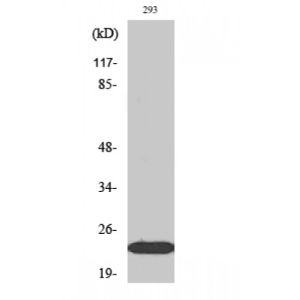
| Application | WB |
| Reconstitution and Storage | -20°C or -80°C |
| Immunogen | Recombinant Rat Ephrin-A1 protein (18-182AA) |
| Purification | Protein G Purified |
| Purity | Caprylic Acid Ammonium Sulfate Precipitation purified |
| Storage Buffer | Preservative: 0.03% Proclin 300Constituents: 50% Glycerol, 0.01M PBS, PH 7.4 |
| Reference | [1] Molecular cloning and expression of rat and mouse B61 gene: implications on organogenesis.Takahashi H., Ikeda T.Oncogene 11:879-883(1995) [2] The status, quality, and expansion of the NIH full-length cDNA project: the Mammalian Gene Collection (MGC).The MGC Project TeamGenome Res. 14:2121-2127(2004) |
|---|---|
| Gene Symbol | Efna1 |
| Gene Full Name | ephrin A1 |
| Alias Symbols | B61;EPH-related receptor tyrosine kinase ligand 1;ephrin-A1;immediate early response protein B61;LERK-1. |
| NCBI Gene Id | 94268 |
| Protein Name | Ephrin-A1 |
| Description of Target | Cell surface GPI-bound ligand for Eph receptors, a family of receptor tyrosine kinases which are crucial for migration, repulsion and adhesion during neuronal, vascular and epithelial development. Binds promiscuously Eph receptors residing on adjacent cells, leading to contact-dependent bidirectional signaling into neighboring cells. Plays an important role in angiogenesis and tumor neovascularization. The recruitment of VAV2, VAV3 and PI3-kinase p85 subunit by phosphorylated EPHA2 is critical for EFNA1-induced RAC1 GTPase activation and vascular endothelial cell migration and assembly. Exerts anti-oncogenic effects in tumor cells through activation and down-regulation of EPHA2. Activates EPHA2 by inducing tyrosine phosphorylation which leads to its internalization and degradation. Acts as a negative regulator in the tumorigenesis of gliomas by down-regulating EPHA2 and FAK. Can evoke collapse of embryonic neuronal growth cone and regulates dendritic spine morphogenesis (By similarity). |
| Uniprot ID | P97553 |
| Protein Accession # | NP_004419.2; NP_872626.1 |
| Nucleotide Accession # | NM_004428.2; NM_182685.1 |