
Human IL-6 Antibody : LE/AF

Cat# OASB01221
Size : 0.5mg
Brand : Aviva Systems Biology
Contact local distributor :

Phone : +1 850 650 7790
Human IL-6 Antibody : LE/AF (OASB01221)

| Datasheets/Manuals | Printable datasheet for Human IL-6 Antibody : LE/AF (OASB01221) |
|---|
| Tested Species Reactivity | Human |
|---|---|
| Predicted Species Reactivity | Human |
| Clonality | Monoclonal |
| Clone | MQ2-13A5 |
| Isotype | IgG1 |
| Host | Rat |
| Conjugation | LE: Low Endotoxin, AF: Azide Free |
| Application | ELISPOT, FC, IP, MP |
| Reconstitution and Storage | Store at -20C |
| Immunogen | COS-expressed human IL-6 |
| Concentration | 0.5 mg/mL |
| Specificity | IL-6 |
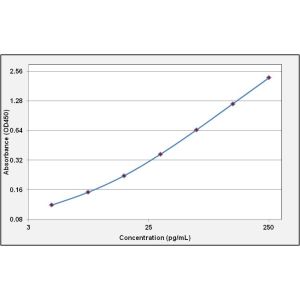
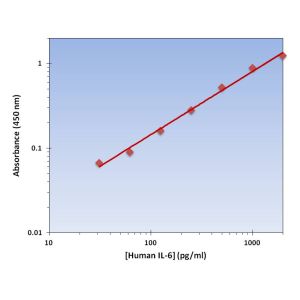
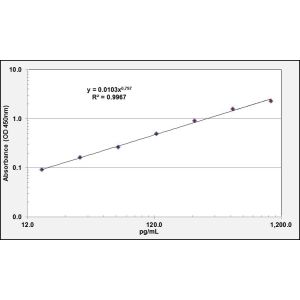
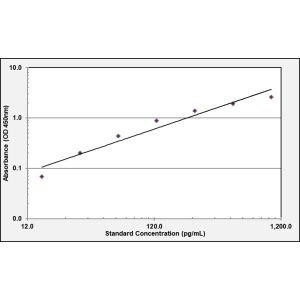
| Characterization | To ensure acceptable performance, each batch of product is tested in a sandwich ELISA to conform tocharacteristics of a standard reference reagent. |
| Application Info | ELISA Capture: MQ2-13A5 monoclonal antibody is useful as a capture antibody in a sandwich ELISA for quantifying human IL-6 protein levels. 1-3 Purified MQ2-13A5 antibody should be paired with biotinylated MQ2-39C3 antibody (OASB01223) as the detection antibody, with purified recombinant human IL-6 as the standard. Immunofluorescence/Flow Cytometry: MQ2-13A5 antibody is useful for intracytoplasmic staining and flow cytometric analysis to identify and enumerate IL-6-positive cells within mixed cell populations. Recombinant human IL-6 or Rat IgG1 (OASB012111) should be used as a specificity control. FITC and R-PE conjugated MQ2-13A5 antibodies are useful for intracellular staining in cells producing IL-6. Aviva intracellular staining buffers are recommended for this application. Immunoprecipitation/Western Blotting: The purified MQ2-13A5 antibody is also useful for immunoprecipitation and Western blotting applications. For Western blotting, a concentration of 1-5 ug/mL (in conjunction with AP-labeled Goat Anti-Rat-Ig, OASB01897) has been found to enable detection of <= 100 ng/lane of recombinant human IL-6 under reducing conditions. Neutralization: The LE/AF form of MQ2-13A5 can be used for neutralizing human IL-6 bioactivity. A suitable LE/AF Rat IgG1 (OASB00095) should be used as an isotype control. Since applications vary, each investigator should determine the optimal concentration appropriate for individual applications. |
| Storage | - The purified (UNLB) antibody is supplied as 0.5 mg purified immunoglobulin in 1.0 mL of 100 mMborate buffered saline, pH 8.2. No preservatives or amine- containing buffer salts added. Store at 2- 8 C - The low endotoxin, azide- free (LE/AF) antibody is supplied as 0.5 mg purified immunoglobulin in 1.0 mLof PBS. Aliquot and store at or below - 20 C - Aliquot and freeze the low endotoxin, azide- free product at - 20 C immediately upon receipt. Eachreagent is stable for the period shown on the bottle label if stored as directed. |
| Reference | 1. Abrams, J.S., M.- G. Roncarolo, H.. Yssel, U. Andersson, G.J. Gleich, and J.E., Silver. 1992. Strategies of anti- cytokine monoclonalantibody development: Immunoassay of IL- 10 and IL- 5 in clinical samples. Immunol. Rev. 127:5- 24 2. Abrams, J. 1995. Immunoenzymetric assay of mouse and human cytokines using NIP- labeled anti- cytokine antibodies. In CurrentProtocols in Immunology (J. Coligamn, A. Kruisbeek, D. Margulies, E. Shevach, W. Strober, eds.). John Wiley and Sons, New York. Unit6.20 3. Gaines Das, R., and S. Poole. 1993. The international standard for IL- 6. Evaluation in an international collaborative study. J. Immunol Meth. 160:147. |
|---|---|
| Gene Symbol | IL6 |
| Gene Full Name | Interleukin-6 |
| Alias Symbols | CDF, HGF, HSF, BSF2, IL-6, BSF-2, IFNB2, IFN-beta-2 |
| NCBI Gene Id | 3569; 705819; 102138971 |
| Protein Name | interleukin-6 |
| Description of Target | This gene encodes a cytokine that functions in inflammation and the maturation of B cells. In addition, the encoded protein has been shown to be an endogenous pyrogen capable of inducing fever in people with autoimmune diseases or infections. The protein is primarily produced at sites of acute and chronic inflammation, where it is secreted into the serum and induces a transcriptional inflammatory response through interleukin 6 receptor, alpha. The functioning of this gene is implicated in a wide variety of inflammation-associated disease states, including suspectibility to diabetes mellitus and systemic juvenile rheumatoid arthritis. Alternative splicing results in multiple transcript variants. |
| Uniprot ID | P05231, P51494, P79341 |
| Protein Accession # | NP_000591.1 |
| Nucleotide Accession # | NM_000600.4 |