

Human Interleukin 5,IL-5 ELISA KIT

Cat# CSB-E04636h-96T
Size : 96T
Brand : Cusabio
Contact local distributor :
 Phone : +1 850 650 7790
| Size | 96T,5×96T,10×96T |
Product Details
Intra-assay Precision (Precision within an assay): CV%<8% | |||||
Three samples of known concentration were tested twenty times on one plate to assess. | |||||
Inter-assay Precision (Precision between assays): CV%<10% | |||||
Three samples of known concentration were tested in twenty assays to assess. | |||||
To assess the linearity of the assay, samples were spiked with high concentrations of human IL-5 in various matrices and diluted with the Sample Diluent to produce samples with values within the dynamic range of the assay. | ||||||
| Sample | Serum(n=4) | ||||
1:1 | Average % | 88 | ||||
Range % | 82-96 | |||||
1:2 | Average % | 92 | ||||
Range % | 90-105 | |||||
1:4 | Average % | 95 | ||||
Range % | 92-103 | |||||
1:8 | Average % | 90 | ||||
Range % | 86-98 | |||||
The recovery of human IL-5 spiked to levels throughout the range of the assay in various matrices was evaluated. Samples were diluted prior to assay as directed in the Sample Preparation section. | ||||||
Sample Type | Average % Recovery | Range | ||||
Serum (n=5) | 85 | 80-92 | ||||
EDTA plasma (n=4) | 87 | 82-94 | ||||
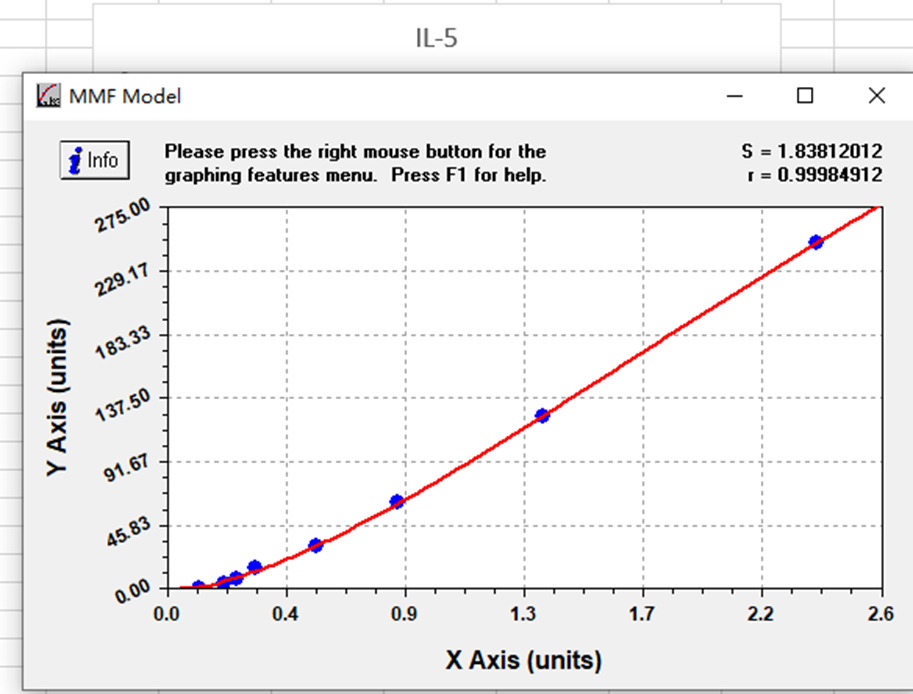
These standard curves are provided for demonstration only. A standard curve should be generated for each set of samples assayed. | ||||||
| ||||||
pg/ml | OD1 | OD2 | Average | Corrected | ||
250 | 2.973 | 2.834 | 2.904 | 2.754 | ||
125 | 2.276 | 2.167 | 2.222 | 2.072 | ||
62.5 | 1.248 | 1.228 | 1.238 | 1.089 | ||
31.25 | 0.635 | 0.629 | 0.632 | 0.483 | ||
15.6 | 0.363 | 0.371 | 0.367 | 0.218 | ||
7.8 | 0.269 | 0.253 | 0.261 | 0.112 | ||
3.9 | 0.217 | 0.214 | 0.216 | 0.066 | ||
0 | 0.144 | 0.155 | 0.149 |
| ||

and FAQs
Interleukin-5 (IL-5) is a cytokine that regulates eosinophil biology and B-cell differentiation. Originally identified as a B-cell differentiation factor and T-cell replacing factor, IL-5 is primarily produced by activated T-helper 2 cells and serves as a key mediator in allergic and inflammatory responses. The cytokine promotes eosinophil development, activation, and survival, making it an important factor in asthma, allergic rhinitis, and other eosinophil-associated disorders. IL-5 also functions as an eosinophil differentiation factor, regulating the maturation and recruitment of these c...
Citations
- SEROLOGICAL EVALUATION OF IL-5 AND LYMPHOCYTES IN ADULT ASTHMATIC PATIENTS WITH COVID-19 INFECTION RA JAYTHOOM,International Journal of Applied Sciences and Technology,2026
- MH Jabbar,/,2023
- J Zheng,Immunobiology,2023
- H Tang,Journal of Translational Medicine,2021
- AM Collison,Clinical & Translational Immunology,2020
- Ali Abdulqader, et al,Asian Pacific Journal of Tropical Biomedicine,2018
- Khalil Ismail A. Mohamed.et al,Curr Res Microbiol Biotechnol,2017
- Masayuki Ito.et al,BMC Pulmonary Medicine,2017
Customer Reviews and Q&A
Sample type: Cell culture supernatant
Sample species: Human
Sample dilution: No dilution
Review: I used this kit (CSB-E04636h) to detect human cell culture supernatants (normal group, undiluted). The absorbance values of the standard curve ranged from 0.1 to 2.36, and the OD values of all test samples also fell within this linear range. The results show that the kit has high sensitivit...
By Anonymous
Target Background
(From Uniprot)
- IL-5 is expressed intrathecally in tick-borne encephalitis, but its pathogenetic role remains unclear.
- eosinophilia in FE is secondary to dysregulation of IL-5 production in PBMC (and their component subsets).
- Data indicate that interleukin-5 (IL-5) was that only serum cytokines show statistical significance between severe chronic obstructive pulmonary disease (COPD) and controls.
- Serum IL-5 and IL-13 are reliable biomarkers for the blood eosinophilia asthma phenotype.
- Longitudinal co-variations between inflammatory cytokines, lung function and patient reported outcomes in patients with asthma
- Obesity alters the lung neutrophil infiltration to enhance breast cancer metastasis through IL5 and GM-CSF.
- simvastatin was demonstrated to inhibit IL-5-induced CCR3 expression and chemotaxis of eosinophils mediated via the mevalonate pathway.
- Interleukin-5/-targeted treatments offer promises to patients with eosinophilic respiratory disorders; review
- Data indicate that interleukin 5 (IL-5)-associated single nucleotide polymorphisms (SNPs) were not associated with carotid intima-media thickness.
- Post-liver transplant patients with food allergy showed a unique cytokine profile in response to various stimuli, with extremely elevated IL-5, low IL-10 secretion.
- Production of IL-5 in response to both extract and the Bet v1-derived peptide mix strongly suggested that T cells were a major source of IL-5.
- It has been shown in this study that the level of IL-5, one of the markers of eosinophilic inflammation, is higher in EBC of children with atopic asthma than in those with nonatopic asthma.
- IL-5 may be part of protective mechanisms operating in early atherosclerosis, at least in women
- Results showed that PAX2 expression is significantly overexpressed in esophageal squamous cell carcinoma tissues and IL-5 is identified as PAX2's effector for metastasis.
- Subsequent IL-5-stimulated signaling.
- increased levels in recurrent versus nonrecurrent rhinosinusitis with nasal polyps at the moment of the first surgery
- HDM-specific IL-5 responses at age 3 years or later are the best measure of T cell function for predicting asthma at age 8 years.
- Fibrocytes studied were generated in vitro from PBMCs by culturing in the presence of platelet derived growth factors and stimulated by IL-33. Fibrocytes constitutively expressed IL-13 and IL-5, which was augmented by stimulation with IL-33.
- Mechanisms of human eosinophil migration induced by the combination of IL-5 and the endocannabinoid 2-arachidonoyl-glycerol.
- Patients with the 'IL-5, IL-17A, IL-25-high' airway inflammatory pattern are often uncontrolled asthmatics, despite daily treatment.
- These unexpected results provide a theoretical basis for the therapeutic targeting of IL-5 in bladder cancer
- In activated eosinophils ligation of Siglec-8 leads to ROS-dependent enhancement of IL-5-induced ERK phosphorylation, which results in a novel mode of biochemically regulated eosinophil cell death.
- When patients were classified according to sputum IgE levels, it appeared that IL-5, IL-6, IL-17 and TNF-alpha sputum supernatant levels were raised in the "IgE high" asthmatics when compared to "IgE low" asthmatics
- alpha(M)beta(2) integrin-mediated adhesion and motility of IL-5-stimulated eosinophils on periostin.
- Type I interferon (IFN)-dependent inhibition of T cell-derived IL-5 is mediated by IFN-alpha acting directly on activated T cells.
- Strong IL-5 production was detected in response to peptides from several of the previously undescribed proteins of grass pollen.
- Topical steroid treatment may suppress IL-5 gene expression, and steroids may inhibit eosinophil functions in nasal polyps.
- Elevated expression of inflammatory cytokines (IL-5, IL-20, and IL-28A) is associated with bladder cancer development.
- binding of IL-5 to IL-5Ralpha plays a critical role in MMP-9 expression, which may be involved in the migration of bladder cancer.
- The study reports the crystal structure of dimeric IL-5 in complex with the IL5RA extracellular domains.
- Elevated levels of IL-5, which uses the neural plasticity-related RAS GTPase-ERK pathway to mediate its actions in the central nervous system, could be one of the factors underlying the depression-related changes in CNS plasticity.
- elevated levels in induced sputum from patients with asthma and allergic rhinitis
- REVIEW: Interleukin-5 and IL-5 receptor in health and disease
- The structure demonstrates that for steric reasons, homodimeric IL-5 can bind only one receptor molecule, even though two equivalent receptor-binding sites exist.
- There is no correlation between the eosinophilic infiltration and the expression of IL-5 in lung cancer tissues.
- Transplantation of human mesenchymal stem cells suppresses middle cerebral artery occlusion (MCAO) focal ischemia-induced inflammation, possibly through expression of fractalkine and interleukin (IL)-5.
- results demonstrate that IL-5(+) and IL-5(-) Th2 cells, respectively, represent more and less highly differentiated Th2 cell subpopulations
- IL-5 may play a role in the early phase of acute pneumonia caused by the 2009 H1N1 virus in Japanese children.
- Activation of GATA-3 might be one of the mechanisms for induction of IL-5 expression in chronic rhinosinusitis.
- AP-1 may participate in the signal transduction of PKC-triggered expression of IL-5 in allergic rhinitis T lymphocytes.
- PPD-induced preferential secretion by PBMCs of Warao indigenous patients in Venezuela
- Functional polymorphisms in the genes encoding the Th2 cytokines Il-5, IL-6, and IL-13, are associated differently with the development and prognosis of autoimmune thyroid disease from each other.
- IL-5 and IL-8 are the key cytokines in the formation of nasal polyps.
- Suggest that IL-5 responses in cord blood samples were strongly related to the season of birth.
- promotes increased immunoglobulin M at the site of disease in leprosy
- Our study identifies CXCL10 and IL-5 as proteins differentiating complicated and uncomplicated plaques from human carotid arteries
- Sputum IL-5 was associated with a sputum eosinophilia.
- data indicate that ability to produce the type 2 cytokines IL-13 and IL-5 defines CD161(+) NK cells at intermediate stages of differentiation, and is lost upon terminal functional differentiation, concomitant with acquired ability to produce IFN-gamma
- CD4(+) T cells are the major source of IL-5 among CD3(+) lymphocytes in atopic asthmatic subjects, whereas in nonatopic asthmatic subjects CD8 (+) T cells as well as CD4(+) T cells contribute to the increased production of IL-5
- By itself, IL5 increases nerve growth factor level in eosinophils, but in combination with immune complexes, significantly reduces eosinophil NGF levels.
HGNC:
OMIM:
KEGG:
STRING:
UniGene: