

Biovalley > Mouse CD19 Antibody : CY5
Mouse CD19 Antibody : CY5

Cat# OASB00348
Size : 0.1mg
Contact local distributor :

Phone : +1 850 650 7790
Brand : Aviva Systems Biology
Contact local distributor :
Phone : +1 850 650 7790
Bulk
Order
Order
Aviva's
Satisfaction
Guarantee
Satisfaction
Guarantee
Contact Us:
- Toll Free: 888-880-0001
- Phone: 858-552-6979
- Email: info@avivasysbio.com
Shipping Info:
- : Antibody & Protein in US
- + /Kit in US
- Contact us for international orders.
Mouse CD19 Antibody : CY5 (OASB00348)
| Datasheets/Manuals | Printable datasheet for Mouse CD19 Antibody : CY5 (OASB00348) |
|---|
| Tested Species Reactivity | Mouse |
|---|---|
| Predicted Species Reactivity | Mouse |
| Clonality | Monoclonal |
| Clone | 6D5 |
| Isotype | IgG2a |
| Host | Rat |
| Conjugation | Cyanine 5 |
| Application | FC, IHC-F |
| Additional Information | Description: CD19 is a monomeric transmembrane glycoprotein expressed at relatively constant levels throughout B cell development from early pro-B/pre-B cells (i.e. B220+/CD43+/HSA+) through fully differentiated B cell stages. Terminally differentiated plasma cells do not express CD19. In humans, the CD19 molecule on the surface of mature B cells associates with CD21 (CR-2) and CD81 (TAPA-1), and this multimolecular complex synergizes with surface immunoglobulin to provide signal transduction and promote cellular activation. All splenic and peritoneal IgM+ cells of both B-1 and B-2 lineages are CD19+, with B-1 cells expressing higher levels of CD19 than B-2 cells in these sites. Studies with CD19-deficient mice have suggested that this molecule may not be required for normal generation and maturation of B cells in the bone marrow. The monoclonal antibody 6D5 recognizes the same epitope as the published clone, 1D3. |
| Reconstitution and Storage | Store at 2-8C |
| Immunogen | Mouse CD19-expressing K562 human erythroleukemia cells |
| Concentration | 0.1 mg/mL |
| Specificity | CD19 |
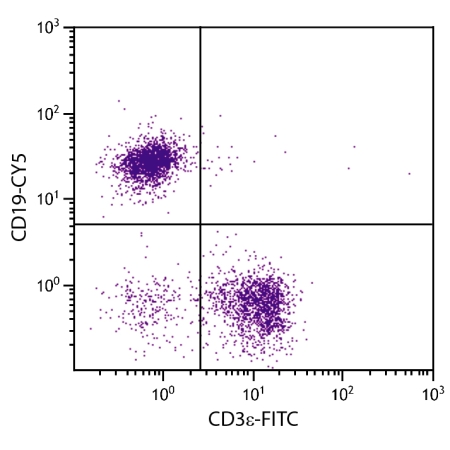
| Characterization | To ensure lot- to- lot consistency, each batch of monoclonal antibody is tested by flow cytometry to conformto characteristics of a standard reference reagent. Representative data are included in this product insert. |
| Warning | Reagents contain sodium azide. Sodium azide is very toxic if ingested or inhaled. Avoid contact with skin, eyes, orclothing. Wear eye or face protection when handling. If skin or eye contact occurs, wash with copious amounts ofwater. If ingested or inhaled, contact a physician immediately. Sodium azide yields toxic hydrazoic acid underacidic conditions. Dilute azide- containing compounds in running water before discarding to avoid accumulation ofpotentially explosive deposits in lead or copper plumbing. |
| Dilution | Flow Cytometry: Fluorescein conjugate <= 1 ug/106 cells Biotin conjugate <= 1 ug/106 cells PE, APC, SPRD, CY5, PE/CY5.5, PE/CY7, and AF488 conjugates <= 0.2 ug/106 cells |
| Application Info | Flow cytometry 8 |
| Other Applications Data | Since applications vary, you should determine the optimum workingdilution for the product that is appropriate for your specific need. |
| Other Applications Image 1 Data | Amount Used: ≤ 1 Ug/106 cells Cells from BALB/c mesenteric lymph nodes were doublestained with anti-mouse CD19-FITC and anti-mouse CD3-R-PE , gated on small lymphocytes and analyzed on a FACScan flow cytometer (BDIS, San Jose, CA). |
| Storage | - The purified (UNLB) antibody is supplied as 0.5 mg ofpurified immunoglobulin in 1.0 mL of 100 mM boratebuffered saline, pH 8.2. No preservatives or aminecontainingbuffer salts added. Store at 2- 8 C - The fluorescein (FITC) conjugate is supplied as 0.5 mg or 0.1 mg in 1.0 mL of PBS/NaN3. Store at 2- 8 C - The biotin (BIOT) conjugate is supplied as 0.5 mg in 1.0 mL of PBS/NaN3. Store at 2- 8 C - The R- phycoerythrin (R- PE) conjugate is supplied as 0.1 mg in 1.0 mL or 0.2 mg in 2.0 mL of PBS/NaN3 and astabilizing agent. Store at 2- 8 C. Do not freeze! - The allophycocyanin (APC), Spectral Red (SPRD), R- phycoerythrin- Cyanine 7 (R- PE- CY 7) and Rphycoerythrin- Cyanine 5.5 (R- PE- CY 5.5) conjugates are supplied as 0.1 mg in 1.0 mL of PBS/NaN3 and astabilizing agent. Store at 2- 8 C. Do not freeze! - The low endotoxin, azide- free (LE/AF) antibody is supplied as 0.5 mg purified immunoglobulin in 1.0 mL of PBS Aliquot and store at or below - 20 C - The Cyanine 5 (CY 5) conjugate is supplied as 0.1 mg in 1.0 mL of PBS/NaN3. Store at 2- 8 C - The Alexa Fluor 488 (AF488) conjugate is supplied as 0.1mg in 0.2mL of PBS/NaN3. Store at 2- 8 C - Protect conjugated forms from light. Aliquot and freeze the low endotoxin, azide- free product at - 20 Cimmediately upon receipt. Each reagent is stable for the period shown on the bottle label if stored as directed. |
| Reference | 1. Krop, I., A.R. Fougerolles, R.R. Hardy, M. Allison, M.S. Schlissel, and D.T. Fearon. 1996. Eur. J. Immunol;. 26:238 2. Krop, I., A.L. Shaffer, D.T. Fearon, and M.S. Schlissel. 1996. J. Immunol. 157:48 3. Fearon, D.T. 1993. Curr. Opin. in Immunol. 5:341 4. Tedder, T.F., L.- J. Zhou, and P. Engel. 1994. Immunol. Today 15:437 5. Rickert, R.C., K. Rajewsky, and J. Roes. 1995. Nature 376:352 6. Engel, P., L.- J. Zhou, D.C. Ord, S. Sato, B. Koller, and T.F. Tedder. 1995. Immunity 3:39 7. Rolink, A., E. ten Boekel, F. Melchers, D.T. Fearon, I. Krop, and J. Andersson. 1996. J. Exp. Med. 183:187 8. Sato, S., M. Hasegawa, M. Fujimoto, T.F. Tedder, and K. Takehara. 2000. J. Immunol. 165:6635. |
|---|---|
| Gene Symbol | CD19 |
| Gene Full Name | B-lymphocyte antigen CD19 |
| Alias Symbols | AW495831 |
| NCBI Gene Id | 12478 |
| Protein Name | B-lymphocyte antigen CD19 |
| Uniprot ID | P25918 |
| Protein Accession # | NP_033974.2 |
| Nucleotide Accession # | NM_009844.2 |
Protein interactions
| Name | # of Products |
|---|---|
| ABL1 | 260 |
| BTK | 167 |
| CBL | 471 |
| CD22 | 78 |
| CD79A | 128 |
| CD79B | 88 |
| CD81 | 115 |
| CD82 | 185 |
| CD9 | 120 |
| CR2 | 96 |
| FYN | 597 |
| GRB2 | 1020 |
| IFITM1 | 50 |
| LYN | 366 |
| MAPK1 | 575 |
| PIK3R1 | 517 |
| PLCG2 | 85 |
| SOS1 | 185 |
| SYK | 252 |
| VAV1 | 151 |
| VAV2 | 96 |
Biological pathways
| Name | # of Products |
|---|---|
| Cell surface receptor linked signaling pathway | 420 |
| Cellular defense response | 219 |
| Regulation of immune response | 318 |
Biological process
| Name | # of Products |
|---|---|
| Cell surface receptor signaling pathway | 179 |
| Cellular defense response | 54 |
| Regulation of immune response | 89 |
Cellular components
| Name | # of Products |
|---|---|
| External side of plasma membrane | 261 |
| Integral to plasma membrane | 817 |
| Plasma membrane | 2678 |
Protein function
| Name | # of Products |
|---|---|
| Receptor signaling protein activity | 171 |
-
 CD19 Colorimetric Cell-Based ELISA Kit (OKAG00591)Catalog #: OKAG00591Application: ELISAKit Range: At least 5000 cells/wellFormat: 96-Well Microplate
- Phospho-CD19 (Tyr531) Colorimetric Cell-Based ELISA Kit (OKAG01545)Catalog #: OKAG01545Application: ELISAKit Range: At least 5000 cells/wellFormat: 2 x 96-Well Microplates
-
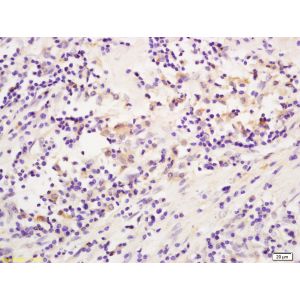 CD19 Antibody (OABF01475)Catalog #: OABF01475Conjugation: UnconjugatedApplication: ELISA, FC-I, ICC, IF, WBFormat: Liquid. Aqueous buffered solution containing 1% BSA, 50% glycerol and 0.09% sodium azide.
-
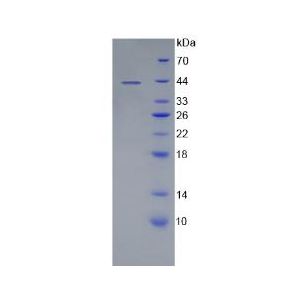 CD19 Recombinant Protein (OPCD01989)Catalog #: OPCD01989Conjugation: UnconjugatedApplication: Ctrl (+), SDS-PAGE, WBFormat: Freeze-dried Powder. PBS, pH7.4, containing 0.01% SKL, 5% Trehalose.
-
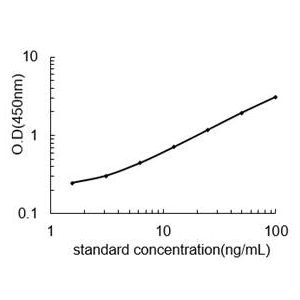 CD19 ELISA Kit (Human) (OKEH04729)Catalog #: OKEH04729Application: ELISA-SandwichKit Range: 1.56-100ng/mLSensitivity: 0.66 ng/mL