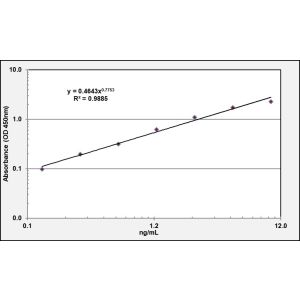

TNF-a ELISA Kit (Mouse)

Cat# OKAG00101
Size : 1plate
Brand : Aviva Systems Biology
Contact local distributor :
 Phone : +1 850 650 7790
TNF-a ELISA Kit (Mouse) : 96 Wells (OKAG00101)
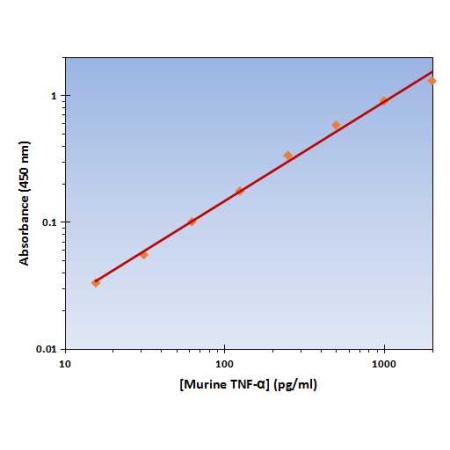
| Datasheets/Manuals | Printable datasheet for TNF-a ELISA Kit (Mouse) : 96 Wells (OKAG00101) |
|---|
| Predicted Species Reactivity | Mouse|Mus musculus | ||||||||||||||||||||||
|---|---|---|---|---|---|---|---|---|---|---|---|---|---|---|---|---|---|---|---|---|---|---|---|
| Product Format | 1 x 96-Well Plate or 12 x 8-Well Strips | ||||||||||||||||||||||
| Application | ELISA-Sandwich | ||||||||||||||||||||||
| ELISA Kit Detection Method | Colorimetric 450 nm | ||||||||||||||||||||||
| ELISA Kit Duration | 4.5 hours | ||||||||||||||||||||||
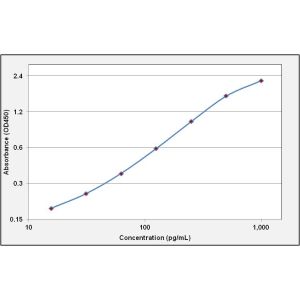
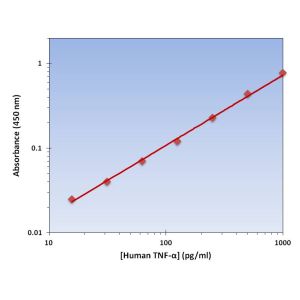
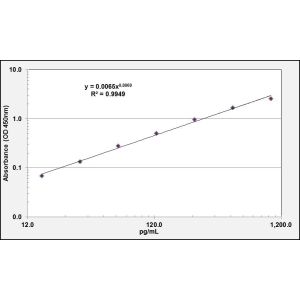
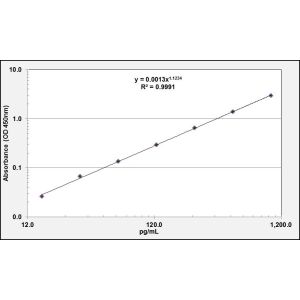
| ELISA Kit Principle | The Aviva MurineTNF-alpha ELISA Kit contains the components necessary for quantitative determination of natural or recombinant mTNF-alphaconcentrations within any experimental sample including cell lysates, serum and plasma. This particular immunoassay utilizes the quantitative technique of a "Sandwich" Enzyme-Linked Immunosorbent Assay (ELISA) where the target protein (antigen) is bound in a "sandwich" format by the primary capture antibodies coated to each well-bottom and the secondary detection antibodies added subsequently by the investigator.The capture antibodies coated to the bottom of each well are specific for a particular epitope on theMurineTNF-alpha cytokine while the user-added detection antibodies bind to epitopes on the captured target protein. Amid each step of the procedure, a series of wash steps must be performed to ensure the elimination of non-specific binding between proteins to other proteins or to the solid phase. After incubation and "sandwiching" of the target antigen, a peroxidase enzyme is conjugated to the constant heavy chain of the secondary antibody (either covalently or via Avidin/Streptavidin-Biotin interactions), allowing for a colorimetricreaction to ensue upon substrate addition. When the substrate TMB (3, 3’, 5, 5’-Tetramethylbenzidine) is added, the reaction catalyzed by peroxidase yields a blue color that is representative of the antigen concentration. Upon sufficient color development, the reaction can be terminated through addition of Stop Solution (2 N Sulfuric Acid) where the color of the solution will turn yellow. The absorbance of each well can then be read by a spectrophotometer, allowing for generation of a standard curve and subsequent determination of protein concentration. | ||||||||||||||||||||||
| ELISA Kit Range | 16-2000 pg/mL | ||||||||||||||||||||||
| ELISA Kit Component |
| ||||||||||||||||||||||
| Reconstitution and Storage | 2°C to 8°C | ||||||||||||||||||||||
| Sample Type | Cell lysates, sera and plasma | ||||||||||||||||||||||
| Sensitivity | 16 pg/mL | ||||||||||||||||||||||
| Specificity | The Murine TNF-α ELISA is capable of recognizing both recombinant and naturally produced Murine TNF-α proteins. The antigens listed below were tested at 50 ng/ml and exhibited 100% cross reactivity. • Rat: TNF-α The antigens listed below were tested at 50 ng/ml and did not exhibit significant cross reactivity or interference. • Human: 4-1BBL, CD40L, FasL, IL-2, sRANKL, TNF-α, TNF-β, sTNF-RI, sTNF-RII, sTRAIL, TWEAK, VEGF • Murine: IL-2, CD40L, sRANKL, sTRAIL, VEGF | ||||||||||||||||||||||
| Assay Info | Quantitative Colorimentric Sandwich ELISA |
| Gene Symbol | Tnf |
|---|---|
| Gene Full Name | tumor necrosis factor |
| Alias Symbols | cachectin, DI, DIF, Tn, TNF-, TNF-a, TNF-alpha, Tnfa, TNFalpha, Tnfs, Tnfsf1a, TNFSF2, Tnlg1f, tumor necrosis factor, tumor necrosis factor ligand 1f, tumor necrosis factor ligand superfamily member 2, tumor necrosis factor-alpha. |
| NCBI Gene Id | 21926 |
| Protein Name | Tumor necrosis factor |
| Description of Target | Cytokine that binds to TNFRSF1A/TNFR1 and TNFRSF1B/TNFBR. It is mainly secreted by macrophages and can induce cell death of certain tumor cell lines. It is potent pyrogen causing fever by direct action or by stimulation of interleukin-1 secretion and is implicated in the induction of cachexia, Under certain conditions it can stimulate cell proliferation and induce cell differentiation. |
| Uniprot ID | P06804 |
| Protein Accession # | NP_001265530.1 |
| Nucleotide Accession # | NM_001278601.1 |