

Zebrafish Stromal Cell Derived Factor 1 (SDF1) ELISA Kit

Cat# MBS2000186-96
Size : 96-Strip-Wells
Brand : MyBiosource
Contact local distributor :

Phone : +1 850 650 7790
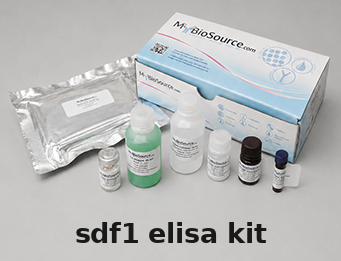
Stromal Cell Derived Factor 1 (SDF1) ELISA Kit for Zebrafish
For Research Use Only. Not for use in diagnostic procedures. Special Promotion Catalog #: MBS2000186SPECIAL PROMOTION: Get FREE Starbucks gift card ( for 48-Wells-Kit or for 96-Wells-Kit. Maximum 5 gift cards/product). Gift card(s) will be included with shipment
The test principle applied in this kit is Sandwich enzyme immunoassay. The microtiter plate provided in this kit has been pre-coated with an antibody specific to Stromal Cell Derived Factor 1 (SDF1). Standards or samples are then added to the appropriate… More details
Product Overview
Online Datasheet in PDFProduct Name
Stromal Cell Derived Factor 1 (SDF1), ELISA Kit
Full Product Name
Zebrafish Stromal Cell Derived Factor 1 (SDF1) ELISA Kit
Product Gene Name
SDF1 elisa kit
Product Synonym Names
ELISA Kit for Stromal Cell Derived Factor 1 (SDF1)
Species Reactivity
Zebrafish
Assay Type
Sandwich
Samples
Serum, plasma, cell culture supernates and other biological fluids
Detection Range
15.625-1000 ng/mL The standard curve concentrations used for the ELISA's were 1000 ng/mL, 500 ng/mL, 250 ng/mL, 125 ng/mL, 62.5 ng/mL, 31.25 ng/mL, 15.625 ng/mL
Sensitivity
Typically less than 3.6 ng/mL.
Specificity
This assay has high sensitivity and excellent specificity for detection of Stromal Cell Derived Factor 1 (SDF1).
No significant cross-reactivity or interference between Stromal Cell Derived Factor 1 (SDF1) and analogues was observed.
No significant cross-reactivity or interference between Stromal Cell Derived Factor 1 (SDF1) and analogues was observed.
Preparation and Storage
For unopened kit, all the reagents should be kept according to the label on each vial. The Standard, Detection Reagent A, Detection Reagent B and the 96-well strip plate should be stored at -20 degree C while others should be at 4 degree C.
Molecular Weight
10,666 Da
Chromosome Location
Chromosome: 10; NC_000010.10 (44865601..44880545, complement). Location: 10q11.1
OMIM
600835
Supply Chain Verification
Manufactured in a lab with traceable raw materials. Bulk orders can typically be prepared to the customer’s specifications, please inquire.
Precision
Intra-assay Precision (Precision within an assay): 3 samples with low, middle and high level Stromal Cell Derived Factor 1 (SDF1) were tested 20 times on one plate, respectively.
Inter-assay Precision (Precision between assays): 3 samples with low, middle and high level Stromal Cell Derived Factor 1 (SDF1) were tested on 3 different plates, 8 replicates in each plate.
CV(%) = SD/meanX100
Intra-Assay: CV<10%
Inter-Assay: CV<12%
Inter-assay Precision (Precision between assays): 3 samples with low, middle and high level Stromal Cell Derived Factor 1 (SDF1) were tested on 3 different plates, 8 replicates in each plate.
CV(%) = SD/meanX100
Intra-Assay: CV<10%
Inter-Assay: CV<12%
ISO Certification
Manufactured in an ISO 9001:2015 and ISO 13485:2016 Certified Laboratory.
Other Notes
Small volumes of SDF1 elisa kit vial(s) may occasionally become entrapped in the seal of the product vial during shipment and storage. If necessary, briefly centrifuge the vial on a tabletop centrifuge to dislodge any liquid in the container`s cap. Certain products may require to ship with dry ice and additional dry ice fee may apply.
Searchable Terms for SDF1 purchase
MBS2000186 is a ready-to-use microwell, strip plate ELISA (enzyme-linked immunosorbent assay) Kit for analyzing the presence of the Stromal Cell Derived Factor 1 (SDF1) ELISA Kit target analytes in biological samples. The concentration gradients of the kit standards or positive controls render a theoretical kit detection range in biological research samples containing SDF1. The ELISA analytical biochemical technique of the MBS2000186 kit is based on SDF1 antibody-SDF1 antigen interactions (immunosorbency) and an HRP colorimetric detection system to detect SDF1 antigen targets in samples. The ELISA Kit is designed to detect native, not recombinant, SDF1. Appropriate sample types may include undiluted body fluids and/or tissue homogenates, secretions. Quality control assays assessing reproducibility identified the intra-assay CV (%) and inter-assay CV(%).
Additional Details
NCBI/Uniprot data below describe general gene information for SDF1. It may not necessarily be applicable to this product.
NCBI Official Full Name
stromal cell-derived factor 1 isoform alpha
NCBI Official Synonym Full Names
chemokine (C-X-C motif) ligand 12
NCBI Official Symbol
CXCL12
NCBI Official Synonym Symbols
IRH; PBSF; SDF1; TLSF; TPAR1; SCYB12
UniProt Protein Name
Stromal cell-derived factor 1
UniProt Synonym Protein Names
C-X-C motif chemokine 12; Intercrine reduced in hepatomas; IRH; hIRH; Pre-B cell growth-stimulating factor
UniProt Gene Name
CXCL12
UniProt Synonym Gene Names
SDF1; SDF1A; SDF1B; SDF-1; hSDF-1; IRH; hIRH; PBSF
UniProt Entry Name
SDF1_HUMAN
NCBI Protein Information
stromal cell-derived factor 1; intercrine reduced in hepatomas; pre-B cell growth-stimulating factor
NCBI Summary for SDF1
This antimicrobial gene encodes a stromal cell-derived alpha chemokine member of the intercrine family. The encoded protein functions as the ligand for the G-protein coupled receptor, chemokine (C-X-C motif) receptor 4, and plays a role in many diverse cellular functions, including embryogenesis, immune surveillance, inflammation response, tissue homeostasis, and tumor growth and metastasis. Mutations in this gene are associated with resistance to human immunodeficiency virus type 1 infections. Multiple transcript variants encoding different isoforms have been found for this gene. [provided by RefSeq, Sep 2014]
Show more UniProt Comments for SDF1
CXCL12: Chemoattractant active on T-lymphocytes, monocytes, but not neutrophils. Activates the C-X-C chemokine receptor CXCR4 to induce a rapid and transient rise in the level of intracellular calcium ions and chemotaxis. Also binds to another C-X-C chemokine receptor CXCR7, which activates the beta-arrestin pathway and acts as a scavenger receptor for SDF-1. SDF-1-beta(3-72) and SDF-1- alpha(3-67) show a reduced chemotactic activity. Binding to cell surface proteoglycans seems to inhibit formation of SDF-1-alpha(3- 67) and thus to preserve activity on local sites. Acts as a positive regulator of monocyte migration and a negative regulator of monocyte adhesion via the LYN kinase. Stimulates migration of monocytes and T-lymphocytes through its receptors, CXCR4 and CXCR7, and decreases monocyte adherence to surfaces coated with ICAM-1, a ligand for beta-2 integrins. SDF1A/CXCR4 signaling axis inhibits beta-2 integrin LFA-1 mediated adhesion of monocytes to ICAM-1 through LYN kinase. Inhibits CXCR4-mediated infection by T- cell line-adapted HIV-1. Plays a protective role after myocardial infarction. Induces down-regulation and internalization of CXCR7 expressed in various cells. Has several critical functions during embryonic development; required for B-cell lymphopoiesis, myelopoiesis in bone marrow and heart ventricular septum formation. Monomer or homodimer; in equilibrium. Dimer formation is induced by non acidic pH and the presence of multivalent anions, and by binding to CXCR4 or heparin. Monomeric form is required for full chemotactic activity and resistance to ischemia/reperfusion injury, whereas the dimeric form acts as a partial agonist of CXCR4, stimulating Ca2+ mobilization but with no chemotactic activity and instead acts as a selective antagonist that blocks chemotaxis induced by the monomeric form. Interacts with the N- terminus of CXCR7. Isoform Alpha and isoform Beta are ubiquitously expressed, with highest levels detected in liver, pancreas and spleen. Isoform Gamma is mainly expressed in heart, with weak expression detected in several other tissues. Isoform Delta, isoform Epsilon and isoform Theta have highest expression levels in pancreas, with lower levels detected in heart, kidney, liver and spleen. Belongs to the intercrine alpha (chemokine CxC) family. 6 isoforms of the human protein are produced by alternative splicing.
Protein type: Secreted; Cell development/differentiation; Motility/polarity/chemotaxis; Secreted, signal peptide; Chemokine
Chromosomal Location of Human Ortholog: 10q11.1
Cellular Component: extracellular space; extracellular region; external side of plasma membrane
Molecular Function: growth factor activity; chemokine activity; chemokine receptor binding; CXCR chemokine receptor binding; receptor binding
Biological Process: response to peptide hormone stimulus; positive regulation of dopamine secretion; positive regulation of cell adhesion; adult locomotory behavior; blood circulation; neuron migration; motor axon guidance; chemotaxis; signal transduction; induction of positive chemotaxis; germ cell development; T cell proliferation; response to radiation; germ cell migration; cell adhesion; organ regeneration; regulation of actin polymerization and/or depolymerization; response to virus; patterning of blood vessels; cellular calcium ion homeostasis; G-protein coupled receptor protein signaling pathway; response to mechanical stimulus; response to heat; ameboidal cell migration; response to hypoxia; positive regulation of axon extension involved in axon guidance; immune response; positive regulation of endothelial cell proliferation; telencephalon cell migration
Disease: Human Immunodeficiency Virus Type 1, Susceptibility To
Show more Protein type: Secreted; Cell development/differentiation; Motility/polarity/chemotaxis; Secreted, signal peptide; Chemokine
Chromosomal Location of Human Ortholog: 10q11.1
Cellular Component: extracellular space; extracellular region; external side of plasma membrane
Molecular Function: growth factor activity; chemokine activity; chemokine receptor binding; CXCR chemokine receptor binding; receptor binding
Biological Process: response to peptide hormone stimulus; positive regulation of dopamine secretion; positive regulation of cell adhesion; adult locomotory behavior; blood circulation; neuron migration; motor axon guidance; chemotaxis; signal transduction; induction of positive chemotaxis; germ cell development; T cell proliferation; response to radiation; germ cell migration; cell adhesion; organ regeneration; regulation of actin polymerization and/or depolymerization; response to virus; patterning of blood vessels; cellular calcium ion homeostasis; G-protein coupled receptor protein signaling pathway; response to mechanical stimulus; response to heat; ameboidal cell migration; response to hypoxia; positive regulation of axon extension involved in axon guidance; immune response; positive regulation of endothelial cell proliferation; telencephalon cell migration
Disease: Human Immunodeficiency Virus Type 1, Susceptibility To
Precautions
All of MyBioSource's Products are for scientific laboratory research purposes and are not for diagnostic, therapeutics, prophylactic or in vivo use. Through your purchase, you expressly represent and warrant to MyBioSource that you will properly test and use any Products purchased from MyBioSource in accordance with industry standards. MyBioSource and its authorized distributors reserve the right to refuse to process any order where we reasonably believe that the intended use will fall outside of our acceptable guidelines.
Disclaimer
While every efforts were made to ensure the accuracy of the information provided in this datasheet, MyBioSource will not be liable for any omissions or errors contained herein. MyBioSource reserves the right to make changes to this datasheet at any time without prior notice.
It is the responsibility of the customer to report product performance issues to MyBioSource within 30 days of receipt of the product. Please visit our Terms & Conditions page for more information.
It is the responsibility of the customer to report product performance issues to MyBioSource within 30 days of receipt of the product. Please visit our Terms & Conditions page for more information.
Product Note
Select online data sheet information is drawn from bioinformatics databases, occasionally resulting in ambiguous or non-relevant product information. It is the responsibility of the customer to review, verify, and evaluate the information to make sure it matches their requirements before purchasing the kit. Our ELISA Kit assays are dynamic research tools and sometimes they may be updated and improved. If the format of this assay is important to you then please request the current manual or contact our technical support team with a presales inquiry before placing an order. We will confirm the current details of the assay. We cannot guarantee the sample manual posted online is the most current manual, it is intended to serve as an example only. Please refer to the instructions For Use provided with the assay kit for precise details.
Product PubMed Publications
Products associated with SDF1 elisa kit
| Reference Product | PubMed Publications |
|---|---|
| CXCR4 elisa kit | >2888 publications with SDF1 and CXCR4 |
| CCR5 elisa kit | >278 publications with SDF1 and CCR5 |
| CXCR7 elisa kit | >195 publications with SDF1 and CXCR7 |
| CXCR3 elisa kit | >114 publications with SDF1 and CXCR3 |
| HIF1A elisa kit | >68 publications with SDF1 and HIF1A |
| CCR4 elisa kit | >40 publications with SDF1 and CCR4 |
| STAT3 elisa kit | >30 publications with SDF1 and STAT3 |
| JAK2 elisa kit | >16 publications with SDF1 and JAK2 |
| VAV1 elisa kit | >14 publications with SDF1 and VAV1 |
| SDC4 elisa kit | >5 publications with SDF1 and SDC4 |
Pathways associated with SDF1 elisa kit
| Products by Pathway | Pathway Diagram |
|---|---|
| Axon Guidance Pathway antibodies | Axon Guidance Pathway Diagram |
| Axon Guidance Pathway antibodies | Axon Guidance Pathway Diagram |
| CXCR4-mediated Signaling Events Pathway antibodies | CXCR4-mediated Signaling Events Pathway Diagram |
| Chemokine Receptors Bind Chemokines Pathway antibodies | Chemokine Receptors Bind Chemokines Pathway Diagram |
| Chemokine Signaling Pathway antibodies | Chemokine Signaling Pathway Diagram |
| Chemokine Signaling Pathway antibodies | Chemokine Signaling Pathway Diagram |
| Class A/1 (Rhodopsin-like Receptors) Pathway antibodies | Class A/1 (Rhodopsin-like Receptors) Pathway Diagram |
| Cytokine-cytokine Receptor Interaction Pathway antibodies | Cytokine-cytokine Receptor Interaction Pathway Diagram |
| Cytokine-cytokine Receptor Interaction Pathway antibodies | Cytokine-cytokine Receptor Interaction Pathway Diagram |
| G Alpha (i) Signalling Events Pathway antibodies | G Alpha (i) Signalling Events Pathway Diagram |
Diseases associated with SDF1 elisa kit
| Disease Name | Pubmed Publications |
|---|---|
| Neoplasms Antibodies | >1295 publications with SDF1 and Neoplasms |
| Inflammation Antibodies | >466 publications with SDF1 and Inflammation |
| Neoplasm Metastasis Antibodies | >326 publications with SDF1 and Neoplasm Metastasis |
| HIV Infections Antibodies | >256 publications with SDF1 and HIV Infections |
| Breast Neoplasms Antibodies | >230 publications with SDF1 and Breast Neoplasms |
| Heart Diseases Antibodies | >225 publications with SDF1 and Heart Diseases |
| Necrosis Antibodies | >186 publications with SDF1 and Necrosis |
| Neoplasm Invasiveness Antibodies | >186 publications with SDF1 and Neoplasm Invasiveness |
| Myocardial Infarction Antibodies | >175 publications with SDF1 and Myocardial Infarction |
| Lung Neoplasms Antibodies | >143 publications with SDF1 and Lung Neoplasms |
Organs/Tissues associated with SDF1 elisa kit
| Organ/Tissue Name | Pubmed Publications |
|---|---|
| Bone Antibodies | >1276 publications with SDF1 and Bone |
| Bone Marrow Antibodies | >1180 publications with SDF1 and Bone Marrow |
| Vascular Antibodies | >946 publications with SDF1 and Vascular |
| Brain Antibodies | >416 publications with SDF1 and Brain |
| Lung Antibodies | >281 publications with SDF1 and Lung |
| Heart Antibodies | >251 publications with SDF1 and Heart |
| Liver Antibodies | >231 publications with SDF1 and Liver |
| Embryonic Tissue Antibodies | >188 publications with SDF1 and Embryonic Tissue |
| Nerve Antibodies | >151 publications with SDF1 and Nerve |
| Skin Antibodies | >130 publications with SDF1 and Skin |