EFNA1 ELISA Kit (Mouse)

Référence OKEH05508
Conditionnement : 96Wells
Marque : Aviva Systems Biology
Contactez votre distributeur local :

Téléphone : +1 850 650 7790
EFNA1 ELISA Kit (Mouse) (OKEH05508)
| Datasheets/Manuals | Printable datasheet for EFNA1 ELISA Kit (Mouse) (OKEH05508) |
|---|
| Predicted Species Reactivity | Mouse|Mus musculus | ||||||||||||||||||||||
|---|---|---|---|---|---|---|---|---|---|---|---|---|---|---|---|---|---|---|---|---|---|---|---|
| Application | ELISA-Sandwich | ||||||||||||||||||||||
| ELISA Kit Detection Method | Colorimetric, OD450 nm | ||||||||||||||||||||||
| ELISA Kit Duration | ~3 Hours | ||||||||||||||||||||||
| ELISA Kit Principle | Aviva Systems Biology Efna1 ELISA Kit (Mouse) (OKEH05508) is based on standard sandwich enzyme-linked immuno-sorbent assay technology. An antibody specific for Efna1 has been pre-coated onto a 96-well plate (12 x 8 Well Strips) and blocked. Standards or test samples are added to the wells, incubated and removed. A biotinylated detector antibody specific for Efna1 is added, incubated and followed by washing. Avidin-Peroxidase Conjugate is then added, incubated and unbound conjugate is washed away. An enzymatic reaction is produced through the addition of TMB substrate which is catalyzed by HRP generating a blue color product that changes to yellow after adding acidic stop solution. The density of yellow coloration read by absorbance at 450 nm is quantitatively proportional to the amount of sample Efna1 captured in the well. | ||||||||||||||||||||||
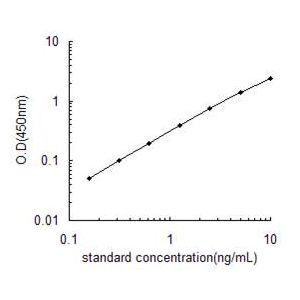
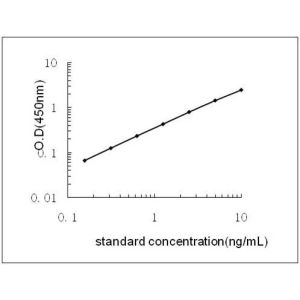
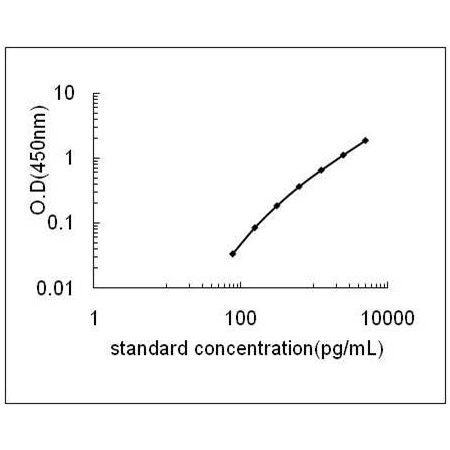
| ELISA Kit Range | 78-5000pg/mL | ||||||||||||||||||||||
| ELISA Kit Recovery | Mean recovery when spiking into Serum and Plasma = 92.2% | ||||||||||||||||||||||
| ELISA Kit Reproducibility | Three samples concentrations were measured in replicate within an assay plate and across replicate assays to assess Intra- and Mean Inter-Assay Precision. Mean Intra-Assay Precision - <6.9%, n = 20 Mean Inter-Assay Precision - <8.8%, n = 20 | ||||||||||||||||||||||
| ELISA Kit Component |
| ||||||||||||||||||||||
| Reconstitution and Storage | Store as indicated in product manual. | ||||||||||||||||||||||
| Sample Type | Serum, plasma and other biological fluids | ||||||||||||||||||||||
| Sensitivity | 39.7 pg/mL | ||||||||||||||||||||||
| Specificity | Natural and recombinant Mouse Ephrin-A1 | ||||||||||||||||||||||
| Assay Info | Assay Methodology: Quantitative Sandwich ELISA |
| Gene Symbol | Efna1 |
|---|---|
| Gene Full Name | ephrin A1 |
| Alias Symbols | AI325262, B61, EFL-, Efl1, Ep, EPH-related receptor tyrosine kinase ligand 1, ephrin-A1, Epl, Epl1, Eplg1, immediate early response protein B61, Ler, LERK, Lerk1. |
| NCBI Gene Id | 13636 |
| Protein Name | Ephrin-A1 |
| Description of Target | Cell surface GPI-bound ligand for Eph receptors, a family of receptor tyrosine kinases which are crucial for migration, repulsion and adhesion during neuronal, vascular and epithelial development. Binds promiscuously Eph receptors residing on adjacent cells, leading to contact-dependent bidirectional signaling into neighboring cells. Plays an important role in angiogenesis and tumor neovascularization. The recruitment of VAV2, VAV3 and PI3-kinase p85 subunit by phosphorylated EPHA2 is critical for EFNA1-induced RAC1 GTPase activation and vascular endothelial cell migration and assembly. Exerts anti-oncogenic effects in tumor cells through activation and down-regulation of EPHA2. Activates EPHA2 by inducing tyrosine phosphorylation which leads to its internalization and degradation. Acts as a negative regulator in the tumorigenesis of gliomas by down-regulating EPHA2 and FAK. Can evoke collapse of embryonic neuronal growth cone and regulates dendritic spine morphogenesis. |
| Uniprot ID | P52793 |
| Protein Accession # | NP_034237.3 |
| Nucleotide Accession # | NM_010107.4 |
| Protein Size (# AA) | 205 |