


Glyceraldehyde is the simplest aldotriose monosaccharide, with the chemical formula C3H6O3. It consists of three carbon atoms, including one carbonyl group in the aldehyde form and two hydroxyl groups, making it the smallest and most basic common aldose sugar. It plays a central role as an intermediate in carbohydrate metabolism and serves as a stereochemical reference for classifying other sugars.
Chemical Structure and Stereochemistry
Glyceraldehyde contains a single chiral center located on the second carbon, resulting in two enantiomers: D-glyceraldehyde and L-glyceraldehyde. These mirror-image forms differ in their optical rotation—D-glyceraldehyde rotates polarized light to the right, while the L-form rotates it to the left. Historically, this distinction was fundamental in establishing the D/L configuration system in sugar chemistry.
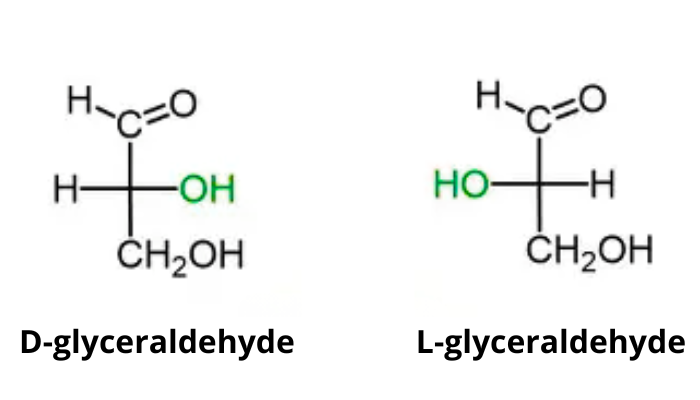
In aqueous solution, glyceraldehyde primarily exists in a hydrated form due to interaction between the aldehyde group and water. At higher concentrations, it may also form dimers through hemiacetal linkages.
Biological Significance
Glyceraldehyde is a key intermediate in major metabolic pathways such as glycolysis and the pentose phosphate pathway. It is generated during the cleavage of fructose-1,6-bisphosphate and subsequently converted into glyceraldehyde-3-phosphate—an essential molecule for cellular energy production. Additionally, glyceraldehyde participates in enzymatic reactions, including those catalyzed by aldose reductase, and contributes to the formation of advanced glycation end-products associated with aging and diabetes-related complications.
Physical Properties
Glyceraldehyde is a sweet, colorless crystalline solid that is highly soluble in water due to its polar functional groups. Its small size and reactive nature allow it to undergo oxidation, reduction, and protein cross-linking reactions.
In summary, glyceraldehyde is a fundamental triose monosaccharide with a simple structure yet important biochemical roles. Its involvement in metabolism and its stereochemical relevance make it a cornerstone molecule in biochemistry.
