

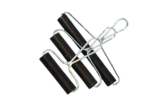
Laboratory hand rollers are lightweight and durable tools designed to apply uniform pressure across sealing sheets, adhesive films, plates, blocks, membranes and other flat laboratory surfaces. Their smooth rolling action helps ensure consistent contact between surfaces, improve adhesion, remove trapped air or excess liquid, and create a homogeneous seal without damaging the consumable or sample support.
Role in Laboratory Workflows
Hand rollers are commonly used for sealing microplates, PCR plates, storage blocks, blotting membranes, adhesive sheets and printed or laminated surfaces. By distributing pressure evenly, they help reduce the risk of incomplete sealing, edge lifting, air bubbles or uneven contact. This is particularly useful in workflows requiring secure plate sealing, sample protection, controlled incubation, contamination prevention or consistent reagent distribution.
Applications and Benefits
A laboratory roller provides a simple and efficient way to seal plates and blocks quickly while maintaining reproducible pressure across the surface. Its ergonomic design and smooth movement make it suitable for routine sample preparation, molecular biology, immunoassays, plate storage, blotting applications and general laboratory handling. Depending on the workflow, rollers can also be used to remove surplus water or liquid from surfaces and to improve contact between membranes, films or sheets.
Common Uses
- Sealing microplates, PCR plates and storage blocks
- Applying adhesive films or sealing sheets
- Removing trapped air bubbles or surplus liquid
- Improving contact between membranes, films or flat surfaces
- Supporting blotting, incubation and sample preparation workflows