
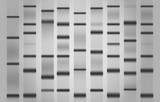
Western blot consumables comprise the products needed to transfer proteins from an electrophoresis gel onto a solid support and then detect them immunologically. Western blotting relies on this transfer to a support membrane followed by immunodetection, which makes it a widely used technique for protein visualization and identification. This category mainly covers transfer membranes, blotting filter paper, transfer and wash buffers, and blocking and detection reagents.
Main Components
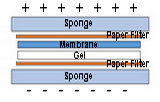
The transfer support is generally one of two types: nitrocellulose or polyvinylidene fluoride (PVDF), both of which bind proteins with high affinity. PVDF membranes must be wetted in 100% methanol prior to use, though they can subsequently be used with a transfer buffer that contains no methanol. Blotting filter paper, made of 100% cotton fiber, provides a uniform flow of buffer through the gel and contains no additives that might interfere with the transfer process; it is available in standard thickness and extra-thick formats, with the latter recommended for semi-dry transfers due to its greater fluid capacity. The transfer buffer used in electroblotting typically consists of Tris base, glycine, and methanol (concentration depending on the specific protocol), while a TBST wash buffer (Tris-buffered saline with 0.05% Tween-20) and a blocking buffer (for example, 5% bovine serum albumin) are used in subsequent steps. Blocking reagents need to saturate all unreacted sites on the membrane without displacing the target protein or interfering with antibodies or detection reagents.
Formats and Applications
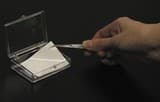
Precut membranes and filter papers, and even preassembled transfer sandwiches, are now available to match gel dimensions directly, simplifying and speeding up the procedure. Some systems integrate a pre-activated transfer membrane directly into a consumable stack, enabling dry transfer in a matter of minutes. Depending on the detection method used (colorimetric, chemiluminescent, or fluorescent), membrane choice can affect signal and background; for example, low-autofluorescence PVDF membranes have been developed specifically to reduce background noise in fluorescence-based detection. Electrophoretic transfer can be carried out under wet or semi-dry conditions, with wet transfer generally considered more reliable, particularly for larger proteins, since it reduces the risk of the gel drying out.