
Epigenetics

Epigenetics

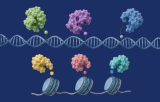
Epigenetics studies stable, heritable alterations in gene expression that do not involve changes to the underlying DNA sequence. These modifications create functional diversity across cell types and respond dynamically to environmental cues.

Core Epigenetic Mechanisms

  • DNA Methylation: Adds methyl groups to cytosine residues in CpG dinucleotides, primarily mediated by DNA methyltransferases (DNMT1 for maintenance, DNMT3a/b for de novo methylation). Hypermethylation at promoters represses transcription by blocking transcription factor binding and recruiting methyl-CpG-binding domain proteins that compact chromatin.
  • Histone Modifications: Include acetylation (HATs), methylation (HMTs), phosphorylation, ubiquitination, and sumoylation on lysine, arginine, and serine residues. Histone acetylation (H3K9ac, H3K27ac) loosens chromatin structure, promoting transcription, while H3K9me3 and H3K27me3 marks mediate heterochromatin formation.
  • Non-coding RNAs: Long non-coding RNAs (lncRNAs) and microRNAs (miRNAs) regulate gene expression post-transcriptionally. lncRNAs scaffold chromatin-modifying complexes, while miRNAs induce mRNA degradation or translational repression.
  • Nucleosome Remodeling: ATP-dependent complexes such as SWI/SNF and ISWI reposition nucleosomes to expose or occlude regulatory elements.

Developmental Roles

  • Epigenetic Reprogramming: Establishes cellular identity during embryogenesis. Pluripotency genes such as Oct4 and Nanog maintain open chromatin in embryonic stem cells via bivalent domains (H3K4me3/H3K27me3), allowing rapid activation or repression.
  • X-Chromosome Inactivation: One X chromosome in female mammals is transcriptionally silenced through Xist lncRNA coating, which recruits PRC2 (H3K27me3) and DNA methylation machinery.
  • Genomic Imprinting: Parent-of-origin-specific gene silencing is controlled by differential methylation regions (DMRs), regulating approximately 100 human genes involved in growth and metabolism.
Frequently Asked Questions (FAQ)

Where can I find epigenetics products on the Biovalley website?

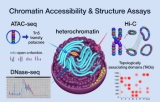
epigenetics products are available in this section and can be sorted by product families or sub-categories, such as Enzymes and regulators, Chromatin accessibility and structure assays, Histone modification analysis . You can browse the catalogue tree or use the search bar with a product name, catalogue reference, brand or supplier.

What types of products are available in the epigenetics category?

The epigenetics category brings together various product references, consumables, reagents, kits, instruments or laboratory solutions, depending on the relevant product family. The Chromatin accessibility and structure assays, Chromatin immunoprecipitation, DNA methylation analysis sub-categories allow you to find the products that meet your needs more quickly.

How can I quickly find a epigenetics product?

To find a epigenetics product, use the search function by name, product code, supplier, brand or sub-category. You can also browse the product families listed on the page to identify an available product code, an alternative or an equivalent product.

Does Biovalley stock several product codes in the epigenetics category?

Yes, Biovalley distributes several product references in the epigenetics category, sourced from specialist suppliers. Depending on the product family, references may vary in terms of format, packaging, brand, supplier, technical specifications or availability.

Can I request a quote for epigenetics products?

Yes, you can request a quote for epigenetics products from the product page or by contacting Biovalley (info@biovalley.fr). To help us process your enquiry, please provide, where possible, the product name, catalogue reference, required quantity, the supplier or brand you are looking for, and the country of delivery.

How can I find out if a epigenetics product is available to order?

The availability of a epigenetics product depends on the product code, supplier, packaging and country of delivery. For up-to-date information, please check the product details page or contact Biovalley with the product code or name of the product you are looking for.

What should I do if I cannot find the epigenetics product I am looking for?

If the epigenetics product you are looking for does not appear in the catalogue, please contact Biovalley with the available information: product name, reference number, supplier, brand, format or packaging. The team will be able to search for the reference number within its network of suppliers or suggest an available alternative.

Are all epigenetics products available under the same terms and conditions?

No. Ordering, delivery, storage and documentation conditions may vary depending on the product type, the supplier and the applicable regulations. Certain product codes may require specific approval, specialised transport, a safety data sheet or additional information prior to ordering.